Editor’s note: This article was first published in September 2012, during Spain’s economic crisis; its claim that organic food stores grew by 20% in Andalusia “so far this year” refers to 2012.
In hard times, people used to turn to one of two ways out: emigrating or going back to the land. Both are making a comeback now that the outlook for an economic recovery is so poor. But ever since the big food lobbies appeared, farming no longer pays.
That’s the complaint of thousands of farmers, who admit that working their land and growing their own produce ends up costing them money. To give an example, they might be paid €0.08 for a kilo of tomatoes that, for some reason, reaches the final customer at €1.89.
We won’t get into the quality of an organic product compared with a “transgenic super-tomato”. But the truth is that, in the middle of the crisis, organic products (or at least somewhat more natural ones) are meeting strong demand from consumers. You can see it in the rise in businesses of this kind, the growing number of “green franchises” and the increase in websites selling organic products.
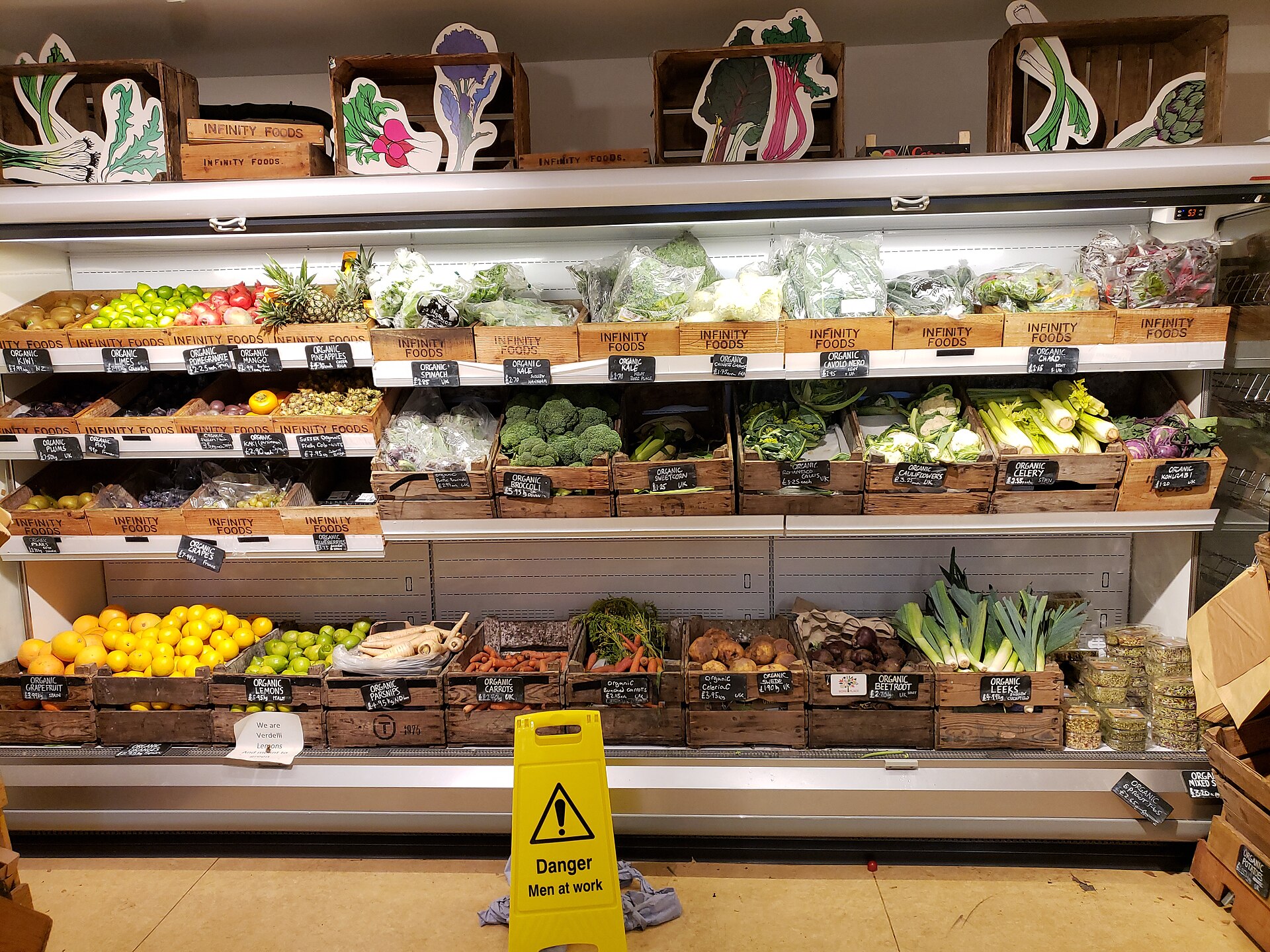
Among these businesses are organic food stores, which are profitable for the entrepreneur and come as a godsend for farmers who could no longer make it pay to work their land and raise animals for sale.
How do you set up an organic food store?
Basically, it’s a shop (fruit and vegetables, meat, bread…) where the products are organic and/or made naturally. These stores are usually supplied by producers from the same province, although they can also use suppliers from elsewhere, always asking for the CAE (Certificación de Agricultura Ecológica) organic certification seal.
Until now, people have assumed that organic products cost customers more than the rest. That’s not true, as long as the store goes straight to the source and avoids the inflated margins of middlemen.
In Andalusia alone, businesses of this kind have grown by 20% so far this year. They work, and their owners hear the now-familiar compliment from customers: “I’d been looking for a shop like this for a long time.”
Thanks to this type of business, organic chicken farms have reappeared, along with farms where animals aren’t fed artificial feed but raised naturally. Some of the land whose owners had stopped working it because it didn’t pay has been brought back into cultivation.
Several entrepreneurs who have recently opened these stores say that starting the business isn’t hard; quite the opposite. Once customers know you’re open and get to know your products, they soon become loyal, everyday shoppers.
They explain that before opening, they toured the villages of their province to find farmers and livestock breeders (generally older people). Some welcomed them with open arms, since it gave them a chance to sell their produce at a somewhat more reasonable price than they are paid now.
As for customers, they wouldn’t mind paying more for an organic product, although, as we said, it doesn’t necessarily have to be more expensive.
In these shops you can find pure honey, pure royal jelly, home-baked bread (the kind that can last up to a week without going hard), fresh milk delivered daily, fresh organic fruit and vegetables, meat that tastes like meat, and so on.
“In times like these, perhaps a good way to innovate is to go back to the past and revive old habits that should never have been lost.”
That line isn’t from Steve Jobs. It comes from a 97-year-old man who still works his land, and who insists that we won’t live to 97 (or probably even 80) because we corrupt the fields and poison the animals that we later eat as… “food”?
Fortunately, green businesses will keep growing. That probably won’t be because of the environment or health, but because of the added economic value for the entrepreneur, since customers are becoming more and more aware. Still, for health, for the environment and for the money, these businesses are worth it.
Featured image: Andy Li, CC0 1.0, via Wikimedia Commons.