

Editor’s note: This article was first published in September 2014. The figures for My Little Paris, including 800,000 newsletter subscribers, more than €1 million in revenue and the box doubling revenue, date from 2012–2014.
It may sound like a cliché, but starting your business idea without any initial investment because you have no funds can make your company much stronger if it gets off the ground, because it is a sign that it has grown in a healthy way. Starting a business with too much money has proved not to be a synonym for success, although… something in between wouldn’t be bad at all.
A while ago we gave you 10 simple steps to start a business with no money, with the usual advice about starting your idea while you are still employed, using the free technology available to us today, and so on. There is also funding through crowdfunding.
But the most important thing when starting our business idea is simply to start it and get moving. “It doesn’t matter if you can’t see the whole path. Start walking and the path will open up as you go” (somebody said this).
On this very question, asked in a Quora thread, I am going to use the answer given by James Altucher, who explains how he started his first business with no money at all and managed to sell it for several million. We will also give some other examples, and in later articles we will go deeper into some stories on this subject that caught my attention.
Altucher’s story of starting his company with no money
Altucher tells it roughly like this:
When I started my first business, Reset Inc, I had no money, no product and no employees. I only had my brother’s help, and both he and I had full-time jobs.
We knew how to do one thing that nobody else could do as well as we could. It was 1994–1995. We knew how to make a good website. We knew how to design it and how to do all the programming to make the site useful.
See also: 7 lessons to learn from Tim Ferriss’s Tools of Titans
We looked for a first client, but we aimed high. We found out that American Express needed a website, so we offered them our knowledge and professionalism, and they hired us on a $250,000 budget.
That helped us land other clients such as Warner, HBO and Ed.com. We took on some designers and programmers and built more websites. And more sites. Record labels, film studios, startups and so on.
Our revenue was growing 10 and 20 percent a month. Our business had been profitable from day one.
As some of you may remember, Altucher is of the opinion that a successful business should never be based on services but on products, because customers value products; but the truth is that a service-based company carries lower variable costs. According to Altucher, that business had only one fixed cost, which was the rent on an office.
In the long run, though, you have to find a way to offer some product to go with the service. They had a very profitable company, but until they built and started selling their own software, that company had no market value.
Once they had a large client portfolio, Altucher was clear about selling the company, and although he has never given the exact figure he sold it for, it is estimated to be in the millions. In fact, it was a well-known deal, because he sold the company shortly before the dot-com bubble burst. That company went under after the tech crash.
(Read: James Altucher: 32 rules for being a successful entrepreneur)
The entrepreneurial lesson of this story
-
If you have a business idea, execute it.
-
If you don’t have the money to execute it, execute it without money.
-
All you need is a talent, or something you are good at, to offer and make money from.
-
As long as people are willing to pay for what you know how to do.
-
Your primary business plan is to find a first client.
-
Your next goal is to find a second client.
-
Now change your business plan: find 2 or 3 more clients and repeat the move as many times as you can.
-
When you can no longer do all the tasks on your own, it’s time to get help.
-
Don’t hire at first; rent (freelancers, independent workers, outsourcing to other companies, etc.).
-
As you need to expand your business, start hiring professionals.
-
When the company is profitable and you don’t know what its future holds, sell it. Don’t hang on to it.
When there are profits, it is easier to get funding
Selling a business idea to a group of investors so that they fund it is a real pain when all we have is a project.
But when we present investors with an idea that is already making a profit and we can explain where that revenue comes from, it is a different story: we are offering a profitable company to investors who know they are putting their money into something safer, so investing in the idea will not weigh on them as much.
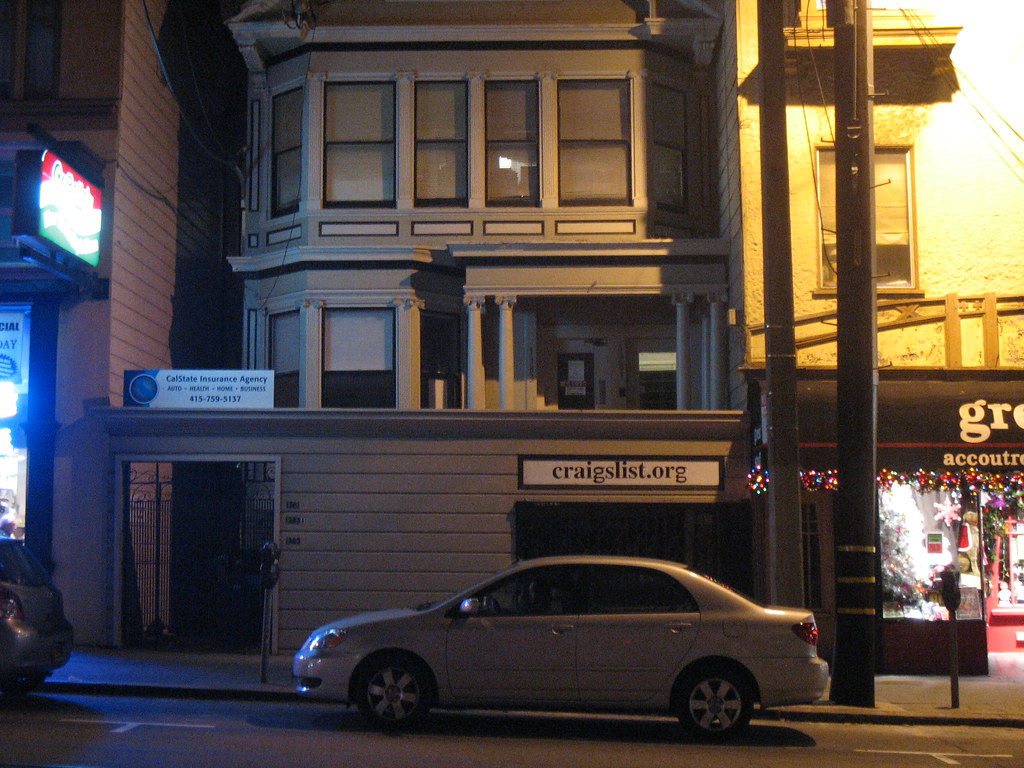
The classified ads site Craigslist started in 1995 and did not ask for funding until 2004, by which time it was already big and famous. So in its early years it found ways to make itself known without any investment, and later it financed its growth with its own funds.
The software company Atlassian was founded in 2002 and funded itself for many years, until in 2010 it raised 60 million in a funding round to expand its business model.
There are hundreds of examples of companies that waited to ask for money until they had shown they could make large sums with their idea.
The case of My Little Paris
This website’s story struck me very pleasantly when I heard about it.
One day, a young Frenchwoman named Fanny sent an email to about 50 of her girlfriends, and three years later she had more than 800,000 subscribers to her newsletter. The crème de la crème of French luxury brands found themselves negotiating with her for the chance to reach her subscribers, who were from a high socio-cultural level.
And she did it all without any investment or marketing
My Little Paris is proof that a simple business idea can succeed if you know your audience, and that great technological know-how does not always beat a simple, basic business like this modest site, which, even without the traffic of other big portals, is said to bring in more than €1 million in revenue.
Later she had the idea of starting to offer a product, which she called “my little box”. It is simply a box of themed treats, and according to the Huffington Post, that little box has helped her double her revenue in a short time.
So we can see that the best recipe for starting a business idea with no money is to start it and be creative. Sometimes you don’t need to be innovative or very original. Something simple is enough. At other times, in a new market, we can take advantage of being the first to offer something as experts in the subject.
See also: 18 business ideas you can start with almost no money
Featured image: David Hilowitz, CC BY 2.0, via Flickr.


