

Editor’s note: This article was first published in February 2012, during Spain’s economic crisis; its references to the current crisis and its forecast of hundreds of thousands of layoffs during 2012–2013 reflect that year.
A financial crisis is something everyone has gone through or will go through at some point in their life. It doesn’t take a global crisis to put us to the test, although with the crisis currently hitting our country, the chances that our finances will take a serious hit are higher. This crisis doesn’t distinguish between the upper, middle or lower class. Even so, not everyone will experience it in the same way: for some people it will mean unemployment, others will lose part of the returns on their investment portfolios, and some business owners will see their companies’ sales fall.
What is clear is that when a financial setback arrives, we have to act sensibly. Better still, if we can see it coming and prepare for it in advance, so much the better, because that way you won’t have to make improvised decisions. What can we do when faced with a financial setback?
1. Avoid panic
A 45-year-old who has been laid off by his company knows he will find it very hard to get a new job in the coming years. He knows he will have trouble paying the mortgage and any other debts he has taken on. Thinking about the situation causes panic, and panic doesn’t let you think clearly, which is why some experts recommend not making any decisions in those first days. Take your time, relax and remember that the situation won’t get worse overnight, but gradually.
This is the moment to keep an open mind and not just look at the problems, but focus on looking around us for new opportunities. As Viktor Frankl put it, if it is not in your hands to avoid a situation that causes you pain, it is in your hands to choose the attitude with which you face it. Remember, too, that sometimes the situation is not as bad as it seems at first sight.
2. Avoid taking drastic measures straight away
When people suddenly find themselves out of work, besides panic and other feelings such as anger and sadness, they often take a lot of measures to head off future problems. Some start selling their house, their car… In the face of this financial setback, you should act like good investors do. An investor who sees the value of his shares fall from one day to the next spends some time analysing the situation before selling them at a loss. Some sell their shares and lose money, while others take advantage of the drop to buy cheaper and increase their returns.
No expert denies that a crisis can be emotionally devastating: what we were yesterday is no longer what we are today. Accept it and do nothing for a few days or weeks. Use those days to analyse your finances: your monthly expenses, the unemployment benefit you would be entitled to, how long you could receive it if the situation dragged on, and so on.
Make an inventory of things you don’t use and could sell. Try to turn whatever you don’t need into cash. A crisis is much easier to get through with some savings.
3. Don’t waste time looking for culprits, and accept that the fault is yours
Who was to blame for the crisis? Aznar, Zapatero, Rajoy (Spanish prime ministers), Obama… The truth is that we were to blame. Politicians and bankers may have wrecked the world economy, but your personal economy (your household’s) is your responsibility. Perhaps you lacked a bit of a saving culture, some understanding of personal finance, or something as basic as knowing that getting into debt is not a good thing (financial education). Don’t look for culprits; look for solutions and accept your share of the blame. Once you recognise that you have made some financial mistakes, both in planning and in carrying out your plans, you will find it much easier to learn how to put them right.
4. Pride and prices
This is the time to set your pride aside. If you were a senior executive at a company and have lost your job, you may have to accept a position below your level, with a lower salary, and you may have to get used to the idea that you won’t have a similar job again (at least in terms of pay). Turning down some offers today because you feel they undervalue your professional standing may mean those job opportunities are gone later, when you go looking for them once desperation takes hold of you.
As for the new prices of things, especially property, you will also have to accept that owning 1 million euros’ worth of real estate won’t do you much good if bricks aren’t edible. You will have heard people say hundreds of times that they won’t sell a property valued at more than €500,000 for €200,000. We are not going to talk about selling a property at a giveaway price, but if you want to sell a property, you may have to get used to the idea that it is no longer worth what you think it is worth, because in a crisis, value is calculated with a simpler formula: “A property is worth whatever price a buyer considers a good price to buy it at.” It is a matter of weighing up the loss and the benefit of selling something below the value you consider fair. Remember: cash.
5. A time of opportunities
There is the old saying that crisis equals opportunity, and the truth is that it can be an ideal moment to pursue your dreams. If you ever thought about having your own business, now may be the time to do it.
Keep an open mind, be creative and use the experience you have gained over these years of work. It is time to be positive and remember that, although many people are losing their jobs, many others are growing their wealth. Many companies are closing while others are expanding. Times are changing, and you can decide whether you want to be one of the statistics of the crisis’s collateral damage or part of the solution. Entrepreneurs are needed, and there are markets to be found for new business ideas.
6. Be prepared
There is no better solution than prevention. Some people haven’t felt the crisis yet and carry on calmly in their jobs. I don’t mean to be negative, but there will be hundreds of thousands of layoffs during 2012-2013. So taking preventive measures just in case can save you from having to take desperate measures later on. Bring your finances up to date and build a financial cushion in case you suffer a financial setback in the near future.
Further reading
- The advantages of starting a business in times of crisis
- How to start a business with no money
- 15 questions to evaluate a business idea
- Before starting a business, answer these 5 questions
- Why new businesses fail
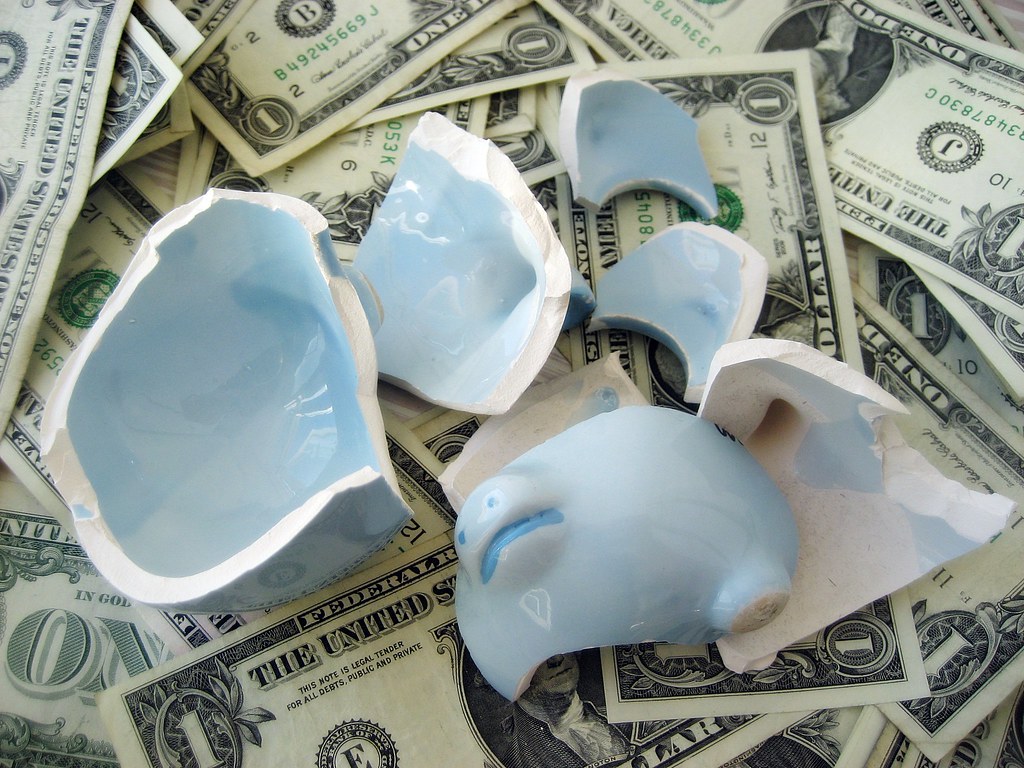
Featured image: 401(K) 2012, CC BY-SA 2.0, via Flickr.


