Editor’s note: This article was first published in May 2013, during Spain’s economic crisis; the claim that barter is on the rise and the recent examples it describes date from that time.
In times of crisis, barter tends to make a comeback: it is probably the oldest form of payment in history. Barter is basically an exchange of products and/or services between businesses, between individuals, or between businesses and individuals. Barter is on the rise, and every day we hear of new businesses that are using it and finding it very profitable.
Many small businesses have not yet stopped to think about the benefits that accepting barter could bring them. To get an idea of those benefits, here are a few real examples.
A few weeks ago I came across the case of a supermarket in Granada that needed some minor renovation work but had no money to pay for it at the time. The owner proposed a barter deal to several unemployed builders. He asked them to give him a quote for the renovation, which came to €1,300. The supermarket would pay for the work with a €1,300 voucher to spend on the supermarket’s products, with no time limit.
That way, the builders, who had nothing better to do, carried out the renovation and at least had one of their most basic needs covered (food and other essentials). The benefit for the supermarket is even greater: because the exchange is made at retail prices, the renovation actually costs it less, since the supermarket’s profit margin is built into the products.
Barter comes in different forms. Some car repair shops admit they have serviced an accountant’s car in exchange for him doing their income tax return, and in other cases in exchange for a certain number of hours of private lessons for their children.
A woman who needed renovation work on her home paid for it by covering the holidays of an employee of the renovation company, so not only did she gain from the exchange, she also has something more to put on her CV.
If you have a skill, a profession or know-how, barter can cover your basic needs. For businesses that accept barter, the benefit is similar to that of solidarity vouchers: used well, it could even give you a kind of financing for your business in its early days.
To sum up: if you have a business and an unavoidable expense is coming up, think about whether you could cover it through barter. That way you help someone who is probably going through financial difficulties, and you also gain a “captive” customer. And if you have a skill or know-how, think about how you could use barter to cover your unavoidable expenses, especially the basic ones such as food and clothing…
Further reading
- When financing dries up: solidarity vouchers
- 10 profitable micro-business ideas
- Second-hand businesses are thriving in the recession
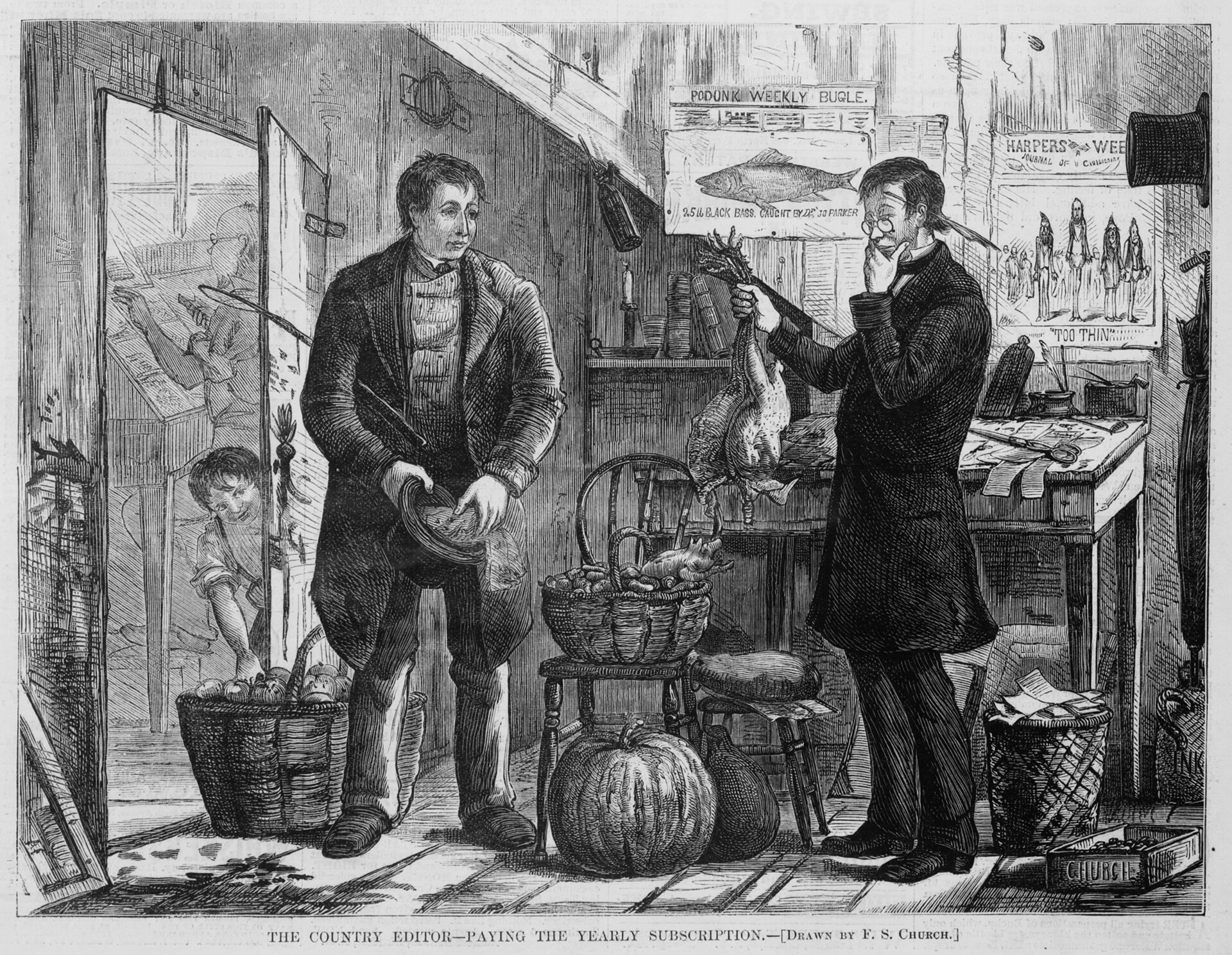
Featured image: F.S. Church, published in Harper's Weekly, January 17, 1874, p. 61, Public domain, via Wikimedia Commons.