

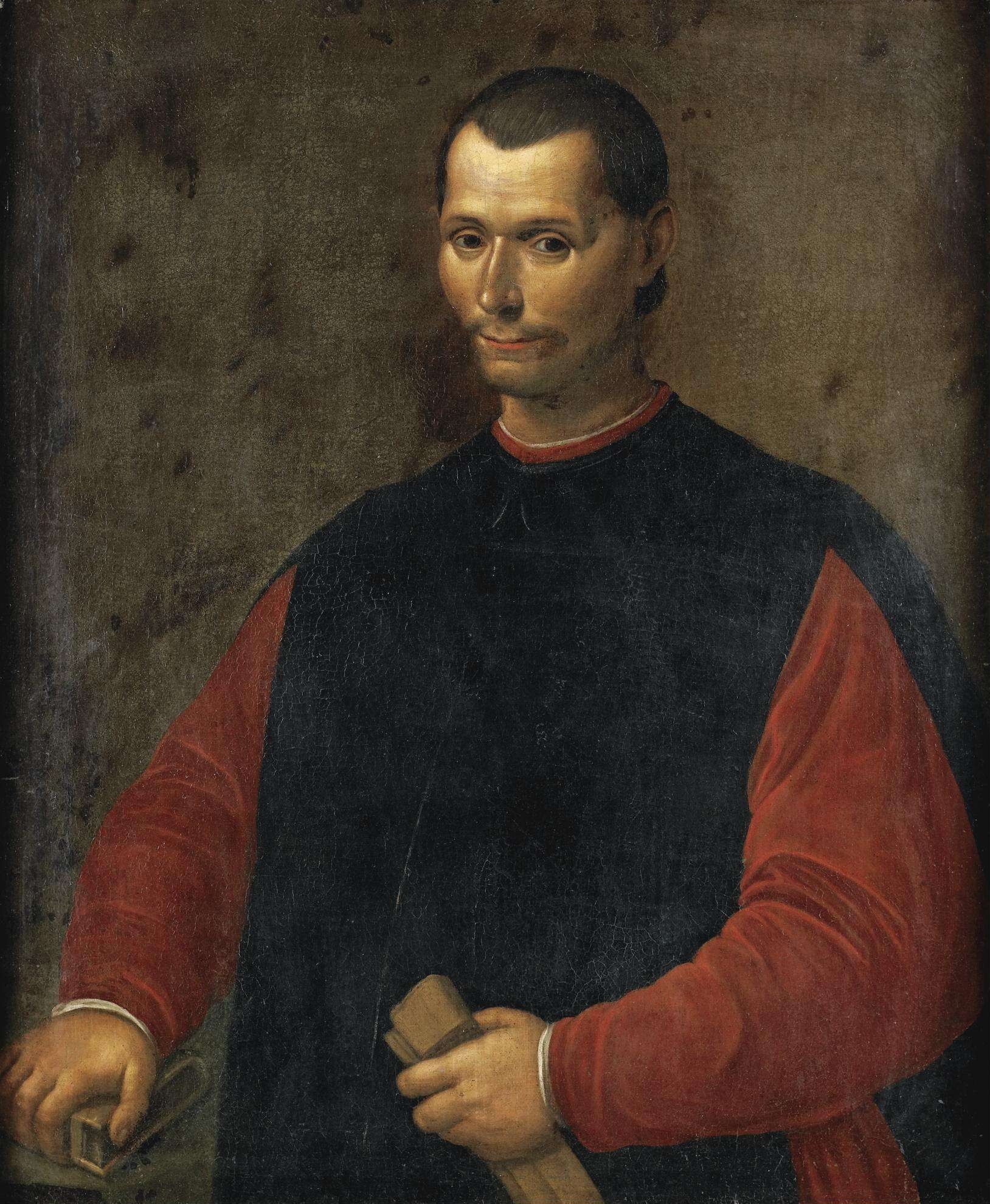
Niccolò Machiavelli was the author of the famous book The Prince, a classic that executives are often advised to read alongside Sun Tzu’s The Art of War. Of course, some readers may feel a little let down to find a book about how a prince was supposed to rule hundreds of years ago, looking for the best way to conquer new kingdoms and subdue their inhabitants while also protecting himself from his own army.
But in those pages, which at times read like a book about politics, you can indeed draw some lessons in leadership and in the manipulation of subordinates. As with Sun Tzu, sometimes all we need to do is replace the word “prince” with “business owner or leader”, “subjects and soldiers” with “employees”, and “enemies” with “competitors”.
That is where we find some business lessons and a slice of dark leadership. It may seem outdated today, now that the new leader is sold as a kind of servant at the service of employees, but there is something that has not gone out of date, and which Machiavelli refers to: human nature, which in many cases will lie in wait to bring us down the moment it gets the chance. And we can find that kind of viper in our own circle.
Here we pick out some of the best passages from the book, which may or may not be useful for leadership today. One thing I can guarantee: there is not a single piece of nonsense in the entire book.
(See also: 7 classic business books everyone should read)
On whether it is better to be loved or feared
A leader should be both loved and feared, but according to Machiavelli, the two cannot be achieved together.
1. … People are less careful about offending a prince who makes himself loved than one who makes himself feared, because love is a bond of gratitude that men, being wicked by nature, break whenever they stand to gain by it; fear, on the other hand, is the dread of punishment, and that dread never goes away.
On being a cruel leader
2. A leader should not worry about being accused of cruelty, as long as the purpose of his cruelty is to keep his subjects united and loyal; for with a few exemplary punishments he will prove more merciful than those who, out of mercy, allow disorder to grow… And above all it is a new leader who cannot avoid acts of cruelty, since every new rule brings countless dangers with it, enemies among them.
Why is it better to be feared?
3. … Since loving depends on the will of others and fearing depends on the will of the leader, a leader should rely on what is his own and not on what belongs to others, while always taking care not to earn their hatred.
(For Machiavelli, whether people fear us depends on us. We can instil fear, but we cannot force anyone to love us, and that is why it is better to be feared than to seek to be loved. But people can fear us without hating us, because we do not always hate everyone we fear. Fear can inspire respect, whereas hatred can inspire a desire for revenge, and that is why it must be avoided.)
4. … A rule that rarely fails: whoever helps another to become powerful brings about his own ruin, because it is natural for the one who has become powerful to grow wary of the very cunning or strength of the person who helped him get there.
On innovation
5. Whoever innovates becomes the enemy of everyone who did well under the old laws, and wins only the lukewarm friendship of those who will do well under the new ones. That lukewarmness comes partly from fear of those who have the old laws on their side, and partly from the disbelief of people who never trust anything new until they have seen it bear fruit.
6. … For anyone who believes that, among important people, new favours make them forget old injuries is deceiving himself.
(In other words, if you offend or harm someone today, even if you make it up to them or reward them tomorrow, that person will not forget the earlier offence or harm.)
Working with mercenaries
7. A prince whose rule rests on mercenary soldiers will never be safe or at ease, because they are divided, ambitious and disloyal; brave among friends but cowardly when facing the enemy; they have no discipline, and in peacetime they strip their prince of as much as his enemies would in wartime, because they have no other love or passion than the prince’s pay, which, moreover, is not enough to make them want to die for him.
(If we replace “prince” with “business owner”, “soldiers” with “workers” and “mercenaries” with “workers who have no motivation or shared culture beyond money”, we have the same problem in any company.)
Preparation
8. Whoever, in a principality, only detects problems once they have already arisen is not truly wise; but this is a virtue few people have.
(It is comparable to the old business saying that you have to spot and tackle a problem before it turns into an emergency.)
9. … Being unarmed makes you contemptible, because there is no possible comparison between an armed person and an unarmed one; it is not reasonable for the armed to obey the unarmed, nor for an unarmed prince to feel safe among armed servants. Besides, a prince who does not understand military matters cannot be held in esteem by his soldiers.
10. … A prince must never stop concerning himself with the art of war, and in peacetime he should train even more than in wartime, which he can do in two ways: through action and through study.
(Without a doubt, the best way to face any fight, whether we are talking about armies or business competition, is to be as prepared as possible, to know your enemy and the ground you move on. This is where Sun Tzu’s famous line comes in: “every battle is won before it is fought”. Battles are not won during the battle itself, but during the time you spend preparing for it.)
Planning
11. Among his other merits, Philopoemen had this one: in peacetime he thought of nothing but matters of war. When he went out riding with his troops, he would always ask: if the enemy were on that hill and we were here, who would have the advantage? If we wanted to withdraw, how should we go about it? And how would we pursue them through these mountains if they were the ones withdrawing? He always laid out every scenario that could arise on the battlefield, and that is why he always knew how to lead his armies: he never faced a situation on the battlefield that he had not already foreseen.
The importance of studying the best
12. … A prince should study history and examine the deeds of great men, see how they conducted themselves in war, and analyse the reasons for their victories and defeats, so as to avoid the latter and achieve the former.
(Observing, studying and learning from other successful business people will give us the keys to what we need to do to reach the goal we have set ourselves, just as looking at other people’s failures will show us what we should avoid doing.)
13. … Never stay idle in peacetime; on the contrary, gather lessons to draw on in adversity, so that if fortune changes, it finds you prepared.
On virtues and skills
14. A leader does not need to have all the virtues expected of him, but he must appear to have them. I would even dare to say this: having them and always practising them is harmful, while appearing to have them is useful… What is indispensable, then, is a mind able to adapt to every circumstance, one that does not stray from what is good while it can, but that, if necessary, does not hesitate to do wrong.
On objectivity and neutrality
15. … Taking a side is always wiser than staying neutral, because in a war, if you have not declared for either camp, you will always fall prey to the winner, whoever that turns out to be. The winner wants no doubtful friends who did not help him in hard times, and the loser cannot offer help to someone who did not fight alongside him when things were difficult.
(The truth is that everyone claims to like objective, impartial and neutral people, when in reality that virtue of being objective is often one of the most damaging, because however much you see yourself as a friend to both sides, you are really the enemy of both.)
The importance of the team
16. The first impression people form of a prince’s judgement, good or bad, is based on the men around him. If he does not choose competent and loyal people, a prince whose main mistake lies in choosing those around him cannot be considered prudent.
(In business as in life, the quality of the people you surround yourself with predicts your success.)
17. … There is no greater mistake than telling your people that they will not offend you by telling you the truth, because when everyone is free to tell you the truth, they stop showing you respect. A leader with sound judgement should therefore choose a few trusted people and allow only them to tell him the unvarnished truth.
Further reading
Featured image: Follower of Santi di Tito, Public domain, via Wikimedia Commons.



