

Editor’s note: This article was first published in June 2013; the investment returns it cites for an S&P 500 index fund, Gamesa, Inditex and the IBEX 35, and its estimate of the share of US trades made by algorithms, are figures from that time.
I have said more than once that investing is not as difficult as some people claim, but it is not so easy that everyone, whether they know what they are doing or not, should jump in. There are thousands of terms we can learn, study and analyse, but in investing, as in many professions, we only need to identify the basic concepts, and there are usually very few of them.
The other thousands of concepts are generally different combinations or complications of the basics. If you forget the simplest things while learning the complex ones, that is when you get lost in the stock market. It also explains why many private investors with no idea about investing get better returns than fund managers or professional analysts. Many say it is luck; I say they have based their investments on what investing should be based on.
At university, for example, you get thousands of definitions, papers, notes and lectures that you have to memorise to pass the exams. When you finish your degree you realise that 97% of it was filler and that for the working world you only need the other 3%. I am still waiting impatiently for the moment when derivatives and natural logarithms come in handy.
So here are the only 4 things you need to know about investing. Once you have them clear, you will be almost ready to face the markets.
1. The only thing that will make you rich is compound interest.
Graham, Kiyosaki, Buffett… in the end they all say the same thing. The secret of Warren Buffett’s fortune is saving early and giving his investments time. Most people don’t start saving significant amounts until very late, in some cases after 50. Buffett started saving in his teens. If he had waited until he was 40, we probably wouldn’t know who Warren Buffett is today. That is why we need to teach the importance of saving from a very early age, from childhood, because investing your savings and adding the returns to new investments is the only way to build wealth. (Read: Financial education for children)
2. We know what the market will do with 100% accuracy.
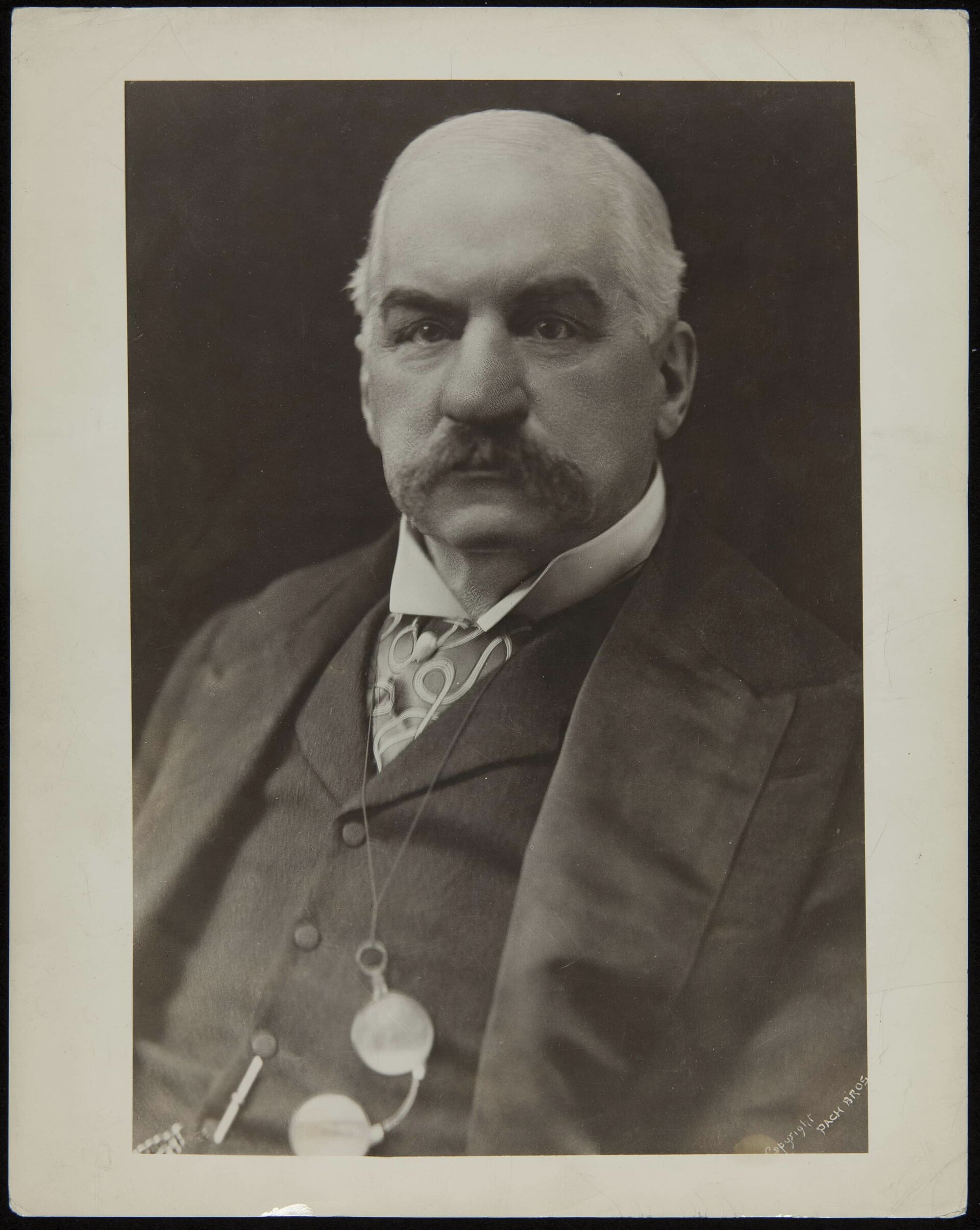
Yes, you can tell everyone: I know what the market is going to do. And I learned it from J. P. Morgan. While analysts rack their brains trying to work out what the market will do in 3 months or a year, J. P. Morgan had it much clearer: whatever happens, the market will fluctuate. With 100% probability, the market will be volatile.
Some days we will see the market rise 15% in a week and lose 3% in a day, and then the analysts will look for an explanation for the fall or the rise. What is happening to make the market go up or down? Nothing is happening; it is just fluctuating. That is what markets do. Panic or euphoria is what makes you buy or sell often, losing money and paying commissions. Volatility is where the big firms, more and more automated, make their money, while the most active private investors and would-be traders keep losing it.
In a year a stock index can rise 8%, yet the gap between its highest and lowest points over that year may have been 30%. So we don’t need to know what the market is going to do (apart from fluctuate). In fact, if you follow the financial press, you will notice that analysts miss more often than a fairground rifle. All you need to know is that if you buy into a battered market, as the IBEX 35 has been, it will rise in the long term. They will tell you the long term no longer works. They are lying to you, because it is the only thing that has historically been shown to work, as long as you have a diversified investment portfolio (but not too diversified). Whoever bought into the IBEX in the summer of 2012 now only has to hold on. That investor no longer loses money. (Read: Value investing is still the best way to invest)
3. Simple is more profitable than complex.
Some people bought an S&P 500 index fund a while ago and have made 97%, without any idea of portfolio management, technical analysis or company valuation. Others invested in Gamesa simply because it looked cheap at 1 euro a share, thinking renewables are the future, and have made almost 300% without worrying about the crisis, Europe, the ECB or Mario Draghi’s words. Meanwhile, the market keeps playing the same old song: Telefónica, Inditex, BBVA and Santander. And here we have another clear example: one of the most profitable stocks has been Inditex, which has risen more than 600% since it went public (the long term). (The best and worst performing IPOs to date)
4. You can’t compete with algorithms, but you have something they don’t: intelligence.
It is no secret that algorithms already dominate a large share of trading. In the United States, it is said that 70% of market trades are no longer made by humans but by machines. In fact, after the false rumour of an attack on the White House, it was more than clear that no human sells that fast. It also showed that a clever algorithm cannot spot a fake tweet.
These algorithms are designed to pick up market sentiment and financial news from the most relevant media and the main social networks. They are extremely clever algorithms, and they are probably squeezing the portfolios of private traders. But you have something the machines don’t, and these algorithms work on the short term. If you are smart enough to know that the long term is what pays best, you won’t need to compete with them. Likewise, algorithms don’t recognise undervalued, unpopular companies, which are the ones that may one day give us high returns. (5 steps to getting rich, by Charlie Munger, Buffett’s right-hand man)
I believe that if you know these 4 things, with just a little more information and knowledge, you are ready to make money in the markets.
Further reading
- The most profitable investment is paying off your debt
- Free course on the stock market and financial derivatives (by Xavier Puig)
- Why private investors always buy and sell at the worst moment
Featured image: Pach Brothers, Public domain, via Wikimedia Commons.


