Editor’s note: This article was first published in July 2015; its comparison of printed books, e-books and audiobooks, including prices, resale value and research on screen reading, reflects the market and studies of that time.
Reading is the fastest way to learn about any subject we want to learn about, and sometimes it teaches us, or even makes us rethink, things that had never crossed our minds. And that is growth.
The author George R. R. Martin once wrote that “a reader lives a thousand lives before he dies. The man who never reads lives only one.”
Elon Musk, Warren Buffett, Bill Gates… are people of a thousand lives. They all say they are avid readers who never stopped reading, and therefore never stopped growing as people.
See also: 8 books Warren Buffett thinks everyone should read
Reading on its own doesn’t guarantee success, but the most successful people on the planet all share a love of reading and constant learning. So you could conclude that success is about reading and learning from other authors who have already succeeded, or who write about how successful people did it.
But even reading has its techniques and parameters. You can read 100 books and say you’ve read 100 books, when in reality all you’ve done is look at the pages of 100 books.
The people at Art of Charm stress this point: if you’re like most people, they say, your reading retention and learning are probably below those of the brightest minds and the smartest readers.
Can you remember the main points of the article you read ten minutes ago? What about that article you liked so much last week? What do you remember from that biography you read a couple of years ago?
These are six techniques or tips to make sure we learn from what we read, retain that information and can apply it in life, in our careers or in business.
1. Identify your purpose
To learn from reading, we first need to understand why we’re reading. In other words, if we buy a book, what is our purpose or aim with that book: pure entertainment, or learning?
Once we’ve identified our purpose, and that purpose is to learn about sales, say, we should probably start by reading the best books on sales techniques and sales strategies. We can combine those with books on psychology and/or motivation, which can often be more useful for sales than sales books full of concepts their authors have already done to death.
And there’s more.
Once we know the sales techniques and strategies, and we also understand customer psychology, we can move on to studying the best salespeople in their field and how they achieved success through their sales skills. That’s when the earlier concepts will come up as you read that person’s story, and you’ll fully understand their anecdotes.
In other words, you won’t just be reading, you’ll also be thinking, because if reading doesn’t make you think, either you’ve picked the wrong books or you’re not reading properly.
2. Engage with what you read
Some people read a book as if they were listening to a lecture. We read the words, which echo in our minds like one person’s monologue. We let the author talk until they’ve finished (we’ve finished the book), although in a while we probably won’t remember what the author said.
There’s another kind of reader, though, who sees the book more as a conversation, with the aim of picking out the key ideas and remembering them for many years (probably for ever).
Tim Ferriss, author of The 4-Hour Workweek, is one of those who say they think about the material they’re reading, highlight the passages they like most and even write down their impressions or objections. If a passage challenges you mentally, make a note of it, whether you disagree with it or found it surprisingly brilliant.
When you engage actively with the book and highlight the key ideas, you dramatically increase how much of your reading you absorb. That’s when you’re not just reading; now you’re learning.
3. Forget about reading speed
There are 240-page books that have taken me more hours to read than a 350-page one. Most readers are obsessed with speed-reading techniques, when the truth is that reading, when we want to learn, is one of those things that benefits from taking it slowly, especially in the most significant parts of a book.
In most cases, reading speed doesn’t go hand in hand with processing the underlying information. If anything, the relationship is the opposite.
Do you want to read a book because you’ve heard you should read at least 100 books, or do you really want to learn from what’s in them?
Some authors’ ideas are too important not to stop at certain sentences or comments, read them calmly and reread them, even go back a few pages. If your goal is to learn, take your time. If your goal is to be entertained, read however you like.
In the end, as we read more and more, our reading speed increases, and our brain starts to process letters and ideas much faster, especially if we engage with the book.
4. Choose the right format
Speaking personally, as I said some time ago in another article: the day books stop existing on paper and I can only read on a digital screen, that day my passion for reading will end.
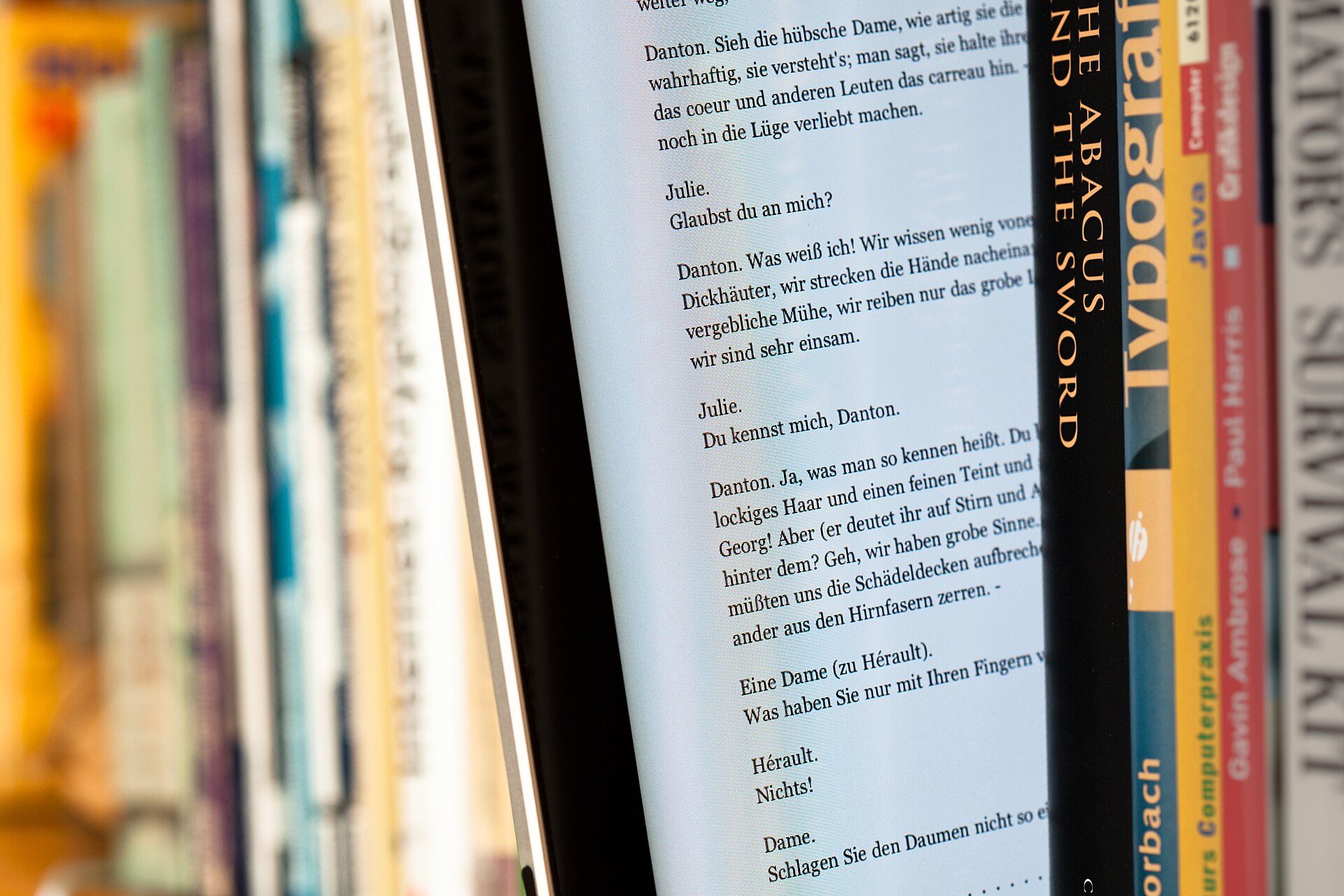
Today we can choose between printed books, e-books and audiobooks. Printed books are my thing. In fact, I need to touch the paper (I love the smell of a new book).
There is plenty of research that backs me up on how useful printed books are.
As for audiobooks, while it’s true that they are the format readers retain least from (the least useful), it’s also true that you can listen to them while exercising or driving, which makes those moments productive.
E-books are gaining ground because they’re cheaper, and they have the advantage that you can carry more than 100 books on an e-reader to use whenever you want. But several studies suggest that digital formats make information harder to understand and can drain key mental resources. In the end, what we save on the e-book we seem to pay for in learning.
And to those who choose digital books only for the price, not for convenience, I’ll just say this: the moment you pay for an e-book, its value is zero. You can’t sell it, whereas a printed book will always have some value as a second-hand book.
5. Write down the key ideas
If you write down what you read, I can practically guarantee you won’t forget it. I speak from experience. As you may have noticed, I write a lot of articles based on books I’ve read and am reading, always adding my own opinions and impressions, and even passages that are already engraved in my mind and probably come from other books I read long ago.
If you read, you learn; if you teach others what you’ve learned, you learn even more, and on top of that, you don’t forget it.
Now I’m going to be honest with you about something curious.
I recommended Machiavelli’s book because everyone said it was a must-read. I thought it was the biggest load of crap I’ve ever read. In fact, as I was reading it I kept saying to myself: “What a drag of a book. What the f*** am I doing reading this rubbish?” But of course, even the worst book you come across has some key ideas.
I marked the passages in Machiavelli that I found interesting and that I could draw some useful lessons from. I summed them all up in the article 17 ideas and thoughts from Machiavelli applied to leadership.
Apart from those 17 passages, the book was a drag for me.
6. Apply what you read
Finally, if you read a motivational book that says that to succeed you have to be a person of action, and after reading it you’re still slumped on the sofa, clearly something has gone wrong with the reader, not the book.
Reading can transform your life, literally
Some people find certain books excellent, while others find them useless. The same book inspires one person and bores another, but practically any book that has inspired or helped even one person probably contains excellent ideas we can apply. Even if it’s only a couple of pages out of 300, you can always take away a useful lesson.
A book is, in a way, one person’s point of view, their ideas, their vision of something. Either way, we’re receiving a contribution from someone we can learn from, or whose ideas we can challenge with our own experience, even if that experience is built on what we’ve taken from other authors.
Remember that reading isn’t just reading, it’s learning. And we only learn when we hold on to what we read and apply it.
Further reading
- Learning techniques used by people who learn quickly
- 5 strategies to learn faster, part two
- 5 books you can read to become smarter and make better decisions
Featured image: Maximilian Schönherr, CC BY-SA 3.0, via Wikimedia Commons.