

Editor’s note: This article was first published in April 2012; its remarks on online banks offering the best conditions, broker custody fees and small charges for postage and account maintenance reflect Spanish banking at the time.
Continuing with financial education (personal finance), we keep looking at how to improve our purchasing power.
In a previous article we gave some advice on how to get your personal finances back in shape. If you haven’t read it, I suggest you start there.
1. Change your mindset: focus on the “why” of your goals as much as on the “how”
We have talked before about the importance of setting yourself a financial goal or target (and it certainly is important to do so), but it often happens that when a temporary setback comes along, it is as if we had suffered a relapse. Julia Belyavsky, a professor at the University of Delaware, believes it is much more important to focus on your personal motivation for reaching the goal than on the “strategy”, because motivation is harder to forget, whereas we may have to change the strategy in the face of unforeseen circumstances. I agree with her approach, but motivation, like passion, gets us nowhere without a clear strategy.
So remember why you want to reach that particular goal, but… draw up a strategy. If something in your plan “breaks down”, replace the part and carry on with the new strategy (and motivation).
2. Plan how you will clear your debts
Clearly, if we have to pay out more than we earn, there is nothing left to save, and someone who has been going through a bad patch for 3 years may feel too discouraged even to try.
The other day I was listening to a financial adviser from New Orleans who explained how he got caught up in what Robert Kiyosaki called the “rat race”: he left university with a lot of debt. When he couldn’t take any more, he had to max out his credit cards. At that point he thought all was lost, but once he thought it through, he saw everything clearly and began a tough debt-clearing strategy. For a few years he went into what we call the financial prison. In the end he reached his financial goals, and today he advises clients on their finances, living proof that you can get out of debt. It is a matter of drawing up strategies. We gave some ideas for getting rid of personal debt (credit cards).
3. Live below your means
Yesterday I read that in the United States there are executives earning $250,000 a year who complain that they struggle to make ends meet because, they argue, they pay too much tax. Meanwhile, in the same city, thousands of people earn $40,000 a year and still manage to save. How do they do it? Very simple: live below your means and don’t buy unnecessary luxuries, even if at some point you can afford them. Avoid credit. If you don’t have the money to buy something, think about whether you really need it before you reach for the credit card.
Remember our saying: “Appearances cost money that we could use not to look wealthy, but to be wealthy.” It’s a question of mindset. Many of you, when you see someone driving a €40,000 car, probably think how lucky that person is. I can’t help thinking about the debt they have taken on, plus the “extra” costs the car brings with it (especially when you know what that person earns).
4. For married couples or couples about to marry: plan your finances together
I know that talking about money with your partner isn’t as romantic as talking about eternal love, but experience and statistics tell me that, in a very high percentage of cases, love tends to fly out of the window when poverty comes in through the door (I read that somewhere). I’m not talking about a separate-property arrangement in marriage, because I take it for granted that these days it is a necessity (if you value the assets you already have, of course). I’m talking about a joint plan that psychologically helps the couple spend less.
It has been shown that when two people have separate accounts, each with less savings than they would have in a joint account, it tends to hurt a little more to buy something unnecessary, and they are more likely to look for a cheaper option, for example when booking a trip or buying a new car.
At the same time, each partner would cover 50% of the shared expenses. Every month, an amount agreed by the couple could be paid into an interest-bearing savings account or any other investment vehicle. And let me stress again how important it is not to take on credit for whims, because if the marriage ends, on top of the heartbreak, both partners have to reach an agreement to keep paying for something that one of them no longer uses.
5. Switch banks or negotiate with your bank
I already covered this point the other day in “Profitable investments for small savers”. To get our finances in shape, we need to start being paid for our money instead of paying to have it. If we spent as much time comparing banks’ terms as we do choosing a pair of shoes or a suit, our finances would be in much better shape.
There are huge differences in the fees charged from one bank to another. These days, of course, online banks are the ones best placed to compete on terms. If you are paying for your money, stop paying for it.
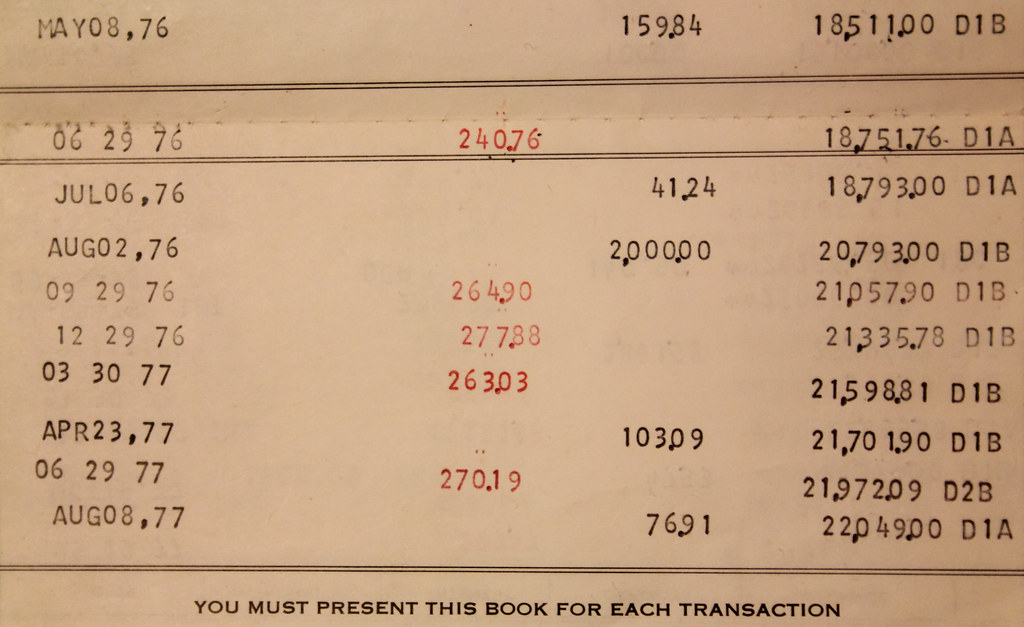
If you invest in the stock market and pay a percentage for “custody” whether or not you make any trades, change broker (or bank). I remember that when I was young I didn’t mind seeing those small charges on my statement: 0.35 for postage, 2 for maintenance, and so on. Today I speak very plainly when it comes to banks.
If you are going to charge me for sending me a letter, phone me instead of writing. And if you are going to charge me for keeping my money, I’ll have to find someone who will pay me to hand it over.
Remember: if you take care of the small monthly expenses, you avoid a big waste over the year.
We will continue with this subject in future articles.
Further reading
Featured image: lungstruck, CC BY 2.0, via Flickr.


