Editor’s note: This article was first published in September 2011, two months before Spain’s general election of 20 November 2011, which Mariano Rajoy’s Partido Popular won with an absolute majority. The figure of 5 million unemployed, the debate on healthcare co-payments and the predictions about Rajoy’s term reflect that moment.
Public education will be free during the compulsory stage, that is, up to the end of secondary school. If a student wants to go on to the Bachillerato (upper secondary) and then to university, they will have to pay. That is what is fair, according to Esperanza Aguirre, whom we take this opportunity to remind that public education in Spain is not free, and neither is the Bachillerato nor university, because we pay for this kind of education with our taxes.
We will never agree with tilting the chances of personal growth, learning and future employment by drawing a line between someone with enough money and someone without the same means.
When a person finishes compulsory schooling and wants to keep studying, there is only one obligation, and it falls on the government, which is bound to provide that education in order to develop talent in our country without any economic distinction whatsoever. That way we will gain qualified professionals in Spain.
First came the debate on healthcare co-payments, and now Esperanza Aguirre opens the door to the education of the future: education for those who have money, and healthcare for those who can pay for it. If these measures are adopted, this new Spain of progress would go back some 30 years in time. Over precisely those years we have seen what happens when any athlete, regardless of political ideology or economic level, can represent Spain, and the result is plain to see: we have the best athletes in the world.
In the same way, we have produced great professionals in our universities. People who could not afford to go to Stanford now have desks next to those of Harvard graduates.
A survey by the Agencia Estatal de Evaluación de las Políticas Públicas y la Calidad de los Servicios (Aeval, Spain’s state agency for evaluating public policies and services) shows that 97% of citizens are against cuts in healthcare, education and pensions.
Spain has 5 million unemployed (perhaps a few more). The situation is not easy, and austerity measures will be needed to get out of the crisis, but a “future government” must distinguish between austerity measures and cutting citizens’ most basic rights. Let us remember that the job of a government is to look after the interests of its citizens, whatever their economic situation, sex or circumstances.
If the solution to this crisis were to privatise healthcare and education, someone should take a look at the United States, which has these systems in place and currently has its highest unemployment rate in 30 years.
I didn’t study politics, and I have no experience running a country, and maybe that is why the answers to these questions escape me: “How can you create jobs by destroying jobs? Is it a good way to end a country’s poverty to ‘strangle’ the poor financially and deny them the chance to have the same opportunities as the well-off?”
I don’t know what Spaniards will do on 20 November (the date of the general election), faced with the anguish of unemployment and the country’s lack of economic growth in the short term, although the polls, if confirmed, show a clear winner.
“Mariano Rajoy, if you go ahead with the measures you are considering and have never stated directly to the public, I predict, Mr Rajoy, that you will have a term in which, of the 365 days in a year, 360 will be devoted to strikes and demonstrations against the cuts in rights. When that moment comes, when the people speak, will you also cut back the right to freedom of expression?”
Spain needs change, but if that change comes in the form of cuts to rights of any kind, especially in education and healthcare, it is not the change the country needs.
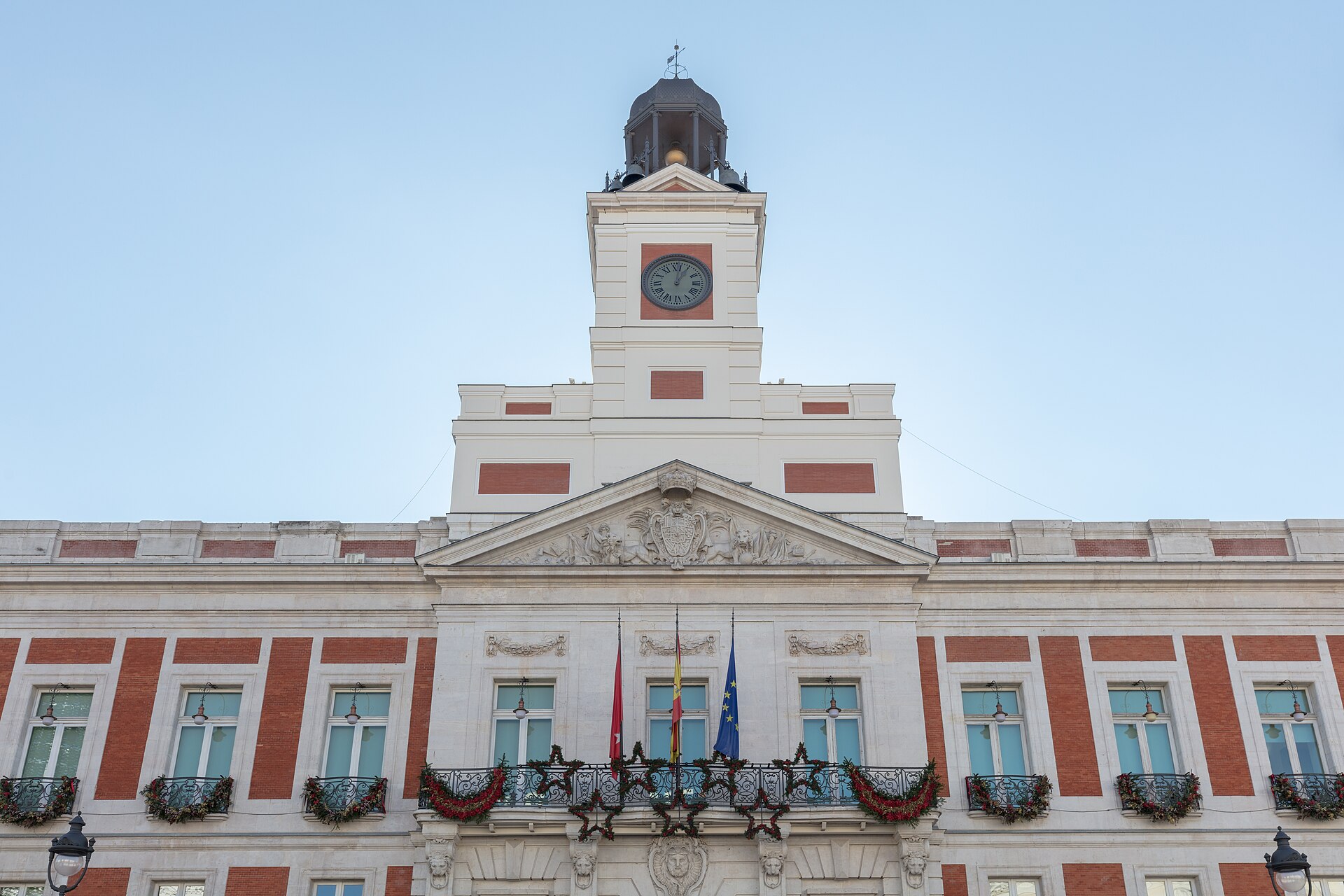
Featured image: Diego Delso, CC BY-SA 4.0, via Wikimedia Commons.