Editor’s note: This article was first published in February 2013, in the middle of Spain’s economic crisis, and the circumstances it describes reflect that time. Several products it proposes, such as sugar-free and gluten-free sweets and child GPS trackers, are now common.
We are not going to get into business ideas related to mobile apps, new websites, innovative blog topics or services we could offer online, because we take it for granted that the ideas there are unlimited, and I’m sure there are still many new things to discover and offer. We are going to focus on problems and needs society has that we could meet with a product or service.
This time we’ll do it differently. We name the problem, the need, and you, the future entrepreneurs, put your minds to work on how we could solve it. We’ll start with personal safety.
1. Kidnappings.
With the crisis, it isn’t just the number of robberies and muggings that has shot up. It goes further than that: from express kidnappings to attempts to kidnap children for ransom. Sometimes the motive is purely financial, but at other times a child may be abducted by a sick paedophile. The first minutes and hours are essential to keep any possible harm to a minimum. Has anyone invented a device, invisible and impossible for a kidnapper to detect, that gives us the exact signal of where our child is, and also alerts us if our child goes outside a set radius? It could be a useful and interesting product.
2. Rape.
Rape happens in Spain and in any city in the world. We could focus on self-defence classes for women or on some kind of alarm device. If we think back, some time ago the South African doctor Sonnet Ehlers invented the first anti-rape female condom, the Rape-aXe, a latex sheath that a woman inserts into the vagina like a tampon. Inside it there are rows of hooks shaped like teeth that latch onto the man’s penis on penetration. The sharp pain it causes gives the victim time to escape and, according to the doctor, once the attacker’s member has been caught he would need to go to hospital. The invention was not very well received. There are surely more services and products that could be offered to give women peace of mind against rapists.
3. Healthy food.
People are becoming more and more aware of the harm to health caused by chemicals, chemicals that are increasingly present in the most basic foods, and even in baby food. Although scientists want to sell us the idea that GM foods are the future, the truth is that consumption of organic products has grown despite the crisis, and despite the fact that they can be more expensive. Completely natural and organic food, as well as new preservative-free herbal drinks, could be very profitable businesses. So far, most organic food shops are doing well.
4. Healthier treats.
Sweets are also a good business, for both children and adults. Can we make sweets that are sugar-free and gluten-free and, if possible, keep the flavour without harming people’s health? There are already sugar-free and gluten-free sweets on the market. Perhaps there is room for further innovation.
5. Abused women.
Some time ago we talked about 2 social business ideas on the edge of legality. Among them were rescuing people trapped by cults and providing real protection for abused women.
6. New forms of advertising.
Advertising is one of the most profitable businesses there is, and it isn’t hard to get into this business as a middleman. Some time ago we gave a few ideas for adapting the internet’s “everything free” model to business through advertising. In the same way, we wondered whether advertising in urinals could be effective. Who knows.
7. Adapting spaces for homes.
Can a 25 m² studio be turned into a spacious, liveable and comfortable home? The answer is yes (see: Making the most of space in homes and businesses).
Adapting spaces, in both businesses and homes, can be very profitable if you are able to turn a shoebox into a liveable flat. Many families are even converting the garage into a bedroom for a relative who, because of the crisis, has had to move back home.
8. Products designed for a crisis.
You can create and sell products that a home needs when space is limited. In previous articles we have featured several products of this kind, from a mobile bedroom to a compact mobile kitchen.
9. Con el culo al aire.
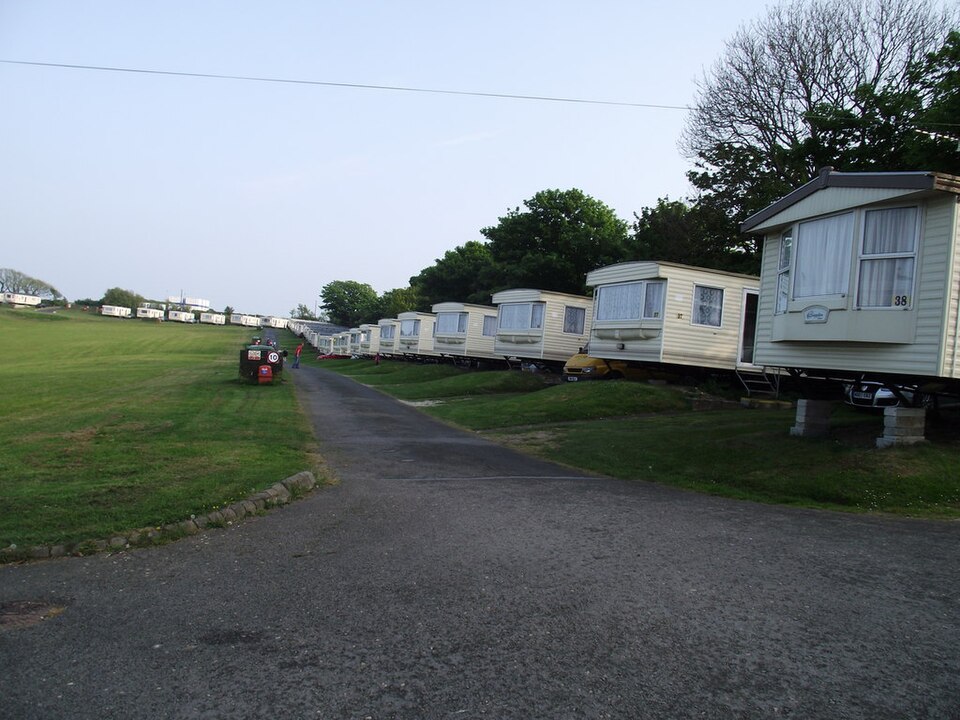
Do you remember this series (a Spanish TV comedy about a group of people living on a campsite)? Why not do it for real? All you need is a piece of land (a campsite) and caravans, and from there we can create a community of residents who can live cheaply by swapping and sharing services to save on day-to-day costs.
10. The 3D mega shopping centre.
We’ll finish with this technological mega-idea, because someday someone will make it happen. On the internet we have social networks, profiles, online shops and so on, but there is no online shopping centre where the user experience is really good. In other words, just as in a video game, we could walk along virtual aisles and go into the shops, and once inside, pop-up windows would open showing the prices of the products or types of products. Maybe we could even be greeted by an avatar run by a virtual assistant. I’m not sure I’ve explained myself.
Further reading
- 9 business ideas you can run from home, without commercial premises
- Businesses that work during a crisis
- 5 personal-service business ideas for the 1%
- 4 business ideas as simple as they are brilliant
Featured image: Caravans on the John Fowler campsite by Anthony Vosper, CC BY-SA 2.0, via Wikimedia Commons.