Editor’s note: This article was first published in July 2011; it presents remote work as an emerging experiment, and much has changed since, especially after 2020.
In this technological age, some companies already regard the office working day as a thing of the past. At a time when people talk about “data in the cloud”, the disappearance of physical media and savings on office space, the worker as we know them could be heading for extinction.
This isn’t the first time Spain’s working day has come under discussion: it is genuinely the longest and the least productive, and however much that Swedish video stung, the truth is that it reflected reality. Large companies are already running successful trials of virtual work. The pioneer is Microsoft, which tested what could be the way of working of the future with dozens of employees. Siemens has followed with its “Siemens Office”, or mobile working.
At the end of the experiment, the statistics and figures showed that both companies increased productivity by 10% and saved around €1,200 a year per worker, as well as giving these “teleworkers” the chance to balance work and family life much better.
To make this innovative way of working possible, the company only needs to give the worker the tools, with the most advanced technology, so they can do any job from a laptop: advanced software, a broadband connection and a smartphone, along with greater use of virtual meetings.
These companies, together with another 500 that took part in the “Home Office Day” project, said that there is no task or role that a person can’t do from home if they are given the right technology.
The advantages of virtual work
The advantages are very clear. As we’ve mentioned, productivity can improve considerably, the company saves on office space and can even hire freelance virtual assistants. The worker avoids traffic jams on the way to work and, depending on where they live, can even gain two hours a day in commuting time, as well as saving on petrol, meals out and so on.
Some are completely convinced that work as we know it today could disappear for certain jobs or professions, from accountants and administrative staff to sales reps. Others, however, warn that this way of working could make it easier to lose motivation, since it cuts off physical, human contact with colleagues and managers, so a middle ground would need to be found.
Further reading
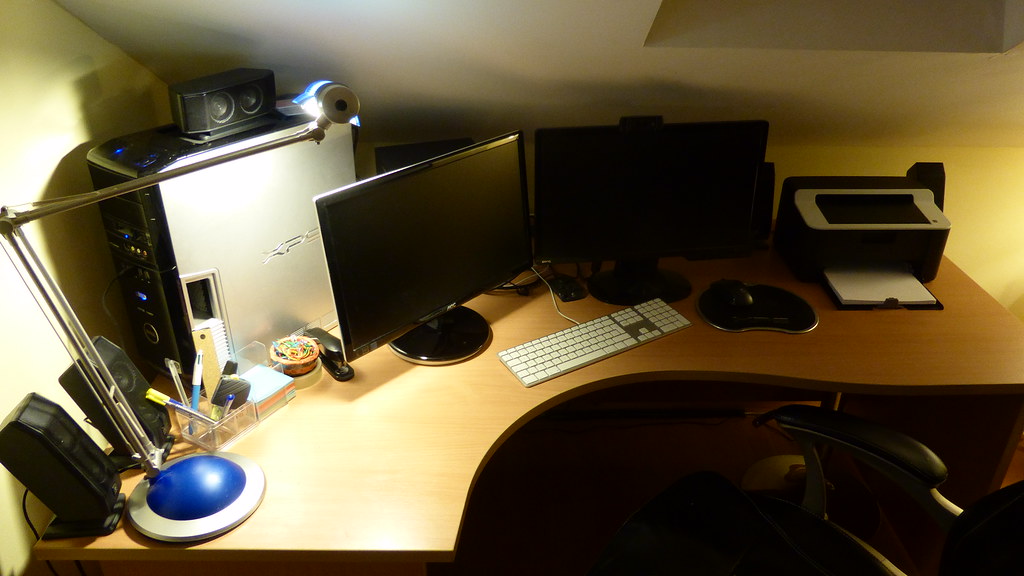
Featured image: Sean MacEntee, CC BY 2.0, via Flickr.