Editor’s note: This article was first published in September 2015; the trading, custody and foreign-market fees it quotes, and the times for sale proceeds to become available, reflect the author’s bank and the brokers of that time.
Over the years, whenever we have talked about investing and the stock market, we have focused on the more complicated aspects, such as the advice of the great investors and the many factors to consider when choosing the companies we invest in. But of course, we forgot to explain the simplest thing of all: how and where to buy shares.
I know it’s an absurd question for most of our readers, but the truth is that people ask me it quite often. So here goes.
These days we can buy shares online by opening an account with one of the many online brokers out there, but before deciding to open an account, we need to answer a few questions.
(First, see: How to invest when you’re young and/or have no experience)
Do I want to invest or to speculate?
We always say that in the stock market the long term is what pays best, and I’m sure most people will say they want to invest, not speculate. The truth, however, is that most of them will behave like speculators when things go wrong (they’ll sell), and when they have a juicy return they will probably also sell to take profits before the share price falls.
The advantage of these online brokers (and I’m not going to name any, so that the usual bored jerk doesn’t turn up saying this is covert advertising) is that they usually charge lower fees per trade.
But if what you really want is to buy shares for the long term, I don’t think it matters much whether you pay 2 euros or 6 or 7 euros per purchase.
That said, I personally recommend using your usual bank, as long as it offers stock market services, which practically all of them do nowadays.
And you can do it through your own bank’s online banking (in almost every case). In other words, within ten minutes you could be buying shares.
All you need to do is open a securities account to start buying.
Why do I recommend using your own bank?
First of all, buying shares will be somewhat more expensive in terms of fees. Even so, it’s a good idea to sit down with your branch manager to negotiate this price and the custody charge. You will always have bargaining power, because they know there are plenty of online brokers that won’t charge you a custody fee.
In my case, I pay no annual custody fee for Spanish shares, although I do pay 12 euros a year for shares on foreign markets. But for me it’s worth it.
When I sell my shares through my usual bank, the money from the sale is in my account 15 minutes later, available to invest again.
With most online brokers you have to request that the money be returned to your account, and some take three working days to transfer it. And those three days can sometimes feel like an odyssey to me.
After the case of the Plus500 broker freezing its clients’ accounts, although it isn’t the norm, the truth is that it can happen. So I trust a bank such as Santander or La Caixa more than some brokers that are here today, but tomorrow… although, I insist, it’s unlikely.
If at some point you decide to change banks, you only need to transfer your securities account to the new bank. That’s no problem either.
Disadvantages of using your own bank
Besides higher fees per trade, both when buying and selling (fees that can reach 30 euros for buying shares on foreign markets), traditional banks provide credit for intraday speculation, but not all of them allow long-term purchases on credit, nor can you trade both ways in the market. In other words, it’s hard to go short on a stock except through derivatives such as futures, options or warrants, something online brokers let you do with great ease, above all thanks to CFDs. Of course, all of this really falls under speculation.
Even so, if what you want is to buy shares for the long term, that shouldn’t be a drawback.
In short, I feel much more at ease keeping my securities account with my usual bank. But this is still a very personal opinion, as some people have been using online brokers for years and everything has gone perfectly for them so far.
It can also be a good idea to hold your long-term shares at your bank and have an account with an online broker holding a small or medium amount of money in case a speculative opportunity comes along, such as a predictable trend in an index, or a stock about to make a technical rebound that we don’t really want to hold for the long term.
But for anyone who didn’t know where or how to buy shares, stock market speculation should clearly be off limits, as they will almost certainly “blow” their money.
See also: Five books on investing and the stock market
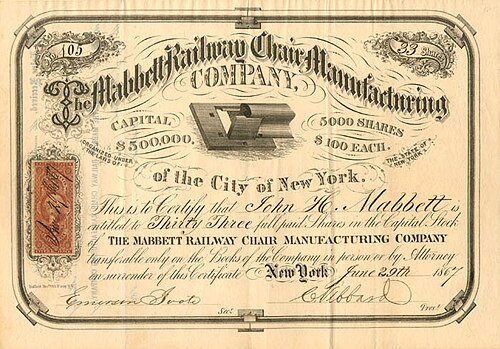
Featured image: Unknown author, Public domain, via Wikimedia Commons.