Editor’s note: This article was first published in January 2016; the details it gives about the four schools, such as student numbers, founding dates, expansion and use of iPads, reflect that time. AltSchool reportedly later closed its schools and rebranded.
The world has changed, but in the vast majority of countries the education system remains exactly the same, teaching all children in the same way, with a system that often fails to give young people what they need right now to go out and take on the job market.
The problem is even more serious in Spain, whose education system the OECD described as mediocre, revealing a huge gap between the systems of northern and southern Europe.
School failure rates and the number of young people who are neither studying nor working in Spain should have triggered major changes straight away. But nothing has changed.
We ask ourselves why young Spaniards don’t create million-dollar apps, social networks or startups worth 1 billion, when the question should be… has anyone taught them how to do that? Has anyone sparked their appetite and passion? What have we done to make them more creative?
Some schools around the world have already developed other education systems, which have won both supporters and critics.
Following a Tech Insider article that listed the 13 most innovative schools on the planet, we have picked 4 of them that could serve as a model of inspiration to adapt to our own education system.
1. Ørestad Gymnasium, Copenhagen, Denmark
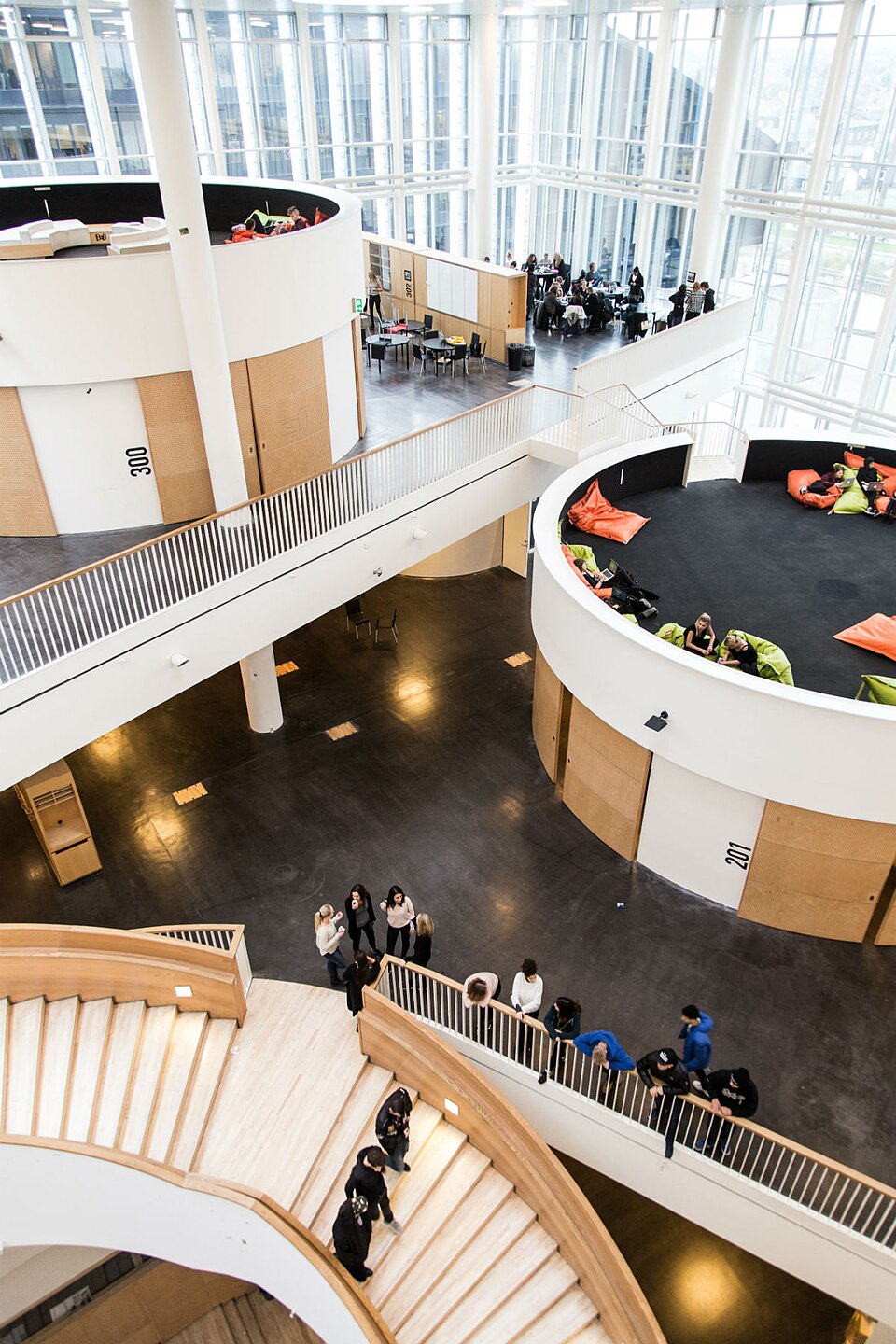
The classrooms at this school, which has more than 1,000 students, are giant glass cubes that steer clear of traditional teaching. Students are taught to collaborate in open environments to help young people think flexibly.
Students take an active role in their own education, creating improvised classrooms and using movable walls. “It’s not enough to give them knowledge; you also have to give them a way to turn knowledge into action. That’s important for modern schools,” says the school’s head.
2. AltSchool, San Francisco, California: the Silicon Valley school
At this school, children play with circuit boards and build 3D “little houses”, preparing them for the future.
AltSchool sidesteps the traditional teaching model in favour of one that improves technology skills, getting children to think flexibly so they can adapt to a new, fast-changing world.
The model of this school, founded in 2013 and taking children aged 4 to 14, has already been copied in several US cities.
3. Steve Jobs School, Amsterdam: the school that thinks different
The Steve Jobs School rejects traditional wisdom and teaching outright. Rather than corralling children under the rules of an education system that treats them all the same regardless of their talents and aptitudes, at this school they go at their own pace.
Each child has an Individual Development Plan (IDP), which is assessed and readjusted every 6 weeks by the child, the parents and the coaches (at this school they aren’t called teachers).
Based on the results of the IDP, the child is offered new personal learning challenges and instructions to choose from. Pupils are given iPads loaded with all kinds of apps to guide their individualised learning.
4. Blue School, New York
The Blue School was founded by Blue Man Group, who felt there was a gap in the way traditional schools work, as they don’t teach children to be more creative.
The school has a curriculum organised by level rather than strictly by age, in which children are taught ways to recycle better, create 3D models and repair technological devices and household appliances.
Pupils are taught that teamwork, creativity and putting new ideas into practice are fundamental skills.
See also: Education in South Korea: if you’re top of the class, you’ll be top in life
Featured image: animal alex, CC BY-SA 2.0, via Flickr.