

Editor’s note: This article was first published in January 2016; its references to YouTubers, ‘instagrammers’ and self-publishing reflect the online world of that moment.
“Carlos, knowing what you know today, if you were me, what would you do in my situation?” This is one of the most common questions I get by email from young people (and some not so young), along with a few paragraphs explaining that they’ve reached a point where they don’t know what to do. Some are stuck in temporary jobs that have already dragged on for too long, while others are clear that they don’t want to keep doing what they’re doing now.
Basically, they’re unhappy with their lives, and that’s not a bad thing at all; quite the opposite.
A while ago, I would have answered with a cliché: “Find your passion, devote yourself to it and find a way to get paid for it”, which, after all, is what we set out in our article “How to work out what to do for a living“. But over time I’ve realised how hard this is, because you’ll rarely manage to put that cliché into practice. In fact, your passion might not even exist right now.
But I like this question, because it takes me back to my past and makes me realise what life is really like.
And it’s true that randomness is going to play an important part, because I sometimes can’t help asking myself: what if I hadn’t met my partner Victoria? She was one of the people who helped me in practically every area of my life. What if I hadn’t met some great sales professionals in my first crappy job? What if I hadn’t been in that restaurant at the very moment a manager came in from a company that gave me my first chance to train its salespeople? What if I hadn’t read more than 40 books in one year, from which I managed to take some very interesting ideas (from only a couple of them)?
What if I hadn’t met every single one of the people, friends and partners who have passed through my life, getting to know joy, disappointment, loyalty and deceit? I’ve learned from every person who has passed through my life.
(See: The impact of luck)
But then I also think about it another way. If I had been smoking joints in a park with a bunch of stoners, Victoria wouldn’t have come up to me.
If I hadn’t taken the risk of accepting that crappy commission-only job, I wouldn’t have met certain sales professionals. If I hadn’t learned something about influence and persuasion techniques, that manager probably wouldn’t have put his salespeople in my hands. And of course, if I hadn’t been working, I wouldn’t have been eating in that restaurant. And, more obviously, I couldn’t have taken interesting ideas to apply from that couple of books if I hadn’t read those 40 books that year.
That’s where I come to understand that luck and randomness play an important part, but that we also create luck, and we can increase our chances of steering randomness in our favour.
Finally, as I explained a few weeks ago, rather than doing what you love, try to love what you do, and each thing will lead you to the next. When you look back, you’ll ask yourself: “How did I get here?”
But today there’s no need to ask permission.
I’ve witnessed an impressive change in the business world. In the past, if you wanted to be a journalist, you had to go to journalism school. Today, if information is your passion, you can have your own newspaper without going to university. At the end of the day, we, the consumers of information, are the ones who ultimately decide whether your newspaper is any good.
A model doesn’t need an agency. Brands now hire YouTubers and instagrammers directly (I think I’ve just made that word up). And if you want to write a book, you just have to write it and self-publish it.
You don’t need a business degree to be an entrepreneur; you just have to start your company. These days, your worth isn’t reflected in hundreds of qualifications but in results.
As I’ve said before, if I had set out to give a talk on financial education at a school or to speak at a conference, they would have sent me packing. But those are things that came to me without my looking for them.
If I were you
I would make progress. If there’s one thing I’ve learned, it’s that the key lies in progress. There’s nothing wrong with working behind a bar or at a McDonald’s, as long as you’re progressing, that is, as long as you keep training and acquiring knowledge so that you can do something else.
I would lose the fear. There are many things we don’t do out of fear. Above all, fear of failure. That’s why a phrase I once saw somewhere has stayed with me all my life: “What would you do if you weren’t afraid of failing?” You’ll be surprised by the answers you can find, because in reality fear is just a state of mind, and rarely something real when we’re talking about taking risks. Sometimes doing nothing is the biggest risk we take.
I would always keep moving forward. Honestly, I’ve never been one to write down my yearly goals. Today I know it matters, because having your plans in writing gets better results. We must constantly measure our progress.
I wouldn’t spend everything I earned. At 20 I was earning more money than most adults, but with no financial education, I spent it as fast as it came in. I’ve done the sums, and if I had saved 50% of that money and had the stock market knowledge I have today, I would have been rolling in money before I was 30. I know many will say, “Well, at least you enjoyed it”, but the truth is I could have enjoyed myself much more while spending much less. Today I know that if you need a lot of money to have fun, it’s because you’re a killjoy who doesn’t know how to have fun.
I would build assets. Whatever you do, and given how insecure jobs are these days, a priority should be to have a source of income alongside your main occupation. It doesn’t matter whether it’s selling shirts online or selling a PDF guide on a particular subject. Our second source of income can often end up becoming our main business.
See also: The 5 most important steps to success that millionaires took in their day
Having secure income keeps us from being afraid to leave a job that isn’t giving us anything. It helps us lose our fear.
Remember that the health of your personal finances is measured by a single question: how much money am I receiving from my assets without having to work for it with my own hands?
I wouldn’t lose my hunger. Often, when we find a job we like and that satisfies us financially, we settle into it and lose our hunger (our ambition). Unfortunately, I’ve seen that life isn’t linear: today you work for a company that may not be there tomorrow. So when things are good, that’s the time to make them better, because as a rule, storms follow the calm.
I would learn about sales and finance. It doesn’t matter what you’re going to do for a living. We’re all salespeople, and I’ll repeat myself on this point: we sell ourselves in a job interview, we even sell ourselves when we’re flirting, and there isn’t a single company in the world that doesn’t live off selling something. As for finance, basic knowledge is essential, not only so that we can multiply our money, but so that the money we’ve earned doesn’t disappear.
Beyond that, I can’t tell anyone exactly which path to take, because each case would need to be looked at individually. So I’ll finish with one simple piece of advice:
Set a goal, start from where you are, and use the means you have right now to get where you want to go. As the saying goes, start walking even if you can’t see the whole path yet, because the path will open up as you go.
See also: The 10 main ideas of Think and Grow Rich for achieving success
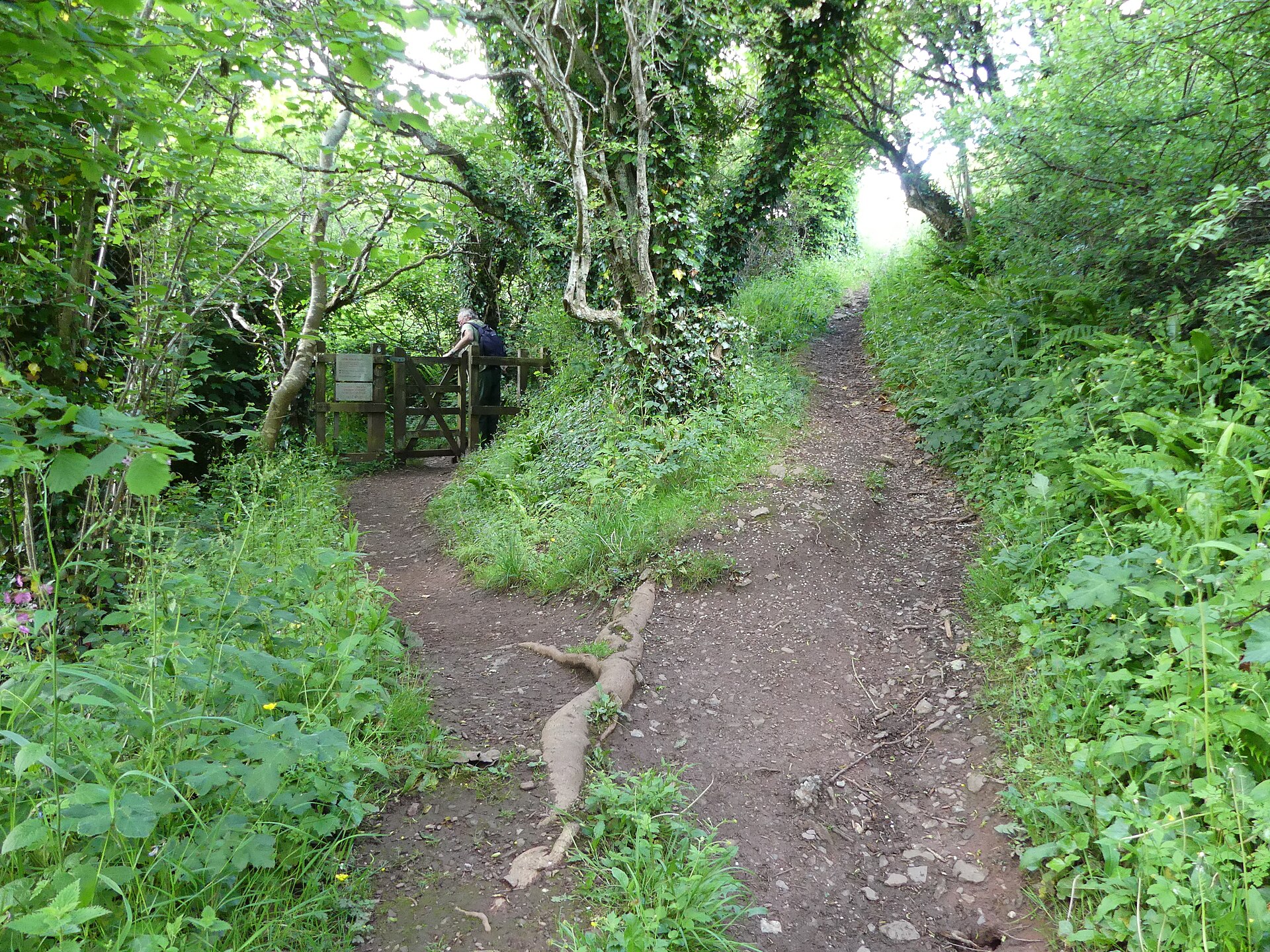
Featured image: Fork in the Coast Path – left to stay on the path, right for the road, Staddon Heights by Ruth Sharville, CC BY-SA 2.0, via Wikimedia Commons.



