

Editor’s note: This article was first published in February 2017. Its examples, such as the taxi vs Uber/Cabify dispute in Spain, 99-cent song downloads on iTunes and CDs sold with a free DVD, reflect the market at that time; iTunes has since been largely replaced by streaming.
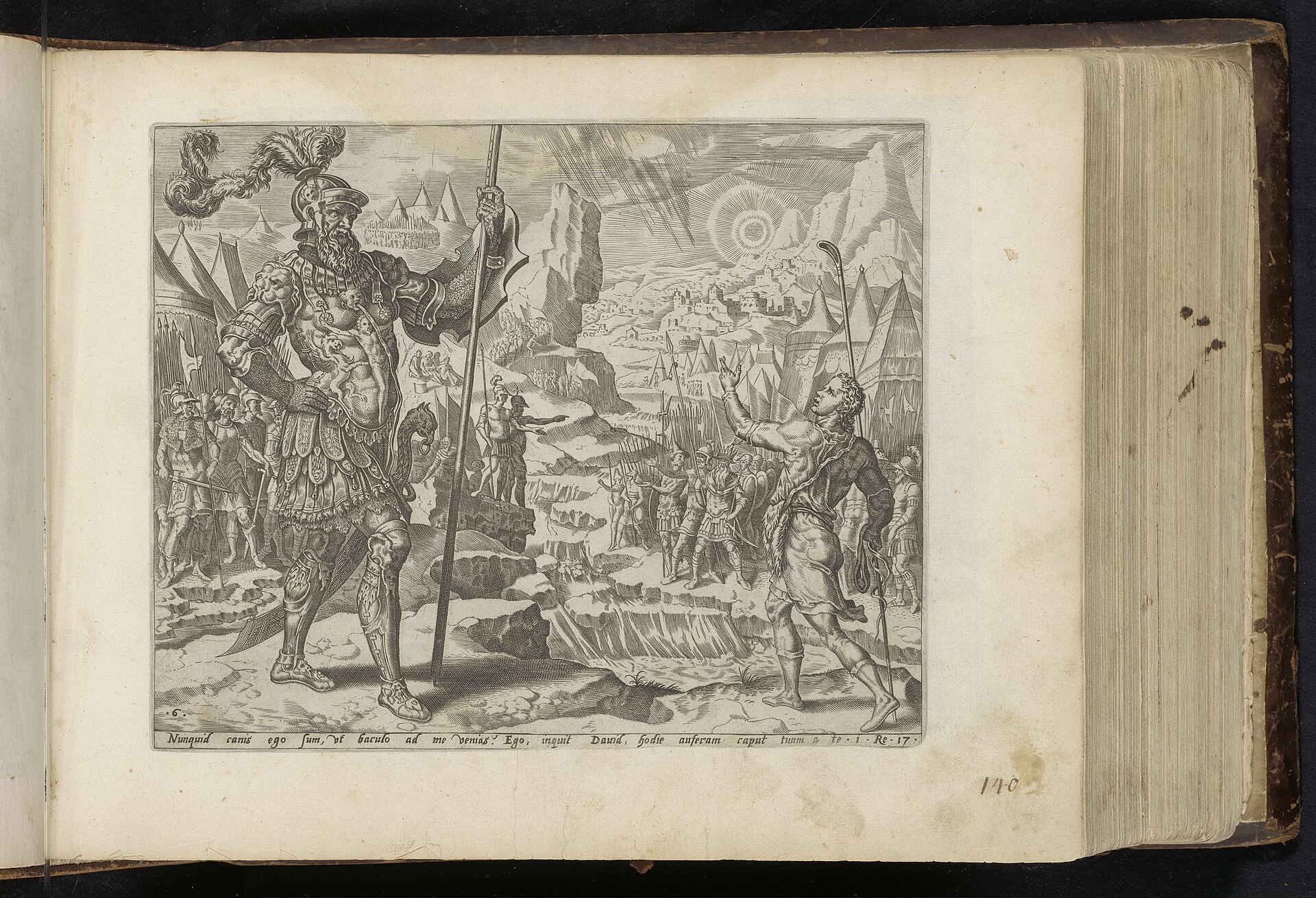
We all have weak points and great strengths. So do businesses, even large companies. History has shown us again and again how a small business has eaten up a giant simply by using its strength to attack the giant’s weakness, as David did against Goliath.
If a small company manages to spot widespread consumer discontent or a crisis in an industry, it will be able to react in time and “eat into” the giant’s ground.
There are three big mistakes that can wipe you off the business map and that, as a business owner, you must never make. They are also flaws found in some big companies, and we can attack them.
1. Not preparing for the competition
Life is a constant competition, and so is the business world. If a business is profitable, there will always be several competitors just around the corner. If an industry is not profitable, there will always be several competitors looking for a way to make money in it. One way or another, there will always be a competitor. So we must always keep a competitive spirit.
Netflix took on Blockbuster and finished off its business, even though Blockbuster refused to partner with Netflix, thinking its industry would survive. Blockbuster didn’t take Netflix seriously, and by the time it did, it was already out of business. Quite simply, it had not prepared for the competition: it had not adapted to what was a change in the business model, or a change in consumer culture.
The same thing happened to Kodak. It clung tooth and nail to a business model that was going to disappear, while the competition was not clinging to the old model; they were already working on creating a new one or adapting to the changes.
Today we are seeing how the taxi sector is making that same mistake in its constant fight against Uber, Cabify and the like. The taxi sector keeps fighting the inevitable, grabbing on to any legal branch it can to stop Uber from winning the battle. It may not be Uber or Cabify that end the traditional taxi model, but one thing is certain: sooner or later, the taxi sector will run out of branches to hold on to.
All the energy they put into fighting Uber should go into creating their own Uber, a model adapted to the new times. They already have the infrastructure and the professionals; all they lack is adapting to the world of technology.
As an entrepreneur or business owner, don’t make the mistake of failing to adapt and prepare for the competition.
2. A change in technology or culture
Many companies have seen Amazon as a big threat to their business. Other companies have increased their sales by more than 300% thanks to Amazon.
It is going to be very hard to stop Amazon, eBay, AliExpress and the like from dominating commerce, since these are companies that, at least in Amazon’s case, never stop innovating and creating new services for users.
Some companies made millions selling GPS units for vehicles. Some of them criticised phone GPS, insisting it wasn’t the same thing, but the truth is that today Google’s GPS for smartphones is more than enough for an average user (and probably for an advanced one).
Garmin understood this perfectly. Faced with the arrival of free GPS on smartphones, it stopped innovating in its GPS units. Rather, it understood that that business was going to disappear, so it focused its efforts on other new products. Thanks to that, Garmin is still alive, and its product range has grown considerably. We can’t say the same of other GPS makers who still believe users will pay large sums of money for something they already have for free.
Lesson: if your product can be replaced by another, and a company has already found the formula to push you out of the market, don’t spend your efforts fighting the inevitable; put them into selling other products.
One of the industries that had the hardest time adapting was the music industry. With the arrival of Napster, users’ culture became downloading music for free from the internet. The music industry, which for so long had “done as it pleased”, was under threat.
It even naively thought it could use the law to put an end to illegal downloads.
In this case, the visionary was Steve Jobs, who says in his biography that it was hard to make them see sense on this.
But why pay such outrageous amounts of money for a CD? The music industry said CD prices couldn’t come down, and what do you know, now they sell you the CD at half the price and throw in the DVD for free.
It was Steve Jobs who saw clearly, with the creation of iTunes, that if you give a user you are accusing of stealing for downloading free music the chance to buy at a reasonable price, without you robbing them, the user will pay that small amount of money. Over time, it can even be more profitable for musicians (not necessarily for the music industry).
That is why you can now download your favourite song for just 99 cents without having to buy the whole album. And the best news is that a musician can now make money from their music without depending on third parties.
Lesson: in business, sometimes you don’t need to fight; you just need to look for a solution that benefits both sides.
How to grow your business
Knowing how to beat our competition and how to avoid being beaten, I think how to grow our business is fairly obvious.
1. You don’t have to reinvent the wheel
The good thing about there being giants in an industry is that, in a way, they have already written your business plan for you. You already know the business will work, because it is working. You just have to spot the sector’s weaknesses and make the most of your strengths.
Develop a plan, and be clear about your company’s mission and purpose. In this respect, learn from Richard Branson, who has more than 400 companies created to satisfy unhappy customers in different sectors.
2. Adapt and optimise results frequently
Basically, look at what works and what doesn’t. What do you think you can improve? Attracting more customers, your salespeople’s selling skills, customer conversion, are the offers working? Which part of my business is most profitable, where am I losing money, what has given me the worst results, what has given me the best results?
Try to analyse and document this whole process. As Tim Ferriss said, if something can be measured, measure it and improve it. Everything that can be measured can be managed. And the truth is that in a business we can measure everything, and therefore we can manage everything.
To improve a business’s profitability, we must compulsively measure every number we can. It is not just about receiving orders and delivering them. For example, for those who decide to sell through a website, we could measure CPO (cost per order). How much does it really cost me to send an order to a customer, including every process from the moment the purchase order is placed? Advertising costs, cancelled orders, cancelled payments, the maximum amount to invest in advertising, return on advertising investment.
Knowing and properly managing these numbers will help us when working on our product’s margins.
For more on how to increase your business’s sales, see Tim Ferriss’s advice in How to make your business more profitable in less time and double its profitability.
Featured image: Rijksmuseum, CC0 1.0, via Wikimedia Commons.



