Editor’s note: This article was first published in August 2011. This is news from that month. The remark that solar has lost ground to wind power and the description of static and tracking panels reflect the market at that time; solar costs have fallen sharply since.
“Someday solar energy will be the future” is something we’ve been hearing for more than a century. Solar energy is clean, doesn’t pollute and, best of all, is unlimited. Yet even with all these advantages, it has lost ground to other types of energy, such as wind power.
Some people think scientists have run out of ideas for making photovoltaic cells pay off, since it’s often said that solar energy on its own isn’t enough. This is where Aidan Dwyer comes in, a 13-year-old from New York.
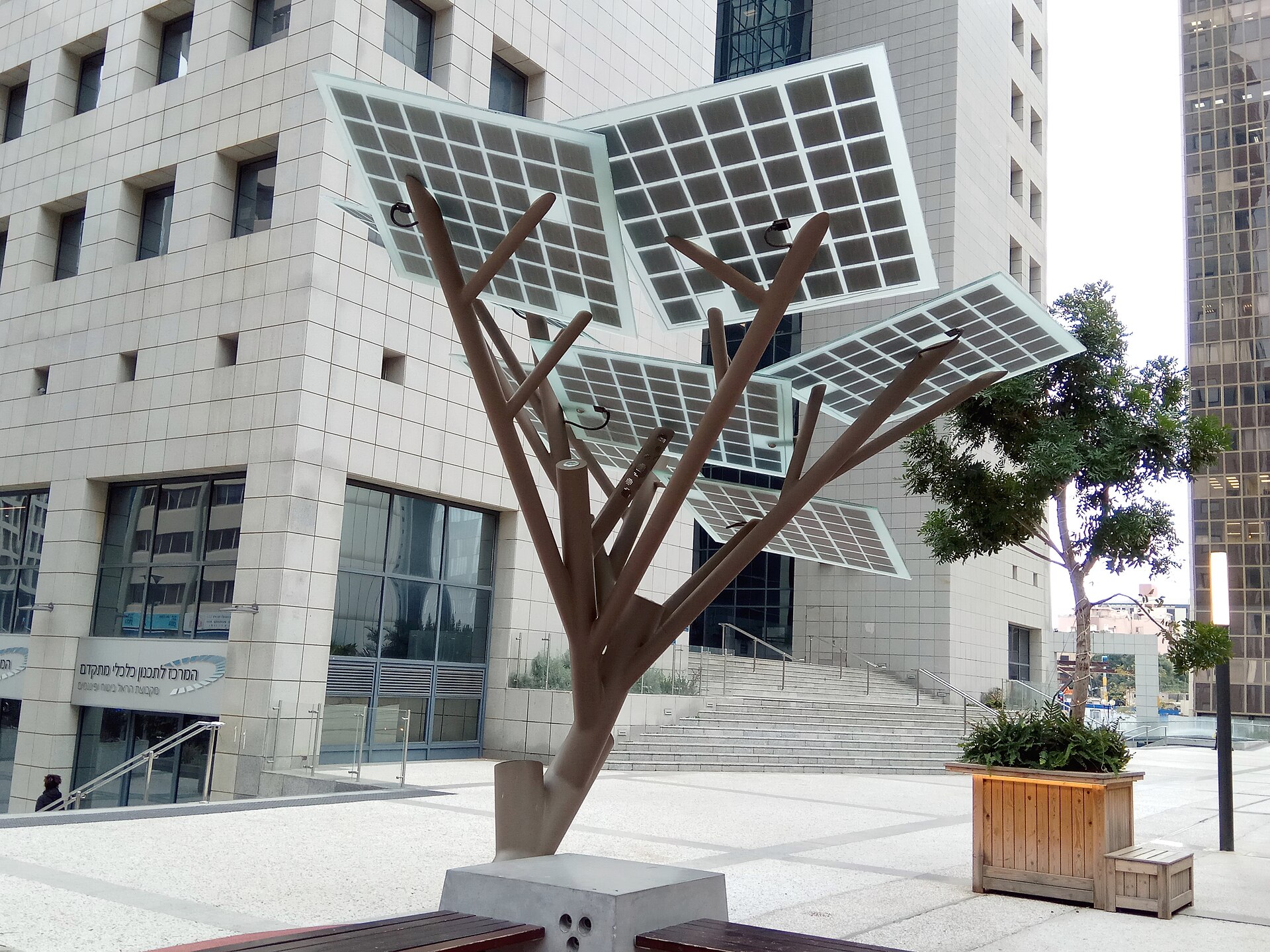
Aidan Dwyer was hiking on a school trip when he noticed that the tree branches were arranged in a “progressive spiral”, which let the leaves catch sunlight better. In a flash of inspiration, it became clear to him: trees hold the secret of solar energy.
It turns out Aidan’s theory fits perfectly with the work of an Italian mathematician, Leonardo of Pisa, who discovered a mathematical sequence in 1209. Ironically, that sequence, “useless” at the time, could be the answer to a puzzle that has stumped scientists 800 years later.
Until now, solar energy was collected with static panels, which were limited in how much energy they could capture because they lost hours of light. Then there were moving panels, which rotate to follow the sun and make the most of the daylight hours, but these are expensive and still weren’t enough. Aidan set up several panels in his own garden, each with its own meter. For a few months he studied and compared the results of the “old” panels and the panels arranged like a tree.
The result was just what he expected. His panels produced 20% more energy than the ones we know today.
A 13-year-old has managed to discover what hundreds of scientists and engineers couldn’t, bringing us closer to solving the problem of pollution and the destruction of natural resources. Aidan has received the Young Naturalist Award in the United States.
As for Aidan Dwyer, I think this young man has a bright career ahead of him.
Further reading
Featured image: Dr. avishai teicher Pikiwiki Israel, CC BY 2.5, via Wikimedia Commons.