Editor’s note: This article was first published in October 2013; its views on intraday trading reflect market conditions at that time, and the share of high-frequency and algorithmic trading in forex and futures markets has changed since. Futures, options, warrants and CFDs are leveraged products: you can lose money quickly, and with some of them more than you invested. This 2013 article is not investment advice.
I have met many people who say they make €200 a day speculating on currencies or stocks. Other traders run courses claiming that two hours a day trading futures can bring you €300 a day. They do it. Some make more, others less, but they all make money.
Five years ago I met a young man who was riding a motorbike at around 80 km/h without a helmet. He crashed head-on into the marble cladding of a building. He broke the marble with his bare head and nothing at all happened to him. He was taken to the doctor and, after various tests, there was no injury of any kind.
With age, you become more and more sceptical about certain things, so I do not rule out that there is some trader who makes money in the markets on a recurring basis. But that should not mean everyone should rush into trading, in the same way that knowing a young man who smashed into a slab of marble and was unharmed does not mean we should all throw ourselves at marble because nothing happens.
In the end, over time and at least from what I have seen personally, I have come to divide traders into two groups:
1. Those who lose money: although there are no official statistics, it is estimated that more than 90% of traders lose money on a recurring basis, and apart from the occasional winning streak, their situation does not change over the long term.
2. Those who make money: this group is split into several subgroups:
- Those who teach trading: most of the traders who genuinely make money do so by teaching beginner traders how to make money, through courses.
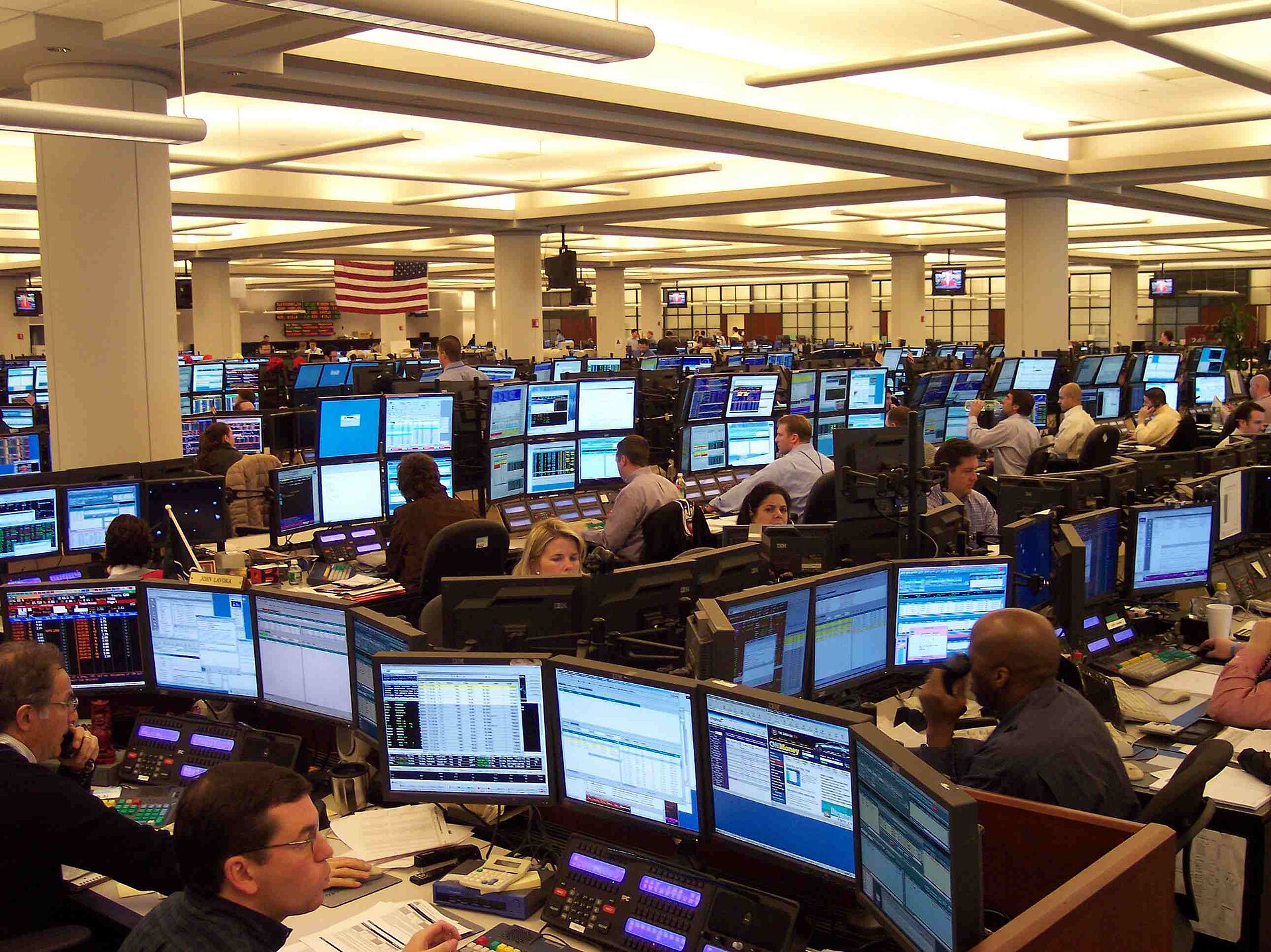
- Automatic machines: high-frequency trading is dominating the market. It is estimated that in the forex market more than 90% of the billions traded every day are traded without human intermediation. In other words, it is the machines that trade, and therefore it is the owners of those expensive machines who make money from trading.
- The intermediaries: without a doubt, the intermediaries, through their commissions on every trade, are the ones who benefit from this kind of activity.
- The “marble” trader: as everywhere, I suppose there will always be exceptions, and just like our motorcyclist, there will also be some trader who makes money on a recurring basis, although we will see why this is becoming less and less likely.
The logic of losses in intraday trading
If you use derivatives to trade, I assume you know that derivatives belong to “zero-sum games”, where if you win it is because someone else has lost.
So in a zero-sum game, we start from the premise that 50% of the players are sure to lose money. It is not the same as investing in the stock market, where if the market rises, everyone who is in it (except those betting on a fall) makes money.
Then we would have to look at what share of the other 50%, those who make money, is institutional, because I am sure that most of it (if not all of it) is.
In fact, great defenders of and enthusiasts for trading are already saying publicly that, with the arrival of the machines, they are going to retire to another kind of trading: sports betting.
Of course, very few are able to admit that high-frequency machines are grinding down their returns, as I do not know to what extent the machines have information about the other players, given that at times you see suspicious moves whose only purpose seems to be to wipe out stop losses (although this is just idle talk).
Why not trend trading instead?
While I do not know anyone who makes money on a recurring basis with intraday trading, with trend trading I do know many professionals who, much more calmly, make money on a recurring basis.
What is more, why trade intraday in the currency market when currencies tend to have broad and long-lasting trends?
In trend trading we can comfortably use the technique of cutting a loss and letting the profit run. Futures, options, warrants, CFDs… there are many products that can be used for this kind of short-term investing, making fewer trades, paying far less in commissions and limiting the stress of trading, as well as having more room for manoeuvre when placing stop losses.
Conclusion
I am not going to say that you cannot occasionally make a lot of money with intraday trading, especially by trading on a day when a sharp move is expected, either up or down, such as an ECB meeting or a particular company’s results. But as a general rule, trading is not investing; it is a game of speculation where, just as in the best casinos, you can lose and you can win, with the similarity that the more time you spend in the casino, the more money you will lose.
It is said that you have to build a methodology, that you will have to lose money before you make it and that it can take you ten years to perfect your technique, but above all you have to be consistent.
I always advise against intraday trading, because you enter a market at a total and absolute disadvantage. Now, if you say trend trading, then yes, you can make money. In fact, you can make a lot of money that way.
Of course, this is my personal opinion, and I understand that many people may disagree.
Featured image: Own Oil Industry News, Public domain, via Wikimedia Commons.