Editor’s note: This article was first published in December 2014; the oil prices, EUR/USD rate, rouble’s fall, Bank of Russia rate hike and Gulf market declines are a mid-December 2014 snapshot. The ECB launched QE in January 2015 and the Fed first raised rates in December 2015.
By Julián Álvarez, Investment and Analysis Department, Aspain11.com
The lack of agreement at OPEC last November, when Saudi Arabia refused to cut production, continues to push down the stock markets of producer countries. Up to the day of the meeting, oil had fallen almost 30% over the year, with Brent below $80 a barrel and West Texas below $75. Almost three weeks later, crude is 30% cheaper, and many countries are watching their economies tremble while others rub their hands.
Several factors may explain the fall of “black gold”. On the demand side, China’s slowdown and Europe’s weak recovery; on the supply side, the exploitation of new fields by the United States using the well-known “fracking” technique, and Saudi Arabia’s determination not to lose market share, forcing OPEC members to keep production at 30 million barrels a day.
Another factor, and perhaps the most important right now, is the dollar’s appreciation: EUR/USD has gone from 1.39 in May to 1.24 today (+10%). The most extreme case is the USD/RUB cross (Russian rouble), with the US currency up 76% since 1 January and 50% in the last three months. Over the past 10-12 weeks, the Brazilian real and the Mexican peso have also lost more than 10% of their purchasing power.
Oil is a commodity priced in dollars, and the US is one of its main importers and consumers. A stronger dollar means a loss of purchasing power for oil-importing countries whose currency is not the dollar. In other words, oil becomes more expensive for these countries because their currencies have depreciated, so they have to pay more units of their currency to get a barrel of crude, even if nominal prices are the same.
It is very likely that Saudi Arabia will not slow its pace of production, in order to keep market share against the US (driving prices down); or we could also think that the dollar’s appreciation will hurt demand for crude at a time when the eurozone, China and Japan are applying expansionary monetary policies, deliberately losing purchasing power against other countries so that they can export more cheaply. High crude prices would squeeze company margins and reduce profits and consumption, so the policies used to revive the economy would lose effectiveness.
Whatever the reason, though everything points to the first option, we are witnessing a delicate moment for markets in general. It is true that after crude rose during Monday’s Asian session, the Dubai stock market recovered 3.7%; even so, that market has fallen more than 25% since the producers’ meeting in Vienna on 27 November.
The Abu Dhabi and Saudi stock markets are further examples of the market collapse in the region over the past three weeks, with falls of 11.5% and 16% respectively.
The Central Bank of Russia raised interest rates again overnight, this time from 10.5% to 17%. Last week it had already raised the rate from 9.5% to 10.5% to curb inflation and prevent the rouble from collapsing in the face of such low oil prices. The economic sanctions imposed on the country by the major powers, together with the collapse in the oil price and restrictive monetary policies like the one just mentioned, will undoubtedly take their toll on the Russian economy, where the monetary authority expects growth close to zero over the next two years.
We should remember that Russia gets about 50% of its revenue from selling oil and gas. Venezuela is another of the hardest-hit countries, as the fragility of its economy and its dependence on exports may force its president, Nicolás Maduro, to take unpopular measures to avoid defaulting on part of its debt, which will cause more social instability in the region.
The US oil sector is also a clear loser, since the new “fracking” extraction technique involves higher costs, so prices below $100 a barrel may make this activity unprofitable. Mexico, Brazil and Argentina will probably see an impact on their balance of payments, although the last two are not net exporters, so the consequences will be smaller. Mexico will be hit harder, since a large part of its tax revenue comes from this activity.
Given this situation, everything suggests that in the coming months we will see adjustments by the various monetary and economic authorities to try to soften the negative effects on public finances.
In the eurozone, the fall in the oil price pushes inflation down, although it improves the margins of non-energy companies and is good for consumption. It can therefore be read two ways: a low euro and falling oil are a clear stimulus for the region’s economy, and at the same time they put pressure on the ECB to act by expanding its monetary stimulus programme.
The clear winners, as we said earlier, are non-energy companies and countries such as Spain, Italy, India and Japan (the latter has become more dependent on energy imports since the Fukushima accident). Historically, the sectors that have benefited most have been transport and airlines, utilities, consumer goods and telecoms.
Obviously, energy companies are the hardest hit, but so are those linked to commodities, materials, banking and technology. Normally, the stock markets of developed countries perform better than those of emerging countries in a scenario of a rising dollar and falling oil prices.
In this context, we raise the following question: the main goal of any central bank is to keep inflation at appropriate levels, but with price growth so low (across the board) and crude falling…
Will it push back expectations of US interest rate rises in 2015? Will it pressure the ECB and the BoJ to bring forward or expand their asset purchases? How will India and China react? And Latin America?
These are some of the many questions on our minds every day, and as always, we are in the hands of the central banks and of our own ability to position our portfolios as well as possible, protecting our clients and trying to seize the opportunities that arise, since speculating on when a central bank will take one decision or another usually doesn’t turn out well.
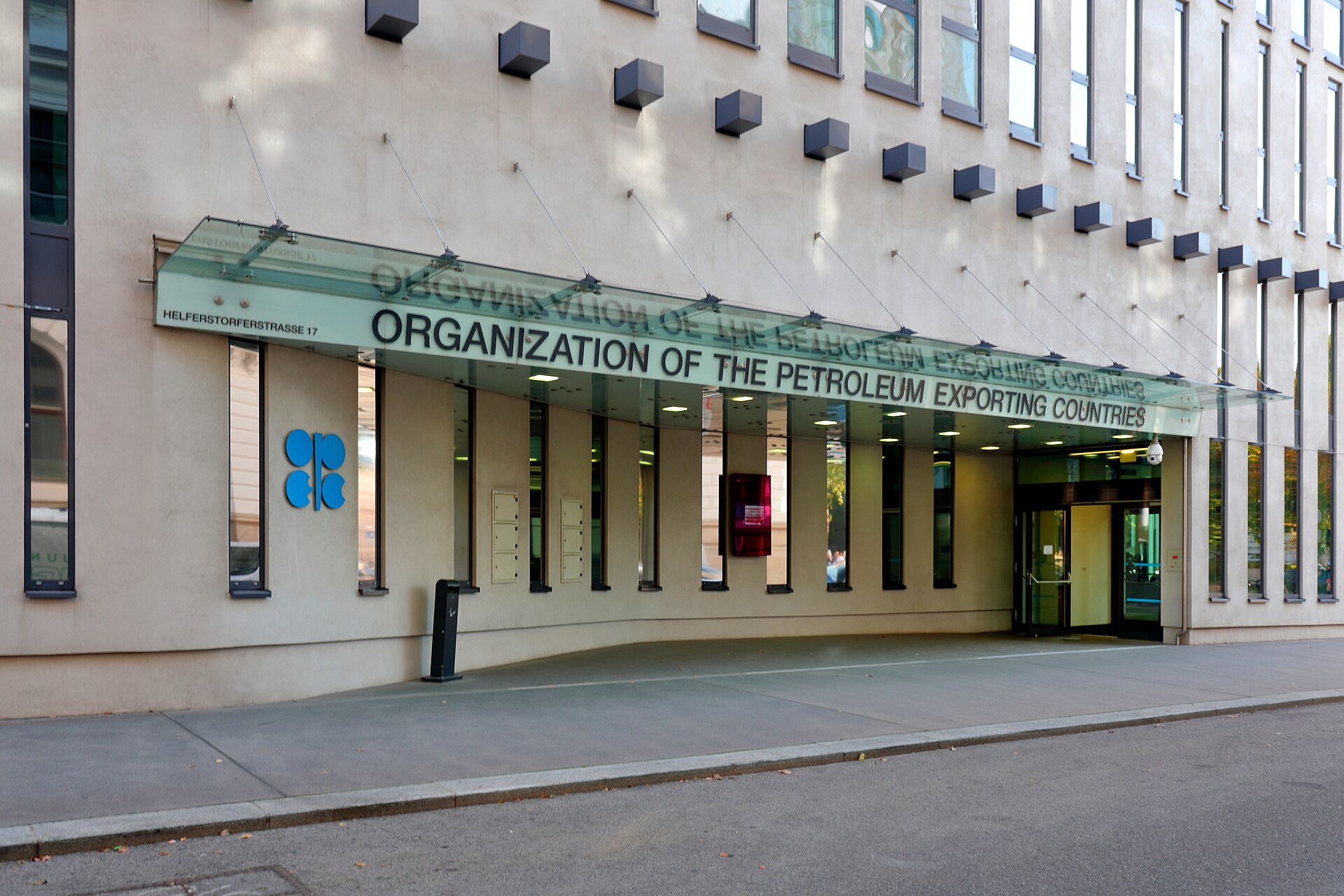
Featured image: C.Stadler/Bwag, CC BY-SA 4.0, via Wikimedia Commons.