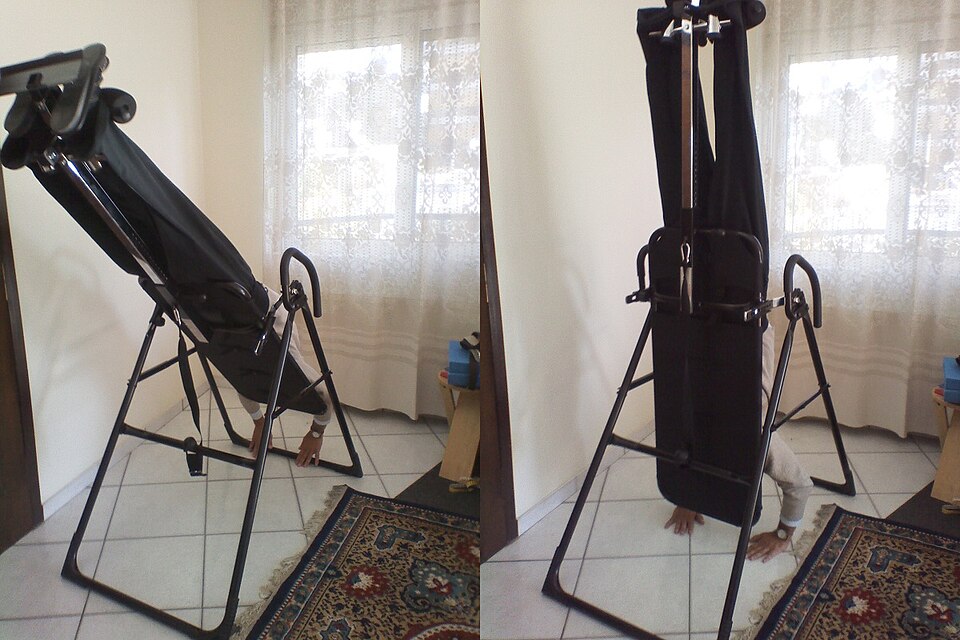
Editor’s note: This article was first published in June 2010, describing the inversion table as a new idea arrived from the United States, with its TV advertising described as ubiquitous. Inversion tables had likely been sold in the US for decades by then.
The inversion table is a new business idea that has arrived from the United States. We’ll use this device as an example of how truly profitable businesses are built, without, of course, dismissing the benefits it may offer, since I haven’t tried it myself.
The inversion table rotates a full 360 degrees and works by reversing gravity, which makes it easier for fluid to enter the intervertebral discs. Reportedly, it’s recommended for:
- Relieving spinal problems
- Relieving problems linked to tension and muscle knots in the back
- Improving blood circulation
- Preventing hair loss
- Preventing varicose veins
- Preventing hemorrhoids
- Strengthening the abdominal muscles
- And best of all, they claim that using it for 10–15 minutes a day will extend our life expectancy.
Now, let’s think about this coolly. We have a product that any carpenter or metalworker could have made, because the mechanism is so simple. But if a self-employed carpenter had created this product, could it have been as successful as it has been for the creators of the inversion table?
Probably not, and there’s a simple explanation. For this company, the product is the least important thing, because they know what I know: the system is simple and anyone could have created it.
So what has their success been built on, if not the product?
- 1. Business system: It doesn’t matter whether the product meets every need they sell it for. What’s clear is that it isn’t harmful. They’re backed by medical teams who have confirmed the health benefits of using it. Those doctors have probably already invested in the shares this company puts on the market, aware of the heavy marketing campaigns the company is going to run worldwide. They drew up a business plan, and had no trouble getting a bank or private institution to finance it.
- 2. Marketing: If you watch TV at certain times of day, it’s very hard not to come across ads for the inversion table. It’s in health magazines, online and on TV channels around the world.
- 3. Distribution system: They’ve set up two distribution systems at the same time, direct sales and sales through distributors, so you can get an inversion table anywhere in the world.
- 4. The product: It offers every benefit a person could ask for. It doesn’t matter whether you have health problems or not. If you do, they sell it as a cure; if you don’t, they sell it as prevention.
See also: The entrepreneur who sold his business idea for 200 million has advice for startup founders
There you have an example of how you can take any business idea to success if you build the four points above into your business. I hope this article helps you see what business success is all about.
Further reading
Featured image: Giorgostr, CC0 1.0, via Wikimedia Commons.