My first job (at 18) was in direct sales. We sold door to door, cold. You’ve probably had a salesperson turn up at your home unannounced at some point. Maybe you bought, maybe you didn’t. If you didn’t, and the sale never happened, it may have been because that salesperson wasn’t on our sales team. It may sound arrogant, but I remember we went out with exactly that attitude. We were very clear that whether someone bought didn’t depend on the customer’s attitude or willingness, but on our work during the visit.
The customer didn’t decide; we guided them naturally towards a decision. That job was like my first university (the University of Sales). In fact, years later, my experience in the sector helped me train large sales forces and top salespeople in all kinds of industries, because, despite what people say, everything is sold the same way. It doesn’t matter whether it’s an investment fund, car insurance or chemicals for businesses. Every sale, absolutely every sale, follows the same steps:
- A product.
- A customer.
- Detecting a need in the customer, or creating one.
- Meeting that need with our product.
- Closing the sale.
Given that every salesperson knows these points, the question is why some reps close 70% of their visits while others close 15%. The fault doesn’t always lie with the salesperson; sometimes it comes from the company itself, which doesn’t spend the time needed to prepare its sales staff.
1. Sell the product to your salespeople
It may sound silly, but very few companies spend enough time making their own reps believe in the product. I’ve seen both cases. One young man sold insurance for a company, yet he himself said he thought taking out life insurance was a waste of money. The other was a young man whose cousin had died and left his family in debt with the funeral costs, so he cared a great deal about a family man having life insurance.
The difference between them was that the first was a mediocre salesman on a mediocre salary. The second was the number one insurance seller in the country. It wasn’t long before he was promoted and building large sales teams. For the first, selling was very hard going. For the second, sales came on their own because, though some people don’t believe it, we pass on to the customer what we feel about our product.
Spend the time needed to sell the product to your salespeople, because that will make it easier for them to sell it. If salespeople believe in what they sell, it has been shown that they will hear 30% fewer excuses from customers and increase their chances of making a sale by 46%. But the most important figure is that they will defend the product 150%.
2. The importance of the working environment
Many companies wouldn’t pass a workplace climate survey: there are disputes, quarrels, tension and plenty of colleagues eager to tread on one another. I remember that while I was at that company we managed to be like one big family. In fact, despite the distance, I’m still in touch with most of them. Not only did we have an excellent atmosphere at work, we even met up on our days off.
One colleague’s problem was everyone’s problem, whatever kind of problem it was. When someone new joined, it didn’t matter how good a salesperson they were: if they had no value as a person, they were simply invited to leave. Contact with our managers was frequent and friendly, and they would even consult us before making certain decisions. I never saw that kind of atmosphere at any other company.
3. New workers adapt to the existing pace
This part is more than proven. Our company had different groups. In one, the best salesperson made 14 orders a month. In another, 14 orders was what someone made in a slow month; the norm was for everyone to make more than 15, and the best salesperson close to 30.
If a worker joins a group where the average is 6 orders, the newcomer will feel satisfied making those 6 orders. In fact, they’ll find it hard and work to reach that goal. If we take that same salesperson and move them to an elite group, where the norm is 14 orders, inexplicably, in less than two months, they’ll be above 14. Of course, it also works the other way round: if you take a good salesperson who makes 20 orders a month and move them to a group that makes 6, over time they’ll be the best in the group, but they’ll make only 12 orders and feel very pleased with themselves, because they’ve doubled what their colleagues do.
4. Working to targets doesn’t create disputes
I’ve always been in favour of the same starting salary for everyone. If someone wants to earn more, they’ll have to either work more than the rest or work better. In short: be better. This approach avoids disputes between colleagues and creates a constant drive to improve across the workforce.
At some companies I’ve very often heard this question: “Why does José earn 300 euros more than me when we do the same job? It’s not fair.” If one person really does earn €300, or €3, less than someone else doing the same job, the truth is that no explanation will convince them.
At my company I never heard anyone ask: “Why does José earn €3,000 and I only earn €1,000?” Nobody asked because they already knew the answer: “Because José sold three times as much as you. If you want to earn what he earns, do what he does.“
The truth is that at some Spanish companies you’d even have to ask why some bosses earn more than their “subordinates”.
5. A zero-excuses policy
When a rep goes out to sell, they sometimes come back with “excuses” they believe are true, such as: “The customer wasn’t interested, they didn’t have the money right now, they need to check with…” The sooner they learn the truth, the sooner they’ll become a good salesperson.
The truth is that if a sale doesn’t close, there are no excuses. The salesperson made a mistake at some step of the sales strategy. I think that, long before it appeared in the movies, we were already using the classic line: “A visit always ends in a sale. Either you sell the customer the product, or the customer sells you a reason not to buy. Who’s the sales expert here?”
People are sometimes a bit wary of this theory, but experience tells us it rarely fails, because someone who has no problems at home or with their family, no money problems, a satisfying sex life and so on, is much more likely to succeed in sales than someone who turns up in the morning in tears because his wife is leaving him, he can’t pay the mortgage, and his 17-year-old daughter has started going out with a man 15 years older than her.
That person’s sales would be a foregone conclusion before they even went out to sell.
I could honestly write a book with anecdotes from this very particular world, but some of you would find it boring. Sales, or sales management, along with finance, is my other passion. I’ve always compared sales strategy to a game of chess: you move your pieces, the competition moves theirs, and in the end one of you wins. And of course… who doesn’t like to win?
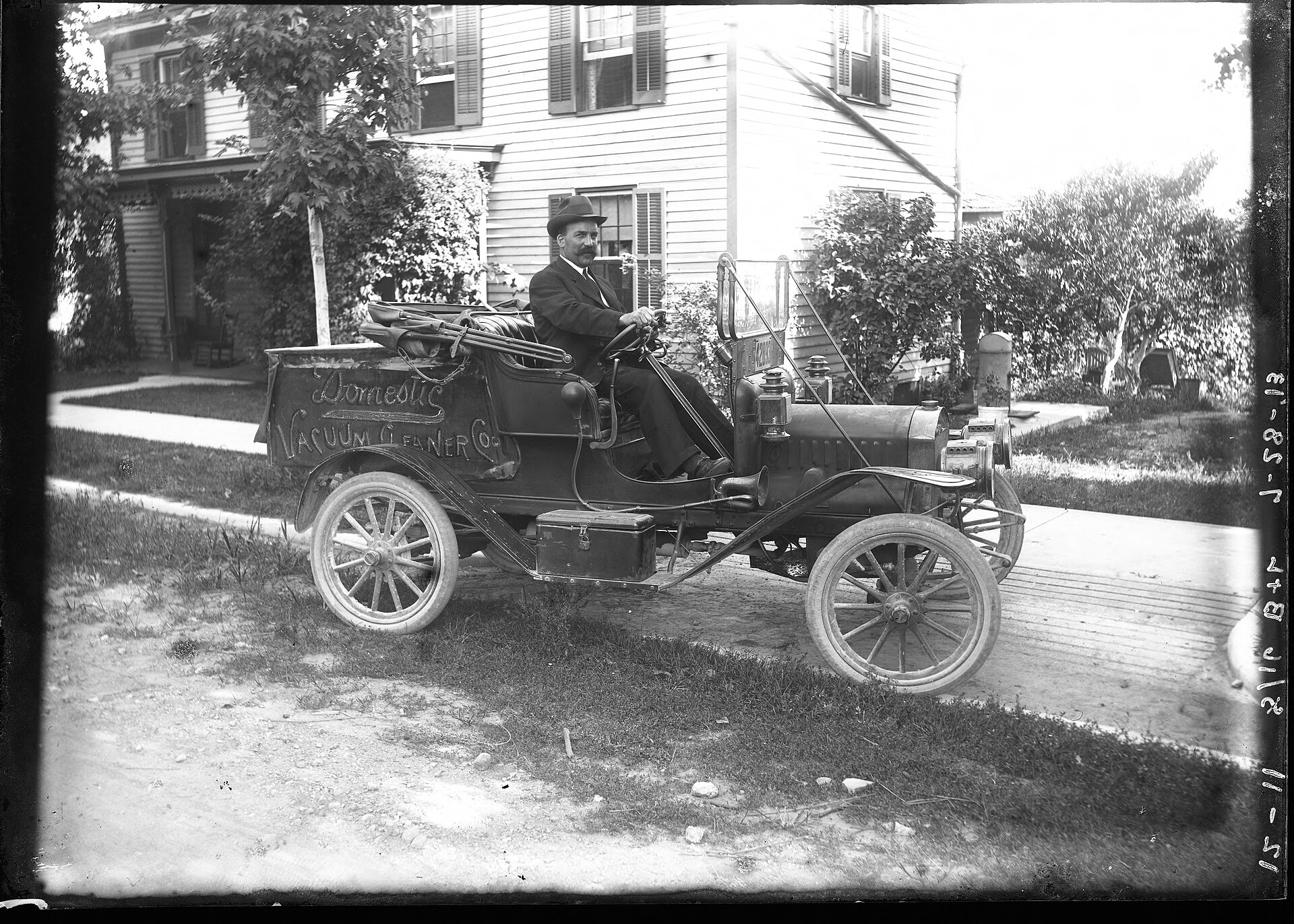
Featured image: Warner, Marion G., 1861-1922, Public domain, via Wikimedia Commons.