Editor’s note: This article was first published in May 2012, during the Spanish crisis. The references to falling house prices and shrinking purchasing power describe that period.
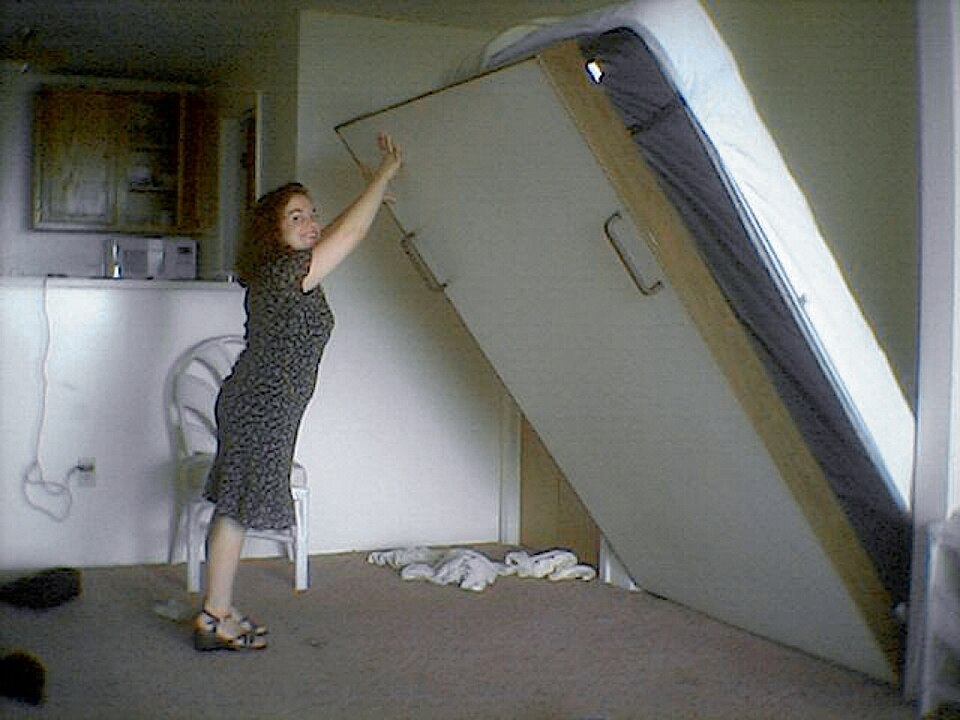
In previous articles we looked at a series of original products, highlighting the mobile bedroom, a product whose demand has grown because of the crisis. Although house prices are falling, that is of little help when purchasing power is falling too, which opens up a business opportunity for companies that specialize in “space adaptation”.
In other words, turning “shoeboxes” into homes with useful, well-used space. Can you live in 15–20 m²? Can a garage be turned into a home? Below are a few ideas.
1. Turning a 25 m² studio into a home with every comfort.
In this studio, some things are not what they seem, and the tight space hasn’t meant skimping on comfort. The stairs leading up to the bedroom double as drawers for storing clothes; there is a well-equipped kitchen and a full bathroom, and discreet doors at the entrance to the hallway hide a wardrobe and a pantry.
Another business opportunity lies in making “multipurpose furniture”: folding tables that turn into ironing boards, staircases whose steps are drawers, and even kitchen units with a “dining table” that pulls out from inside. That way, a simple studio could become an apartment with every last detail taken care of.
2. Turning a garage into a home.
Creativity can transform just about any space into a home. In the example featured in the original article, it was an ordinary woman who adapted the space herself, which gives us an idea of what a company specializing in this business could achieve.

Here we’ve looked at what can be done with a focus on homes, but what if we adapted these ideas to make them useful inside companies? Although coworking already makes the most of available space, I think there is still room for innovation in the business sector. Any ideas from an entrepreneur out there?
Featured image: David Boyle, CC BY 2.0, via Wikimedia Commons.