

As in many areas of life, the world of work is a place where the desire to grow professionally mixes with some people tripping others up, others sucking up to the boss, the talent of a few and the sheer nerve of others. There, envy and jealousy grow and turn the daily grind into torture and punishment.
These and similar situations have been studied in three countries, Spain, the Netherlands and Argentina, and the results are intriguing: sexual competition affects women more than men, although a colleague’s social skills trigger jealousy and envy equally in both sexes.
It’s no wonder. How often do we envy the colleague whose friends keep calling, whom co-workers stop to chat with, while nobody pays the rest of us any attention? I, for one, experience it almost every day at work.
The analysis
The researchers looked at intrasexual rivalry among 200 people in their workplaces (that is, competition with others of the same sex, driven by the urge to gain and keep access to the opposite sex). The results showed that women are more jealous if the rival is more attractive, and more envious if the rival is more powerful and dominant.
In men, by contrast, these results did not appear: none of the rival’s characteristics triggered the kind of jealousy and envy that would point to intrasexual competition.
The study distinguished between two emotions, jealousy and envy, described as follows:
- Jealousy appears as a threat to, or loss of, what one has gained in a relationship because a rival interferes. It involves losing, or the threat of losing, something one has.
- Envy is the response to other people who have desirable achievements, skills or qualities. It involves lacking them, and arises from comparison between people or colleagues.
The result
Women are more affected by the sexual competition that gives rise to these two feelings. However, in both men and women, a rival’s social skills trigger emotions that show how important social skills are in the workplace.
These feelings, jealousy and envy, can cause stress in workers and harm their quality of working life.
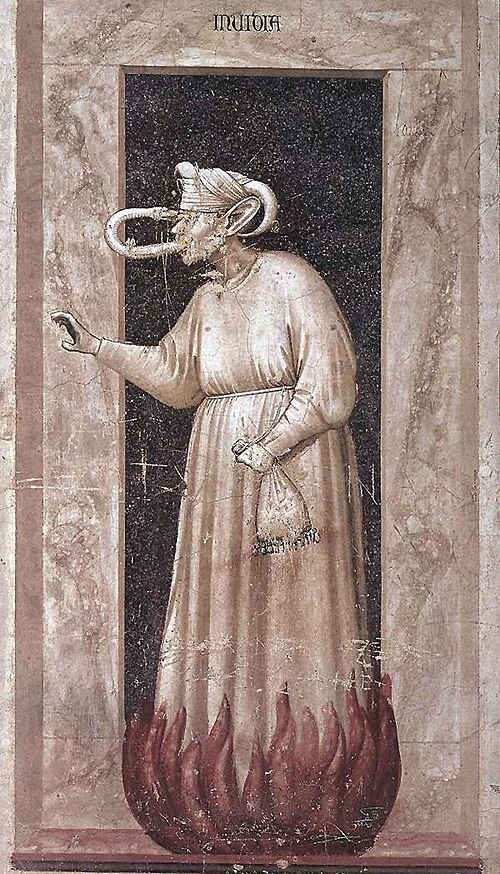
Featured image: Giotto, Public domain, via Wikimedia Commons.



