

Editor’s note: This article was first published in May 2012, with 2009-2010 data: national absenteeism of 3.8% (2009) and 3.7% (2010), the regional table, industry at 4.9%, and the 61% and 24% survey figures. All refer to the crisis years and are long out of date.
The doctor, the kids, family members and other excuses were the daily rule for partial or temporary absences from work at many Spanish companies during the boom years. Spanish picaresca (the national knack for getting away with things) has crossed borders, and for years we have been at the top of the European absenteeism rankings.
Let’s think about how many of us have made up an excuse to take time off work without much real justification, while colleagues in the department covered our tasks during our absence, back in the days when there were plenty of people working in the same area.
The figures don’t lie. Absenteeism in Spain went from 3.8% in 2009 to 3.7% the following year. Broken down by autonomous community (Spain’s regions), the Balearic Islands have the lowest absenteeism rate (3.3%), while at the other end of the scale the Basque Country exceeds 5%.
The situation improved over the past year, as absenteeism rates fell across several categories. Those whose incidence in the labour market decreased were:
- Temporary incapacity (sick leave)
- Unjustified absence
- Labour disputes
- Public holidays
Making it easier to dismiss employees for absences, requiring proof for every absence, cuts in social security, and the crisis in today’s labour market are the factors that have driven the reduction in absenteeism.
The absenteeism figures
The fear of losing your job is one of the reasons behind this welcome drop in absenteeism at companies. Broken down by autonomous community, the results are:
| Autonomous community | Absenteeism (%) | |
|---|---|---|
| Lowest | Balearic Islands | 3.3 |
| Extremadura | 3.4 | |
| Andalusia | 3.6 | |
| Madrid | 3.7 | |
| Valencian Community | 3.7 | |
| Highest | Galicia | 4.5 |
| Navarre | 4.5 | |
| Cantabria | 4.7 | |
| Basque Country | 5.3 |
The same figures broken down by sector show that industry has the highest absenteeism, at 4.9%, followed by services and construction.
What employees care about now
This drop in absenteeism is driven by different motivations. Employees are now more concerned about pay, promotion at work and work–life balance.
High unemployment and few, if any, job prospects force employees to turn up more and miss work less. In fact, 61% of employees stay longer at work, and 24% admit that their area of the business is short-staffed.
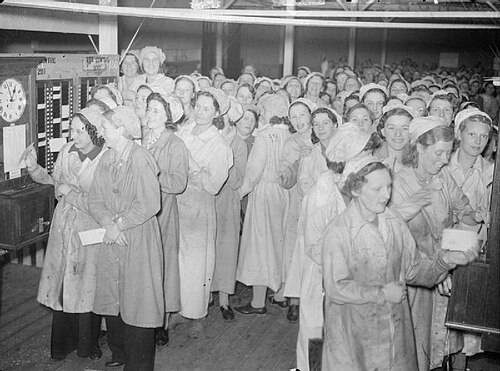
Featured image: Ministry of Information Photo Division Photographer, Public domain, via Wikimedia Commons.



