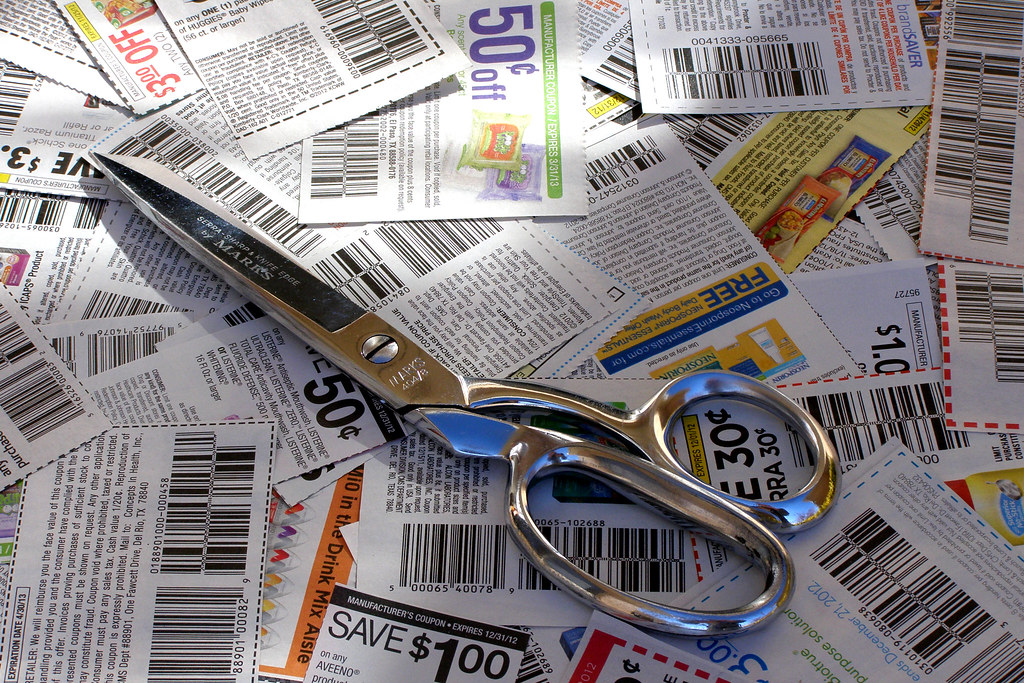
Editor’s note: This article was first published in October 2012, at the height of the daily-deal boom. Groupon’s market position and its terms for merchants have changed considerably since then.
We’re talking about Groupon because it’s the giant of discount coupons, although dozens of companies now offer users a similar service. If we asked a range of small and medium-sized business owners, we’d find that some of them are delighted with what discount coupons have done for them, while others would never repeat the experience because they felt let down at not getting what they expected.
Perhaps, before using these coupons, we should be very clear about the benefit we want to get. And as business owners we should be even clearer that what we’re doing is an investment, one we can approach with a short-term or a long-term focus. It has advantages and disadvantages, so let’s look at them below.
The biggest advantage of using these coupons is visibility for the business.
Using discount coupons gives us the chance for lots of people in our city who didn’t know us before to discover us and try our product or service. I’d especially recommend coupons for a new business, because that way, from day one, it will get its first customers through the door with juicy discounts, move stock and start building its first customer base.
I’d also recommend them for slow sales seasons or for clearing inventory, outlet-style.
Rather than thinking about short-term financial gain, the business should be thinking about building customer loyalty over time.
The offer must be exactly what the customer expects to find, with no tricks or small print. There are cases where the wording of the discount suggested something that turned out not to be what the user thought they’d understood. That kind of confusion, which is sometimes deliberate in the hope of making a bit extra, doesn’t build trust and means we’ve wasted our time using coupons: the customer may not have been clear about what they read, but they were very clear about how much money they wanted, or could afford, to spend.
The disadvantage is little or no profit for the business in the short term.
To make an eye-catching offer, most coupons give discounts of 40%, 50% and even 90%, and on top of that Groupon keeps 50% of the coupon revenue. In other words, a restaurant that normally charges €20 for its set menu would have to offer it for €8 to make it eye-catching, and €4 of that goes to Groupon.
False expectations with discount coupons.
Before launching a discount coupon campaign, every entrepreneur should know that most regular users of these coupons are not, and never will be, customers of their business. Some people live on discount coupons and have got used to paying for their leisure at 70% off. In fact, in our personal finance articles we recommend coupons as a way to save large amounts of money each year.
When it comes to business, though, you need to analyze in great detail whether it’s worthwhile, under what conditions and with what expectations.
Let’s take a few examples… Suppose you’re someone who doesn’t usually get massages or go to spas, because you see it as an unnecessary expense, although, like everyone, you’d love to. You see an offer for a spa day with a massage included for €12. You’ve been dying to go, so this is your moment. They look after you wonderfully and you come out completely relaxed. Most people wouldn’t go back if they had to pay €50 next time, so they’ll wait for another spa to put out discount coupons before going again.
I met the owner of a restaurant who launched discount coupons for dinner. He says he sold more than 500 coupons, so the restaurant was packed. He swears that of the 500 people who came with a coupon, not one ordered anything beyond what the coupon included. Once the offer was over, he doesn’t remember seeing a single one of the customers who had used the coupon.
An example of positive use.
Not long ago I saw a discount coupon from a garage offering an oil change and check-up for €25, and as it happened my car was due for its ITV (Spain’s compulsory roadworthiness inspection), so… it was perfect timing. The man at the garage told me what needed fixing on the car and gave me a quote in case I wanted them to do it. The service was good and the price was fair. You also had to admit the man at the garage was quite a good salesman, so I went in with a €25 coupon and ended up getting out my card to pay close to €500. And I was grateful, too, because he gave me a discount voucher to spend at the garage next time.
That’s how you make money in the short term and win a loyal customer in the long term: a customer who didn’t even know that particular garage existed. I asked the owner whether he was happy with Groupon’s discount coupons. He told me he was delighted and, in fact, he renewed his offers practically every month, because new customers came in every time he did.
Clearly, in other kinds of businesses or products that particular strategy might not work, but basically that’s what you should be aiming for. Failing that, you should go in assuming that you’re investing in discount coupons as an advertising strategy to give the business visibility.
So our opinion of discount coupons can be neither positive nor negative: it depends on the type of business, product or service, and so using them can be very good or very bad for the business’s bottom line.
Further reading
Featured image: Chris Potter, CC BY 2.0, via Flickr.