

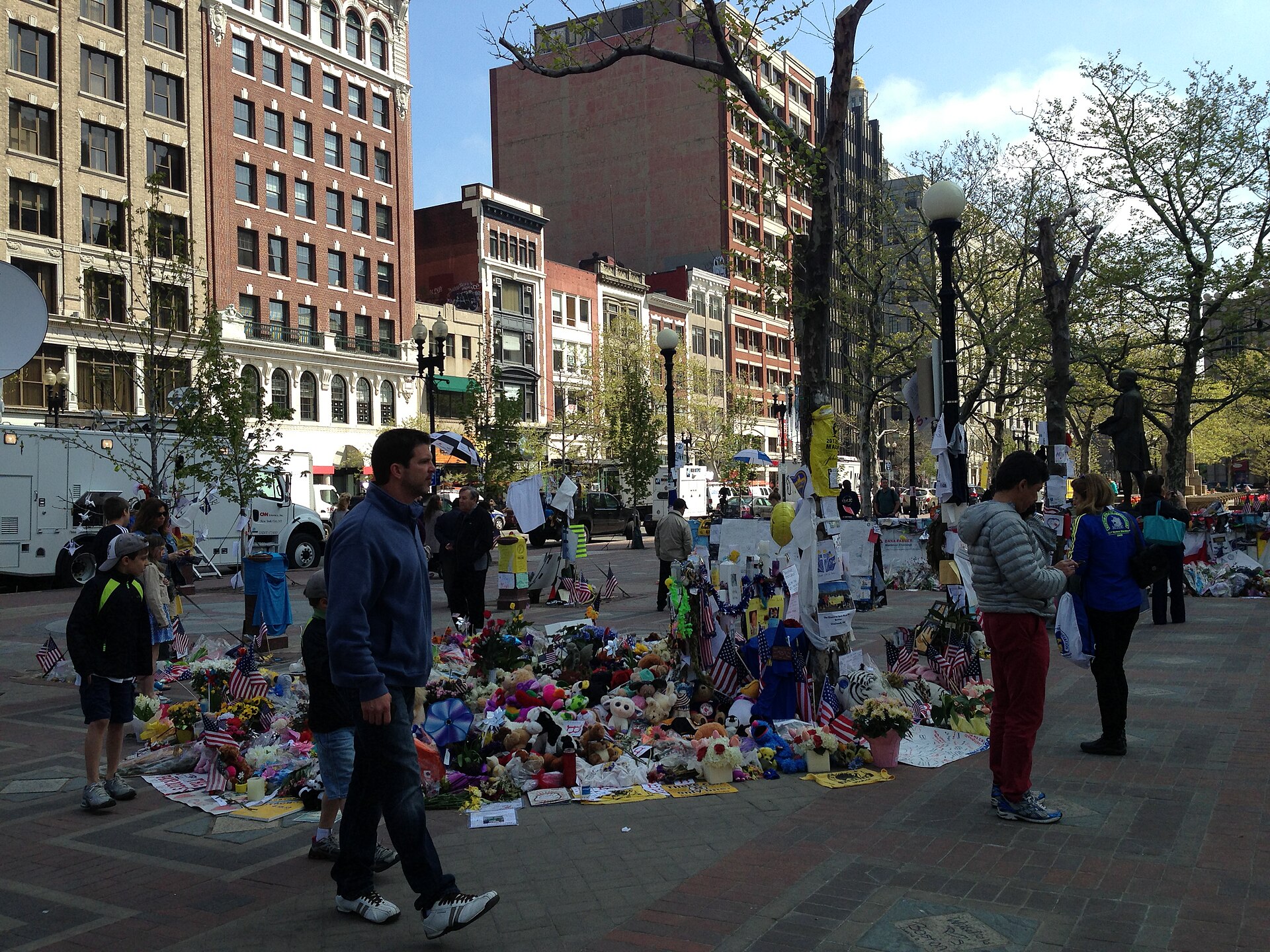
Editor’s note: This article was first published in April 2013 as a news piece, written about a week after the Boston Marathon bombing; the timings, prices and store decisions it describes refer to that moment.
Some entrepreneurs have wasted no time in cashing in on the Boston Marathon bombing with a line of T-shirts and stickers. One company applied to trademark “Boston Strong” just two days after the tragedy.
The fastest of all was the creator of Chowdaheadz.com, who had an online store up and running in record time selling “Pray for Boston” shirts for about $14, with a promise that 20% of the profits would go to those affected by the attack.
These entrepreneurial initiatives have stirred up controversy for using a “massacre” to make money, with comments appearing on social media along the lines of “Have you no shame?” or “Anyone who wants to help the victims should just send them the money. There’s no need to buy a shirt.”
People do tend to attack the entrepreneurs behind initiatives like these. But what happens when Adidas launches the very same idea, putting solidarity T-shirts for the Boston tragedy on the market at $26? The result is that customers snap them up, practically falling over each other to buy one.
Meanwhile, Nike was forced to pull from its stores T-shirts reading “Boston Massacre” in blood-spattered lettering. These shirts had been in the shops before the bombing: Nike says they have nothing to do with the attack and were printed to commemorate a game in which the Yankees beat the Boston Red Sox 4-0.
What do you think of these entrepreneurial initiatives? Is it right to use a tragedy to make money, even if part of the profits really does go to the victims? Could it be considered a charitable business? I’ll start by saying that sometimes business is business, and if one entrepreneur doesn’t make money from an event, another one will. The question is whether it is ethical and moral for a small entrepreneur to do it, because, as we have seen, when the big brands do it, it’s called solidarity.
Featured image: Sarah Nichols from Boston, MA, USA, CC BY-SA 2.0, via Wikimedia Commons.



