Editor’s note: This article was first published in April 2013. Yanai as Japan’s richest man and 66th in the world, the ranking as the world’s fourth-largest clothing company (2012), the 7 US stores and the valuation of roughly 15 billion dollars are all figures from that time.
Japanese clothing chain Uniqlo must have applied “The Art of War for business” to perfection: over the last 10 years it has quietly grown into Asia’s largest clothing company. Its medium-term goals are very ambitious, since it aims to become the world leader. And judging by its track record so far, everything suggests it could get there.
Uniqlo’s first store opened in Hiroshima, Japan, in 1984. During Japan’s recession, Uniqlo used a strategy similar to that of Amancio Ortega’s company, Inditex: “constantly changing fashion, with consistent quality at a good price“, and the company came out of that recession genuinely stronger.
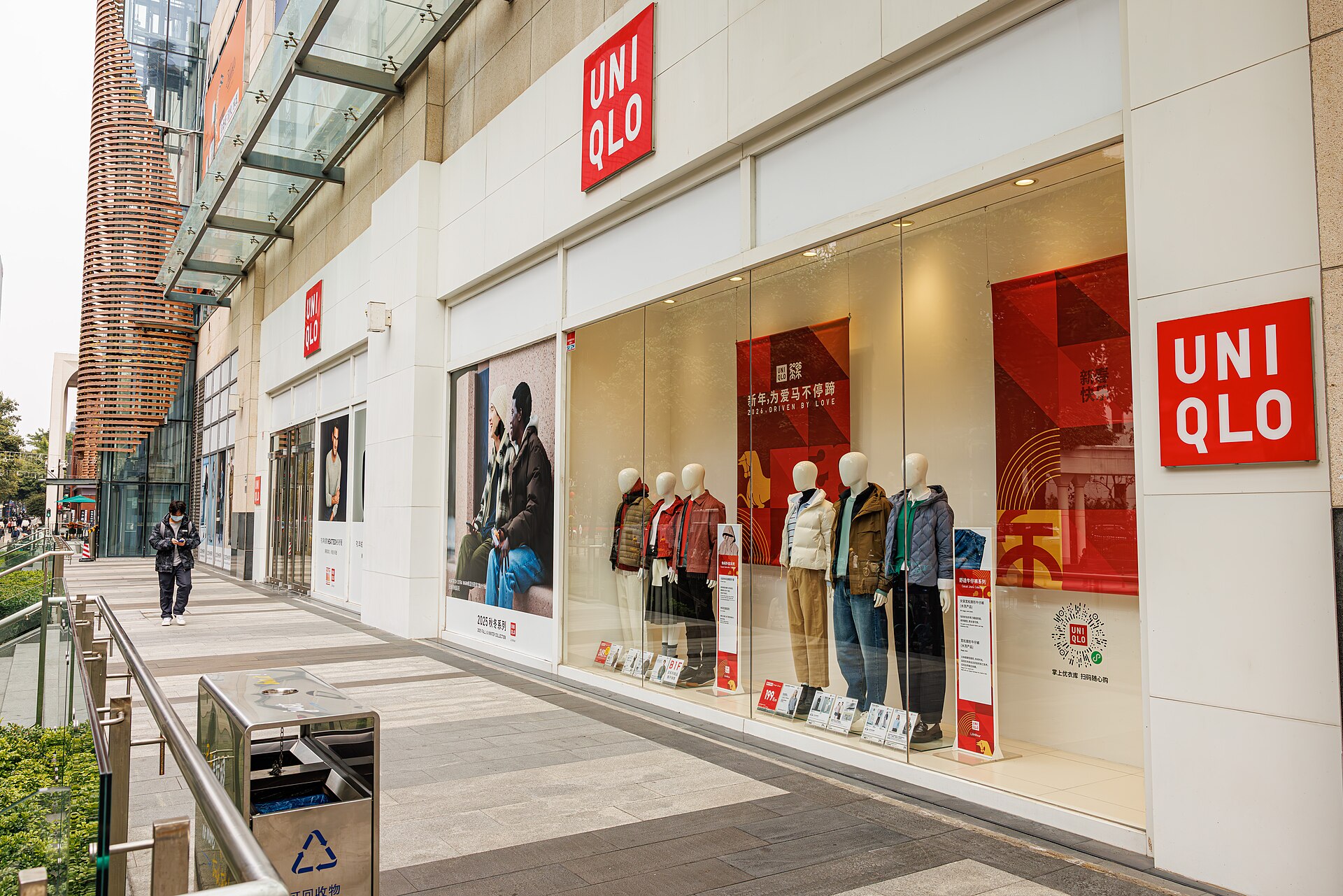
By 1994, ten years later, Uniqlo already had 100 stores. It has hit several bumps along the way, because its founder, Yanai, now the richest man in Japan and number 66 in the world, did not handle its rapid growth well. Even so, the company is now present in major capitals all over the world, with a strong presence in the best areas of London, Paris and New York, as well as a strong presence in Singapore, Malaysia, the Philippines, China and Taiwan, although most of its stores are still in Japan and China.
By 2012, Uniqlo had become the world’s fourth-largest clothing company, behind only Gap, H&M and Inditex. Its executives have told the New York Times that they intend to be number one worldwide, and their short- to medium-term plans include having a presence in every single country on the planet.
To give an idea of how ambitious those plans are, according to Forbes magazine they want to go from 7 stores in the United States to opening close to 1,000.
What sets the Uniqlo brand apart, according to our colleague Victoria Bernal, is that it is made for everyone, with very varied and colourful designs, and that it has big agreements with Chinese factories to get great prices without lowering product quality. Victoria Bernal, who has had the chance to visit some of these stores in London and the United States, says that “customers who walk into one of these stores have a pleasant experience, thanks to the decor, the colours, the variety and the price. Above all, the price. They have all the ingredients to unseat any other clothing store.”
“What’s more, they don’t hold back from opening stores of more than 10,000 m², the largest being in Shanghai at more than 80,000 m². They are single-brand shopping centres, but with the variety of 50 different brands,” says Victoria B., who, despite being a loyal Inditex shareholder, sees the Japanese clothing company as a serious threat.
Uniqlo is currently valued at around $15 billion, and climbing. If it achieves its ambitious plans, the sky will be the limit for this company in the medium term.
Featured image: Dinkun Chen, CC BY-SA 4.0, via Wikimedia Commons.