Editor’s note: This article was first published in May 2013 when research on e-cigarettes was in its early days; the health picture, regulation and products have changed a lot since. Its market figures, such as Citi’s sales forecast to 2015, are from that time.
The tobacco companies have finally developed what they had been chasing since 1950: a cigarette* that doesn’t cause cancer**. That means profits for the tobacco industry could stay the same or even grow, since, in theory, customers would now smoke for longer because they would live more years. Of course, there are a few things to consider before declaring “victory”.
* To begin with, you could argue that the electronic cigarette isn’t even a cigarette, since it lacks the taste of the traditional cigarettes smokers are used to. That could be why e-cigarettes still account for only a tiny part of the tobacco companies’ business.
** Secondly, e-cigarettes may not cause cancer (although it is too early to know), but according to several studies they can still contribute to heart disease, heart attacks, strokes and other illnesses.
Even so, we can say almost with certainty that the e-cigarette is infinitely less dangerous than the traditional cigarette, because what is certain is that it does not contain the more than 4,000 chemical components of a regular cigarette.
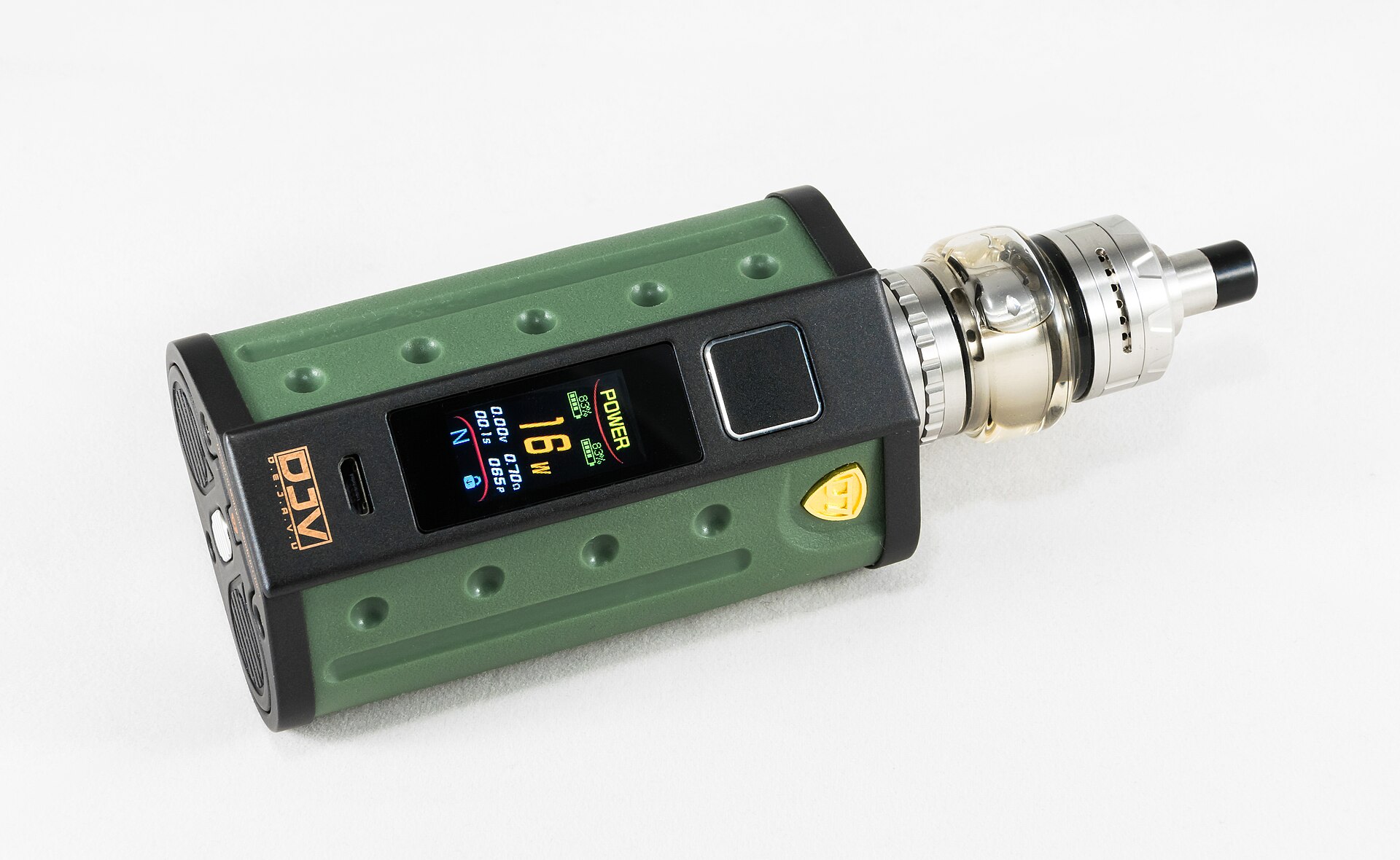
E-cigarettes contain nicotine in liquid form, which is heated into a vapor and released when the user draws on the device. Since it is free of tar and other chemicals, it should be less carcinogenic. Then again, the long-term effects of inhaling nicotine vapor are still unknown.
E-cigarettes may not cause cancer, but that doesn’t make them safe. Nicotine itself is a potentially toxic poison similar to pesticides. When we take in nicotine, the body releases adrenaline, raising the heart rate, blood pressure and breathing rate. It also makes the body start pumping sugars into the blood. It is nicotine consumption that is linked to heart attacks and strokes.
In a study reported by Science Daily, it was shown that smoking e-cigarettes can have negative effects on people with coronary disease, since it lowers blood oxygen levels within 10 minutes of use.
Another study, published in the Chest Journal, found that e-cigarettes cannot be recommended for improving lung health, but that they are certainly much less harmful than conventional cigarettes. It also reminded readers that, while we know how nicotine acts on the body in conventional cigarettes, we still don’t know how vaporized nicotine would act without all the other chemicals, and it could have consequences that cannot yet be predicted.
Are e-cigarettes a good way to quit smoking?
You’ll find every kind of opinion. Many people say they managed to quit thanks to the e-cigarette, while others say it did nothing for them. That makes sense: when we set out to quit smoking, what we want is to get rid of our dependence on nicotine, and the e-cigarette doesn’t do that. According to several studies, a large percentage of those who tried to quit with the e-cigarette ended up either still hooked on it or back on traditional cigarettes. Many patients said the e-cigarette satisfied them less and less over time.
Other studies showed that, without the chemicals that help nicotine get absorbed quickly, users had to inhale more than usual with the e-cigarette to satisfy their need for nicotine, so they ended up taking in a larger dose of nicotine than they would need with a conventional cigarette.
The e-cigarette is one of the 7 technologies of the future that will change the world, according to the investment bank Citi, with sales expected to grow from $416 million in 2010 to almost $3.2 billion by 2015.
The global cigarette market was estimated at $700 billion in 2011, according to Business Insider.
In short: e-cigarettes are neither healthy nor safe, but they are less harmful than conventional cigarettes (pending studies that show otherwise), although long-term use could lead to conditions we don’t yet know about. They are not a remedy for quitting smoking, but rather a change of device for continuing to take a drug: nicotine. They are not a cure for the addiction. Ultimately, the healthiest thing is to give up tobacco completely and cut off the supply of nicotine in any form.
Featured image: Jacek Halicki, CC BY-SA 4.0, via Wikimedia Commons.