

Editor’s note: This article was first published in May 2013. Its link presenting financial derivatives as one of the next bubbles reflects a 2013 view.
Last month marked 376 years since the tulip crisis (tulip mania). The Dutch government was meeting to try to solve a pressing problem: the tulip sector was sinking, falling apart.
I imagine that talking about a tulip bubble to young people today may sound somewhat absurd. A contemporary writer wrote in 1648: “Our descendants will no doubt laugh at the human folly of our age.”
A few centuries later, not only are we not laughing, but we realise that human stupidity knows no limits. Dutch tulips were the first speculative asset of the modern world, and the bubble took place in the Netherlands in the 17th century. It was the first, though obviously not the last: over the following centuries there has been a bubble every 50 years (on average), and they have become more and more frequent, to the point that nowadays we tend to see a bubble every 10 years. (See: The 4 phases of a bubble)
In case you don’t yet know some of the details that led to this tulip crisis, here is a short but instructive history: tulip mania as you have probably never been told it.
According to tradition, tulip mania had its roots in the Ottoman Empire.
An ambassador at the court of Suleiman the Magnificent discovered this flower, which is native to Central Asia. In the late 1500s, he decided to send tulips to some botanist friends.
Collecting things such as seashells or works of art was already quite normal before tulips reached Europe, but they were objects of trade, not of speculation.
There was already a futures market in Amsterdam
Ironically, these days one of the bubbles that may be about to burst is financial derivatives. The Amsterdam stock exchange opened its doors in 1602, and grain and some commodities were traded there as if it were a futures market, although a somewhat more informal one.
Flowers in general were one of the most profitable businesses for merchants: the rarer and more beautiful the flower, the more people paid for it. And of all flowers, tulips began to dazzle, becoming the most sought-after and highest-priced flower, above all because of the large number of varieties the tulip had.
The first tulip exchanges
In the 1630s, the first exchanges for trading tulip prices appeared. A poet of the time said that “the tulip trade proved stupidly irresistible”, even though at first trading tulips on the exchange was reserved for the rich and for skilled craftsmen. The poor families of the time began to watch the usual people now getting rich with tulips.
Little by little, the chance to get into the tulip business spread. Neighbours talked to neighbours, friends to friends, doctors to patients and tavern keepers to customers, all completely fascinated by the great opportunity to get rich thanks to tulips, because the price of tulips always goes up. Sound familiar?
Then came the madness
In 1637, a very popular type of tulip went from 125 florins to 1,500 florins in less than 12 months. Sheer madness, and it was far surpassed that same year. Up to 4,403 florins were paid for a Viceroy and up to 5,200 florins for an Admirael van Enckhuysen.
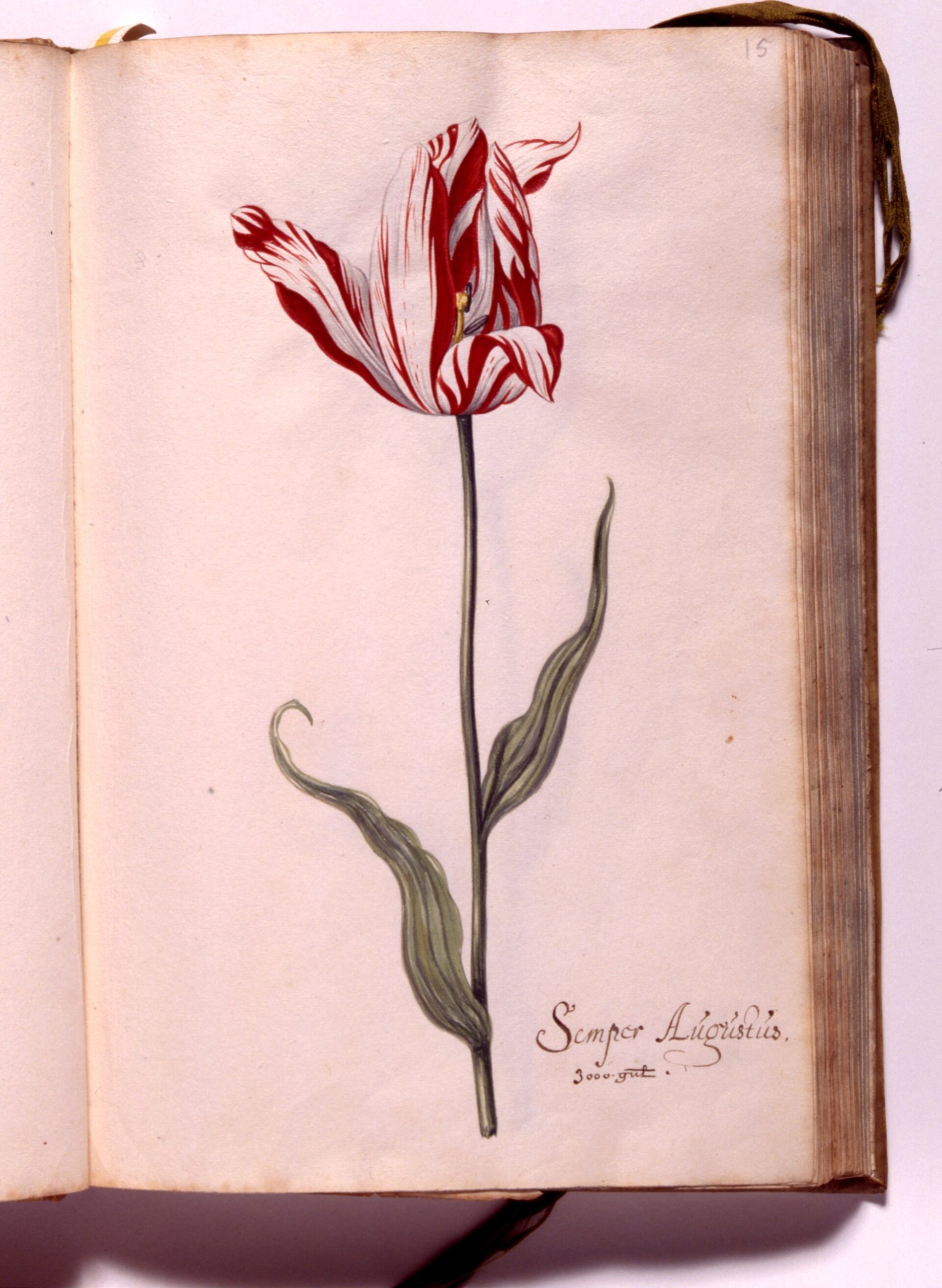
The record was broken by the Semper Augustus, which reached 6,000 florins. To put it in perspective, that was the equivalent at the time of more than 20 tonnes of wheat. In other words, the price of one tulip could have fed several entire cities for 12 months.
They were in a dangerous bubble and, since there had been no other bubbles before, nobody had any idea of what might happen.
The wave of selling began
Nobody knows exactly what triggered the wave of selling. Some say the collapse may have been caused by the bubonic plague, but that is not true, since the bubonic plague struck in 1636, a year before tulip prices broke records. What’s more, the bubonic plague pushed up the prices of practically everything even further because of the shortage of labour. Others say it may have been due to a bad deal in Haarlem, where an agreement went wrong and may have put tulip owners on alert.
The fact is that everyone wanted to sell their tulips, but nobody wanted to buy them any more, so many rich people who had invested their whole fortune in tulips were never able to recover their investment. When there are no buyers, the real value of a tulip becomes 0 florins.
It later emerged, according to various writings, that the exchanges had started planting and growing their own tulips to get rich by putting tulips on the market.
With no buyers, many of the exchanges and insurance companies that had sprung up around the tulip were forced to close.
Although some central governments, including the United States, quickly met to try to resolve the situation, they could do nothing to prevent the economic debacle caused by tulips. Tulips destroyed the entire economy at a pace never seen before in history.
Writers of the time tell how a great many businesses closed and the formerly rich wandered about disoriented. Nobody could explain what had happened, except for a few poets who had already warned about it.
It is said that once the population had sunk into a deep depression, the first “magic” methods for getting rich or making easy money appeared, and the number of teachers promising to show you how to speculate with other products grew.
The tulip crisis set a precedent, because at the time it caught everyone off guard, and the rich were even the hardest hit, since they were the ones with the most money invested in tulips. Over time, the bubble technique has been refined so that the smart can take advantage of it and get out in time, while the rest of the population comes in late, usually fails to recognise the bubble and is left holding the “tulips”.
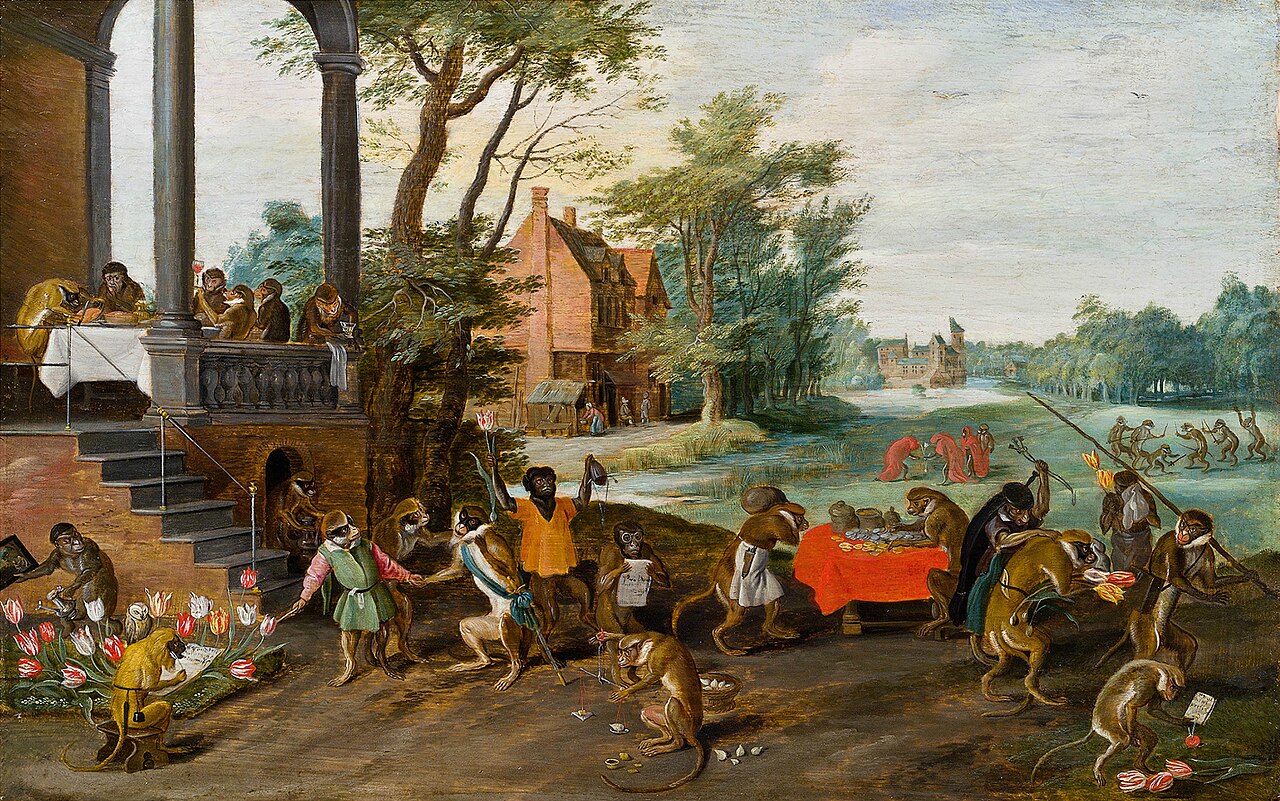
Featured image: Jan Brueghel the Younger, Public domain, via Wikimedia Commons.




