

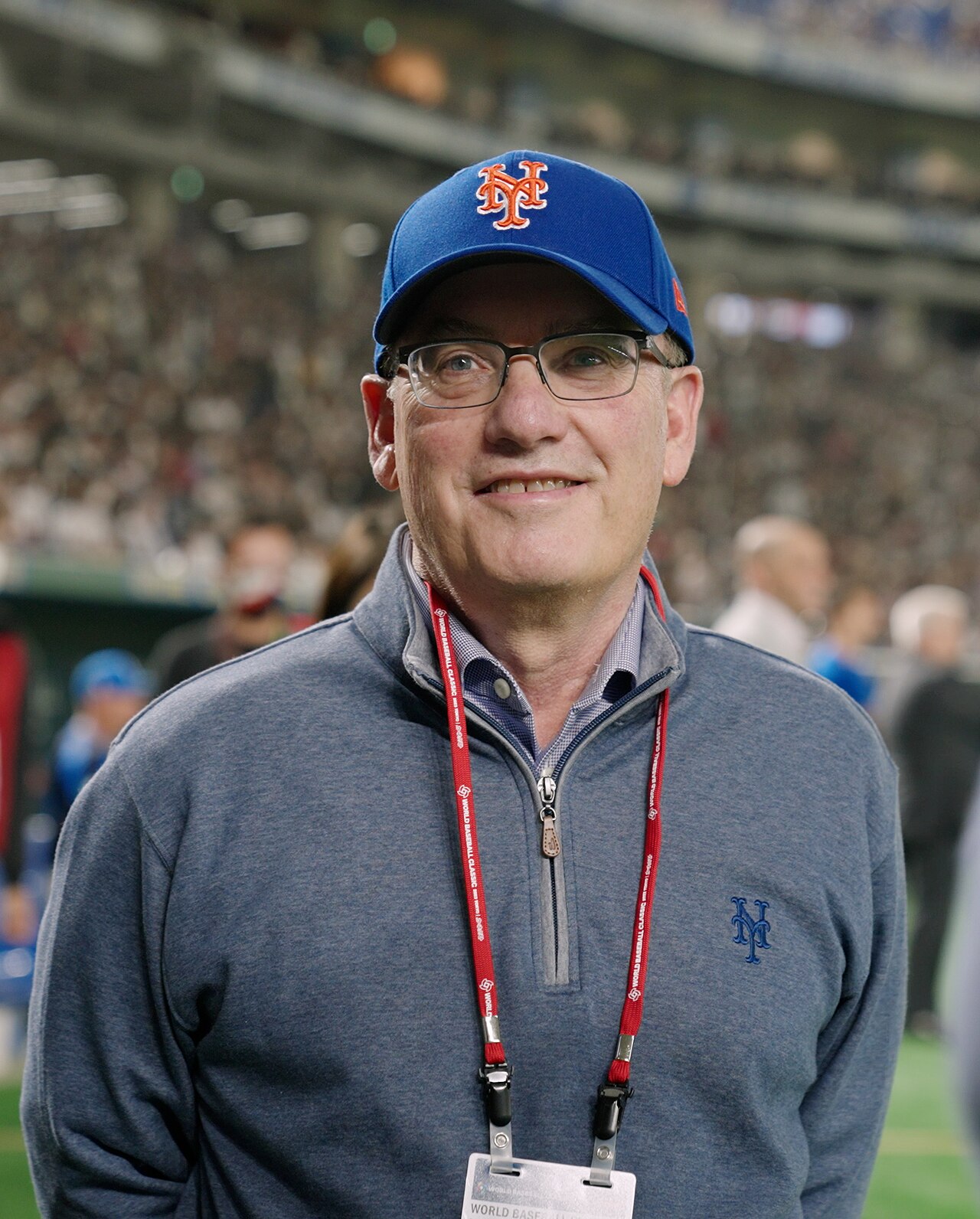
Editor’s note: This article was first published in August 2013, while the insider trading case was open. Its figures are from 2013: $14 billion under management, more than 900 employees and a personal fortune of $9.3 billion. SAC Capital pleaded guilty in November 2013 and later became the family office Point72.
The billionaire manager of the hedge fund SAC Capital Advisors is reputed to be one of the best investors on Wall Street today, and both his career and his life in general make for a pretty interesting story.
He may currently be best known for being investigated by the SEC over alleged insider trading, something he denies, as fund managers usually do. At the end of July charges were brought against him, although it seems the accusations do not hold up.
Steve Cohen launched his own hedge fund in 1992 with just 25 million under management. Today his fund manages 14 billion and employs more than 900 people. His personal fortune is estimated at 9.3 billion dollars. But… how did Cohen get started?
Steve A. Cohen was born in June 1956 in Great Neck, Long Island (New York), into a modest family, the third of eight children. His father worked in a factory and his mother was a homemaker.
(Read: The fascinating life of Bill Ackman)
His first job, at 14, was selling fruit in a supermarket for 1.85 dollars an hour. He soon quit, because one of his passions was already earning him more money in a couple of hours than a whole day at the supermarket. That passion was poker. He had a knack for cleaning out everyone else at the poker table.
See also: Donald Trump: from business success to bankruptcy, and from failure to billionaire
In Cohen’s case, he couldn’t afford to go to Harvard, and he ended up studying economics at the Wharton School of the University of Pennsylvania.
At university he was already diving headfirst into the stock market, spending more time on the financial markets than in class, and in his spare time he won enough money at poker to cover his living expenses at university.
The Wall Street legend
As soon as he graduated in 1978 he joined Gruntal & Co, a Wall Street investment banking firm. He started as a trainee broker, and the legend surrounding Cohen is that this beginner, fresh to Wall Street, made a profit of 8,000 dollars on his first day.
Many people thought it was luck, so the next day he showed that luck had nothing to do with it by making more than 10,000 dollars, and more than 10,000 dollars again the day after. According to some sources, in his first months he even made more than 100,000 dollars a day three days in a row. This was clearly his thing.
He was so successful that in 1984 he began running his own group at Gruntal & Co, with astonishing results. Then in 1992 Cohen rented a floor of offices in the same building as Gruntal & Co and took some of the firm’s professionals with him to start his own fund with 25 million in capital.
What sets SAC Capital Advisors apart from the rest of the industry?
I suppose most managers have their own quirks. In Cohen’s case, in 2006 his trading room earned him an article in The Wall Street Journal.
The room covers 20,000 square feet and silence reigns. Steve Cohen sits right in the middle (he likes it that way). The phones don’t ring, they flash, and the computers’ hard drives are kept outside the room to avoid annoying “humming”. All the brokers keep their eyes on Cohen, waiting for a signal to buy or sell shares.
Cohen was the first fund manager to hire a psychiatrist to train his traders to master feelings such as anxiety, fear and tension…
Cohen is estimated to account for more than 3% of all trades carried out on the stock market every day, which is probably why SAC Capital is the fund most closely watched by market traders.
The legend continues
Steve Cohen achieved an annual return of 70% in 1998, slightly beat it in 1999, and then came the dot-com crash… What happened to Cohen? Nothing, absolutely nothing. He again made a return of more than 70%, and that turned him even more into a Wall Street legend.
Addicted to risk
Although Cohen is a very shy person in private, he considers himself addicted to risk. He isn’t afraid of risk, he takes it on, and that is why his two passions are speculation and poker. And, it must be said, thanks to his nerves of steel he is brilliant at both.
He recently bought a house in the Hamptons valued at 60 million dollars and a Picasso painting for 150 million dollars.
Cohen’s biggest problems
Most of this billionaire’s problems have been caused by his ex-wife, who got the authorities to open an investigation into Cohen over an alleged case of insider trading in a purchase of RCA shares in 1985, before the company was acquired by General Electric.
This woman’s resentment has put the authorities on the billionaire’s trail, to the point that many of his clients are asking for the money SAC Capital manages for them to be returned. Clients are estimated to have pulled around 5 billion dollars out over the last few months, after insider trading charges were brought against SAC.
If the case goes ahead and he is finally charged, the SEC would seek a 10 billion fine for the damage caused, which is 1 billion more than Cohen’s current fortune, and he would also be practically forced to close his hedge fund.
Sources: BusinessWeek | WSJ | Forbes | Business Insider
As we can see, Cohen’s life is not what you would call boring.
Further reading
Featured image: Michael Seib, CC BY-SA 4.0, via Wikimedia Commons.



