Editor’s note: This article was first published in September 2013; the statement that the books are over 70 years old was true in 2013, and both books are now well over 85 years old.
If we had to name books that explain the process of building wealth, we’d find thousands of them, and they share a common message: don’t get into debt (or get out of it), save more and learn to invest, as well as generating income from several sources, which is why they also tend to recommend starting a business.
The reason many people come away from these books disappointed is that they’re looking for an ABC process, a set of steps to follow in a particular order. Some time ago we published a list of the best books on financial education, some of which gave us a good grounding in finance.
Of course, if you want the best, you have to go back to the source of the best and avoid imitations and recycled messages. After looking into the reading that has most inspired today’s millionaires, it turns out that the message about wealth ultimately comes from two specific books.
The two best books for getting rich
1. Think and Grow Rich, by Napoleon Hill
Written in 1937, this is probably the book that has inspired more of today’s millionaires than any other. More than a book, it’s a guide that goes straight to the root of the problem that separates rich and poor: the way we think. It was one of the best-selling books in history, and you won’t find any investment advice or references to the stock market in it, but you will find the solution to the psychological barriers that stop us from building wealth.
Nor is this a book about attracting money (think about money and money will come to you).
Its message, roughly, is this: wishing for money won’t bring you riches, but desiring wealth with the right state of mind turns that desire into an obsession, and that obsession, combined with proper planning and with carrying out those plans with a persistence that refuses to accept failure as an outcome, will end up bringing wealth.
One passage of the book sets out six steps to follow, such as fixing in your mind an exact amount of money. Saying “I want a lot of money” isn’t good enough. You have to be completely precise about that amount, and there are plenty of psychological reasons for this. In fact, even when we teach financial education, drawing up a financial plan also means defining exact amounts.
The book explains how to decide what you’ll offer in return for the money you want, because there’s no such thing as something for nothing, or a lot for a little. We’re going to have to give something up, and we need to be very clear about what we’re willing to sacrifice in exchange for reaching our goal.
The book also teaches you how to influence people
To do so, it advises you to prepare yourself emotionally. It’s packed with stories of people who fixed a specific goal in their minds and didn’t stop until they achieved it.
For Napoleon Hill, the only thing that separates a life of poverty from a life of wealth is the way we think. If you change the way you think, you change the way you act, and if you change the way you act, you increase your chances of changing the outcome.
There are no rich people who didn’t plan, whereas most poor people go through life without any plan at all, waiting for something to change their situation. And if you believe in luck, Napoleon Hill makes it very clear that this book isn’t for you.
2. One Thousand Ways to Make $1000
One Thousand Ways to Make $1000 dates from the same period (1936) and it was the book that inspired an 11-year-old boy named Warren Buffett.
This book tackles the root of a different problem: how big and difficult our goals are. Every kilometre travelled begins with a single metre, so the book explained how to set short-term goals that, over the long run, would add up to our final goal.
The book doesn’t talk about making a million dollars, because anyone would lose heart after failing to get there within three years. It talks about making 1,000 dollars (or euros) 1,000 times. Millionaires say the first million is the hardest to make, because once you’ve done it, making more millions becomes relatively easy.
Applying that message to our own “not rich” situation: once you’ve made your first €1,000, making the next €1,000 should be easier, so just repeat the process another 1,000 times and you’ll reach your first million.
Of course, it also gives us some tips for bringing in €1,000 again and again through different channels, with a variety of stories about people who successfully carried out simple business ideas of the time; you’d only need to adapt some of that advice to the present day.
Further reading
- Learn how to get rich in just 7 minutes: we have the formula
- 12 things millionaires know that you should learn
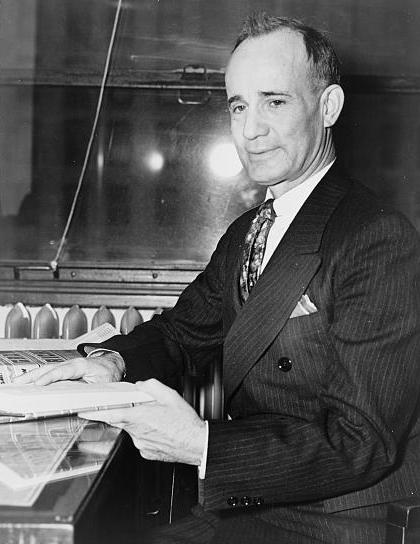
Featured image: New York World-Telegram and the Sun Newspaper staff photographer, Public domain, via Wikimedia Commons.