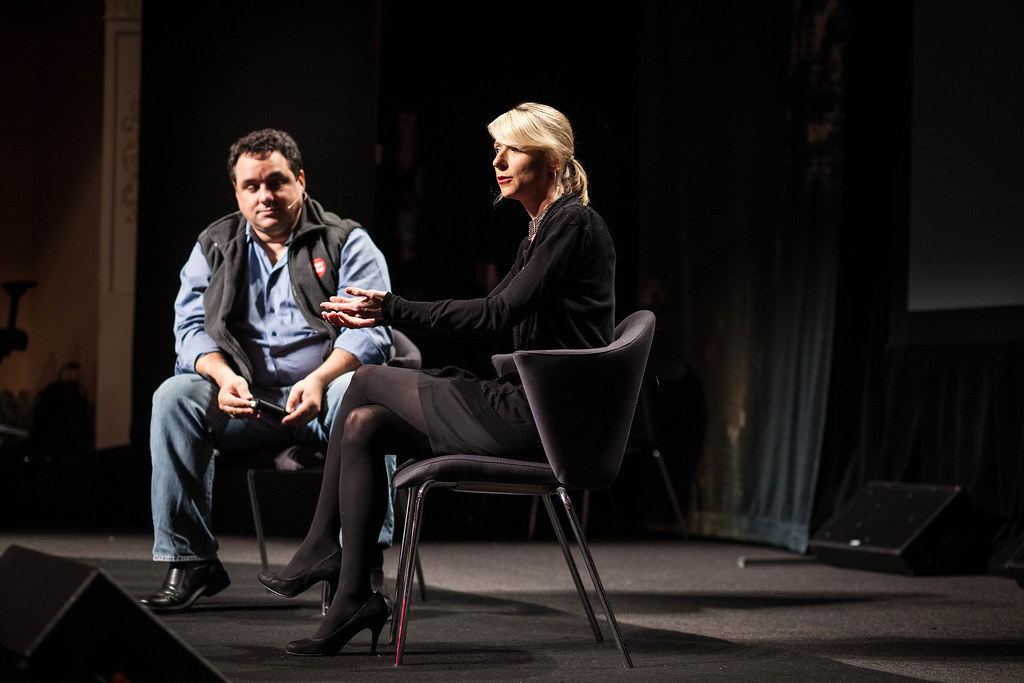
In the first part we discussed Amy Cuddy‘s research on the importance of changing our body language, which found that even the most insecure people, when they swap some of their postures for others, end up gaining confidence, and not just in appearance.
But where do we start when it comes to changing our body language? First of all, remember that whether or not you believe in reading gestures, the truth is that we can all interpret many postures and expressions, often unconsciously. Sometimes we call it intuition when someone gives us the feeling they can’t be trusted, when in fact intuition has had nothing to do with it. And at other times it is entirely conscious.
1. Become aware
The first step towards change is to become aware of which part or parts we need to change. A mirror is often recommended, but there is really nothing like seeing yourself on video: you will notice how your hands and feet react, and they reveal how comfortable you feel with the people you are talking to. A wedding video can be ideal for watching yourself.
2. Work on your smile
We smile because we are happy, but it also works the other way round. In other words, if you are not happy and you make an effort to put a smile on your face, you will end up feeling happy. Many studies claim that people who smile without being happy can come to feel happy.
For that, we need to remember that the brain can be tricked. In point 4 of this article we explain how to trick your brain so that it doesn’t make you nervous in a stressful situation.
Also, never underestimate how contagious good humour is. The saying “life is like a mirror: it smiles at you if you look at it smiling” has a scientific explanation, and so does a positive attitude (read: The power of positive thinking, beyond the cliché).
Remember that happiness reinforces our confidence.
3. Start adopting expansive, powerful poses
Start practising what psychologist Amy Cuddy described in her TED talk. Whether you are heading to a business dinner or a job interview, or you have an important meeting, spend a few minutes in these poses and relax while you’re at it. Remember that, according to Cuddy, certain postures would give us the benefit of testosterone (power poses), while others bring cortisol (hunched, worried, defeated postures).
4. During the meeting, never cross your arms
We have seen what to do before an important situation. Now remember that during the interview or negotiation you should never cross your arms, neither high across your chest (indifference, insecurity, boredom) nor low in front of you (inferiority, nervousness).
5. Supporting gestures and a deep voice
Numerous studies show that leaders with lower-pitched voices are more persuasive. What’s more, women and men with deeper voices are usually more likely to land leadership positions in companies. People who are sure of what they say don’t need to raise their voice to prove they are right. Likewise, we should accompany our words with some gestures (tips for being more persuasive and charismatic).
6. Practise eye contact
This part is easy to work on. Get used to looking everyone in the eye: the butcher, the greengrocer, the person you are giving directions to, and so on. Avoiding eye contact is one of the most common and visible mistakes of shy and insecure people, and very often even confident people feel intimidated and make it too.
And since, according to Aristotle, “we are what we repeatedly do”, start changing these little things until you become that better version of yourself.
Further reading
- 5 keys to excelling at whatever you set out to do
- The learning techniques used by people who learn fastest
- Strategies for learning faster (part 2)
- 10 things you should avoid in the first 30 years of your life
Featured image: PopTech, CC BY-SA 2.0, via Flickr.