Editor’s note: This article was first published in June 2014. It describes the June 2014 draft bill, not the law as finally passed in November 2014, which differed on several points. All rates, thresholds and growth forecasts, and the references to expected ECB easing and the 2015 election calendar, are as of June 2014.
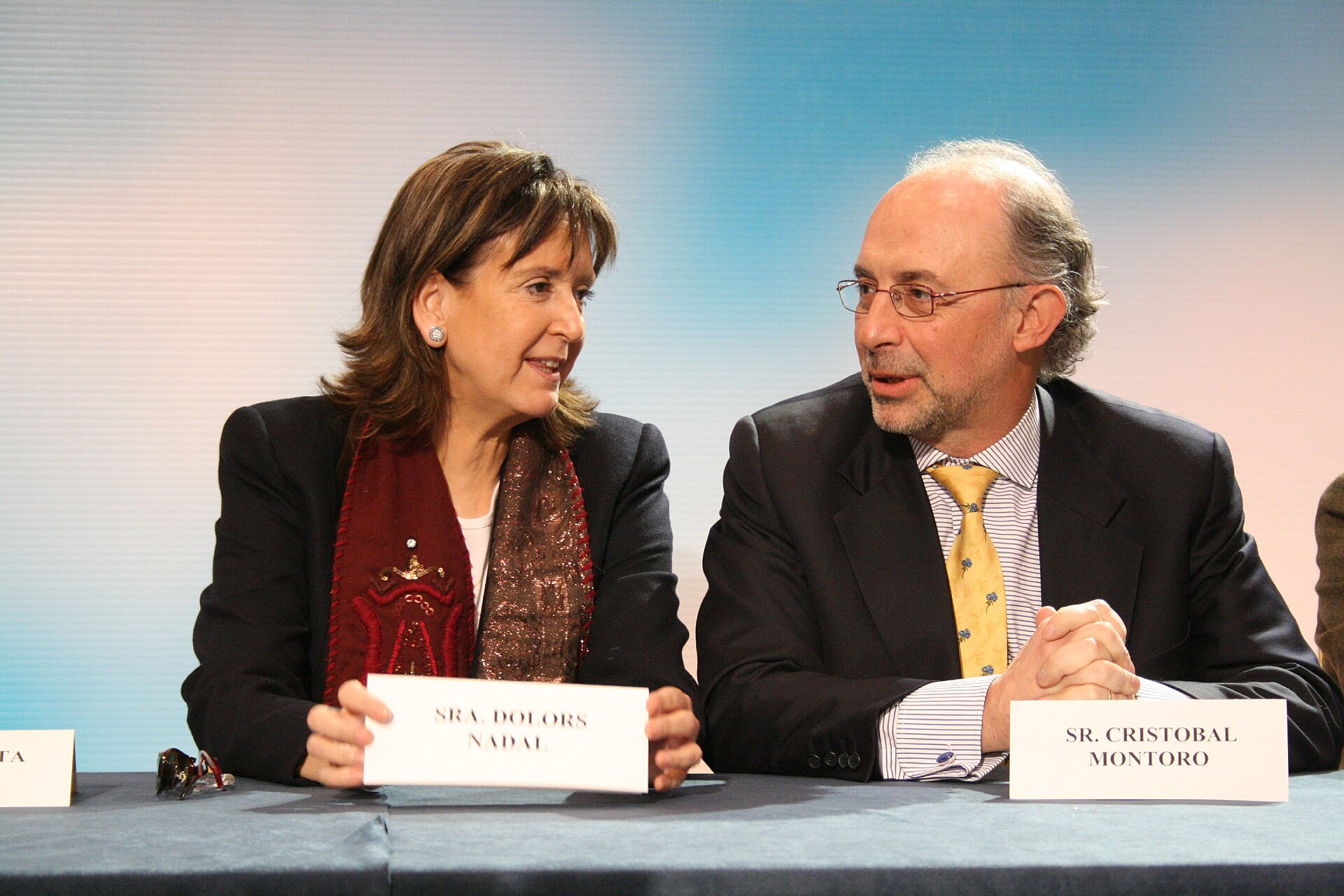
In June, besides planning the summer holidays, the government announced some details of the new tax reform, which it presents as being about economic growth and fairness and which will also include social benefits meant to help the Spanish economy. On 20 June, Prime Minister Mariano Rajoy met to clear up the uncertainty that had arisen over VAT and, with Finance Minister Cristóbal Montoro present, stated that this tax would not be raised and that withholding for the self-employed would instead be cut.
More specifically, the draft tax reform bill recently released by the government sets out the measures affecting the main taxes. With this draft, the parliamentary process begins, starting with consultations with employers’ organisations, trade unions and the other political parties.
So we at Aspain 11 Asesores Financieros EAFI, an independent financial advisory firm, set out the main measures in the draft bill:
Personal income tax (IRPF): Five income brackets are set, to which the following rates will apply, with the cut made in two phases, in 2015 and 2016:
The new income tax brackets are cut from the current seven to five, with a minimum rate of 19% (compared with 24.75% now) and a maximum of 45% (compared with the current top rate of 52%).
Income below €12,000 will not be subject to withholding, and family allowances will rise by 32%.
Cuts to income tax and corporate tax (currently at 30%) worth €7.6 billion between 2015 and 2016 are intended to boost domestic demand, economic growth and job creation. The income tax cut will amount to €5 billion and the corporate tax cut to €2.6 billion, with the corporate rate going from 30% to 28% in 2015 and to 25% in 2016. The deductions for reinvested profits, for R&D and innovation, and for financial expenses will remain, although these could be trimmed even further than they have been in recent years.
Newly created companies will pay 15% in their first year with a positive tax base and in the following year, unless they are entitled to a lower rate. A levelling reserve will be created for SMEs to offset future losses over a five-year period, with a reserve of 10% of profits and this fund capped at €1 million. Using both reserves lets these companies bring their effective rate down to 20.5%.
On the other hand, most of the current deductions in this tax will be abolished. The aim of all this is to remove the steps that separate small companies from large ones, which sometimes discourage businesses from expanding.
Savings income will be taxed as follows:
- From 21% to 20% in 2015 and 19% in 2016 for gains of up to €6,000.
- From 25% in 2014 to 22% in 2015 and 21% in 2016 for gains between €6,000 and €24,000.
- From 27% to 22% in 2015 and 21% in 2016 for amounts between €24,000 and €50,000.
- From 27% in 2014 to 24% in 2015 and 23% in 2016 for amounts over €50,000.
– The €1,500 dividend exemption disappears, as do the abatement coefficients (for assets acquired before 1994, for those who were benefiting from them).
– Long-term income: The reduction falls from 40% to 30% (one example would be long-term savings plans for employees who have taken early retirement).
Personal and family allowances rise by up to 32%, a tax improvement for families and for taxpayers with dependants. Taxpayers earning less than €12,000 a year will pay no income tax (the threshold is currently €11,162). They will also receive an allowance of €1,200 (large families, ascendants with disabilities, etc.).
Changes for business owners and the self-employed: withholding for the self-employed will go from 21% to 19%, with a separate 15% withholding rate for those earning less than €12,000 a year. At the same time, the general rate for the self-employed will fall to 20% from the current 24%. These measures will come into force as a matter of urgency on 1 July, to make Spanish companies more competitive.
VAT will not change under the tax reform, nor will excise duties be raised any further, against the view of the main international organisations (the IMF, the European Commission and the OECD), which are calling on Spain to raise indirect taxes; VAT stands at 21%, as agreed in previous years. Medical products, however, will be affected: they will go up from 10% to 21% to comply with a ruling of the EU Court of Justice. This will not apply to certain products families commonly use, such as glasses and contact lenses, or to those used by people with disabilities, although materials used in laboratories to make medicines will go up from 4% to 21%.
The maximum deductible contribution to pension plans is €10,000, but from the new year it will be reduced to €8,000 a year.
Severance pay will be taxed, with a minimum exemption of €2,000 per year worked. For example, a worker earning €20,000 a year with severance pay of €1,900 per year worked will be exempt. Taxpayers earning less than €20,000 a year, meanwhile, will have 100% of their severance pay exempt.
The deduction for landlords who rent out a home will be reduced from the current 60% to 50%, and where the tenant is under 35 it will reach a 100% deduction. Tenants will also be affected, since the tax reform plans to abolish the rental deduction, bringing the tax treatment of a main residence into line whether it is rented or owned.
Spanish film productions will be able to deduct 20% up to the first million and 18% of the rest, up to a maximum of €3 million. Foreign productions will be able to deduct 15% of their spending in Spain, up to a maximum of €2.5 million and with a minimum of €1 million.
Banks will not benefit from the corporate tax cut and will continue to pay 30%.
The government brings back the “Beckham law” (the special tax regime for workers who move to Spain), taxing the first €600,000 at 24%, while the rest of the income will be taxed at the top marginal income tax rate.
After this brief analysis of the tax reform, it is worth noting that our government still has some unfinished business flagged by Brussels, such as reducing labour market segmentation, unemployment and the number of contract types. Here, Ecofin is in favour of real wages adjusting in order to encourage employment. The EU requires a systematic review of spending at all levels of government before next year, to help improve the efficiency and quality of public spending. In Europe’s view, Spain’s budget strategy for the coming years only partly meets the requirements of the Stability Pact. The government’s growth forecasts are reasonable for 2014 (1.2%), but risk being overestimated for 2015 (1.8%) and are somewhat optimistic for 2016 and 2017.
Now that the government has approved the draft tax reform bill, there will be a period of public consultation before the reform is finally approved. The intention is for it to reach Parliament by July at the latest so that it can come into force in 2015 and people will already see the income tax cut in their January payslips next year, which happens to be an election year, with municipal and regional elections in spring and a general election in the autumn.
At Aspain 11 Asesores Financieros EAFI, we want to speak up and read between the lines of what is not being said openly:
-
We consider the abolition of the rental deduction harmful. Given that 70% of the Spanish population has gross income below €24,000, we find it hard to see how buying can be encouraged, especially with the fall in real wages now taking place. House prices will certainly keep falling, and the rental market ought to be encouraged.
-
We welcome the income tax cut, but nobody is talking about the trap in the brackets: at each step there is a tax increase rather than a reduction.
-
There is a lot of talk about large fortunes, but we find it frankly trivial to touch the dividend exemption, which hurts long-term investors, without passing a law to fight fraud.
-
The corporate tax cut is certainly positive, since the ultimate aim is to reverse the current situation so that more is collected in the future, which is common sense. On this point you may remember the view we gave in our report on the Laffer curve: however much taxes are raised, revenue does not necessarily increase. In fact, as that report showed, the result is a larger underground economy.
-
Although it is difficult to take measures in the Social Security system because of our pay-as-you-go model, the way to really drive consumption is for companies to have lower fixed costs. It is true that Brussels is breathing down our neck, but we have no doubt that, whatever measures are taken, if fixed costs do not come down, real wages will keep falling (we will expand on economic models in future reports). Credit is starting to flow again, and we expect the ECB to launch quantitative easing before the end of the year, but without cutting costs and lightening the load on exasperated businesses, there will be little appetite for opening new productive ventures.
We can conclude that these are positive measures, although incomplete, as some points could be refined. We have been warning for more than a year that a tax reform was needed, and although it has now arrived and is fine as a starting point, it should not make us rest on our laurels, because the government’s growth targets for 2015 and 2016 are too optimistic.
Featured image: Partido Popular de Cataluña, CC BY-SA 2.0, via Wikimedia Commons.