

One of our best articles on achieving success in life came from commander William H. McRaven, who organised the raid on Bin Laden and gave us a set of guidelines for success that I consider brilliant. Highly recommended if you have not had the chance to read it yet.
This time, a Quora user asked an open question about which military strategies can be used in everyday life. The answer from a soldier who has spent more than half his life in the army likewise leaves us some invaluable lessons that can be applied to life, to business and to success in general.
1. Look after your image.
This soldier admits that he spent most of his training learning to iron his uniform, polish his boots and keep his hair neat, and they even shaved twice a day. Many people may find this excessive, but when soldiers leave military life, they realise how inappropriately badly dressed civilians are.
It is not a question of fashion but of self-respect. When you look at how some people dress, you can see how little they respect themselves.
2. You are what you eat and drink.
Soldiers have a complex relationship with food and drink. Napoleon knew that a well-fed army was an army that marched further. This soldier says that during training he ate more than ever before in his life, and still lost weight.
In the desert they drank litres and litres of water, and even so many became dehydrated. In military operations, being well fed and hydrated is one of your best safeguards. Soldiers learn respect for food, just as they do for fuel, and so when they leave the army they appreciate eating well. “Families who can afford to eat well and choose junk food have no excuse. Cook well, eat well and you will live well.”
3. You can’t do everything on your own.
Soldiers know that people cannot achieve important goals on their own. Everything is done with the “buddy system”, because that is what will keep you alive in battle. Learning at every moment that the individual is always less important than the team as a whole will be the greatest life lesson a person can learn, and it carries over into the business world.
As a soldier, you are always a small cog in a bigger machine, where you even have invisible teammates you must trust with your life: on your flanks, in the air or sitting behind a screen flying drones. “Learn to play as a team, and everything will run smoothly.”
4. Value sleep.
In tough training they teach you to go practically without sleep, while in real conflicts four hours of uninterrupted sleep can be a luxury you forgot long ago. The enemy does not care about fatigue or sleep.
However, anyone who has served in the army will have seen first-hand how lack of sleep reduces performance, and how tired soldiers often make the wrong decisions.
In the civilian world, many companies push their employees to work as many hours as possible, thinking this will boost the company’s performance, when the truth is that someone who is tired and in need of caffeine is no good to anyone. All of us soldiers value our hours of sleep as a gift, and the civilian world should do the same, because being well rested is already a competitive advantage.
5. Confidence and decisiveness.
There is a very fine line between confidence and arrogance, and between bravery and stupidity, but there is no room for hesitation or uncertainty on the battlefield. Soldiers and their teams often get caught halfway to where they should be because they are not completely sure of their location and objective.
As a leader or as a soldier at any level, having confidence in your decisions is crucial, but you have to be firmly decisive and not hesitate.
6. Learn from other people’s experience.
When you are young and ambitious, you tend to ignore the advice of people you consider old and out of date. But in the army you quickly learn to listen to and respect the opinions of your elders, because that advice is often what saves your life, and you discover that it is not that there is anything new in war, but that there is a lot you have not learned yet.
Never ignore the advice of those who know more than you through experience.
7. You can’t rely on technology.
We live in a technological age. And this age of solutions and conveniences is not only present in civilian life. Things have also changed a great deal on the battlefield: aerial drones, thermal imaging systems, advanced weapons and indestructible vehicles.
Even so, to take a city, a person of flesh and blood still has to walk into it and raise a flag. Iraq and Afghanistan have reminded us that soldiers still need face-to-face interaction with other people. Besides, for certain things technology fails.
In the business world, visiting a client face to face is still more powerful than hundreds of emails, which often end up in the spam folder.
8. Value your friends, your team.
Most soldiers are very patriotic and some are very religious, but none of them dies for their country or their God; they do it for their comrades.
And this soldier is not talking about getting your friend out of trouble in a bar fight. “I have seen men practically dead from exhaustion, and even wounded, who were out of the combat zone (and safe) volunteer to go back and rescue a comrade who had fallen into enemy hands. And that is the most beautiful thing a soldier can see in his life.” In the civilian world, it is rare to find someone willing to die for a friend or neighbour.
Further reading
- The keys to success when things get ugly
- 9 things you can do to become smarter
- 10 toxic behaviours that are ruining your life
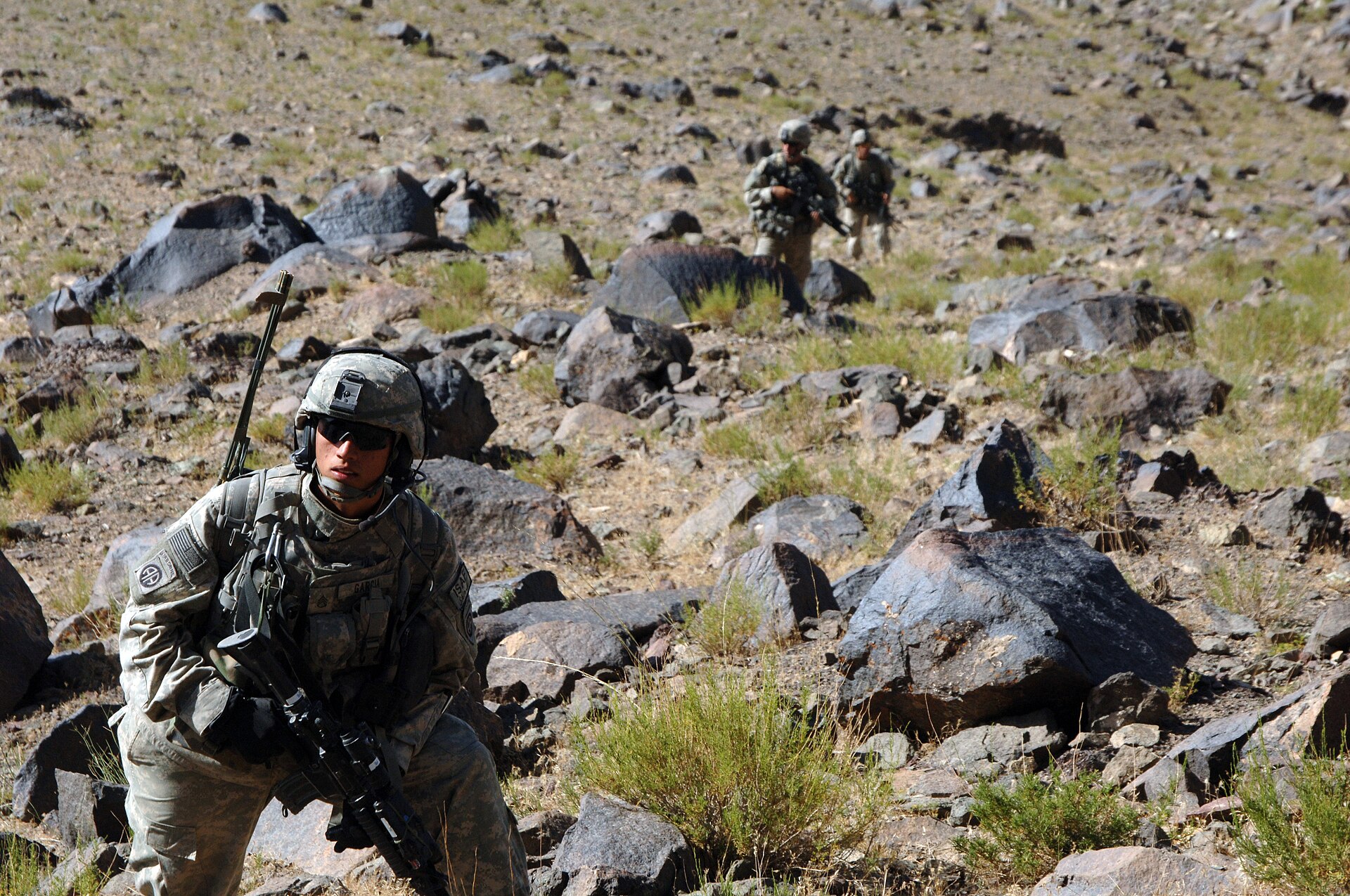
Featured image: soldiersmediacenter, Public domain, via Wikimedia Commons.



