When you own your own company, you can dress however you like, because you will succeed or fail on the strength of your talents and business skills. Even so, even as a business owner, when it comes to doing business people will form an image of your company based on your physical appearance. But that is another story.
In this story, which Jeff Haden published on his LinkedIn profile, we can probably find the answer to a question: “When it comes to getting hired or promoted, do my skills and who I am matter more, or does what I look like matter more?”
In a perfect world, who you are would matter more. But in the real world, which is not perfect, what you appear to be matters more.
(Also read: 3 physical qualities associated with great leaders)
Haden recounts that many years ago he worked in a manufacturing plant.
“One day the department manager asked me about my work history, my skills and my education, and asked me about my career goals. I told him I wanted to be a supervisor. The manager smiled and said: ‘Good for you. I like young people with dreams.’ Then, after a pause, he looked me straight in the eye and said: ‘But if that’s what you want, you need to start looking like a supervisor.’
‘What do you mean?’ I asked.
‘Look around you,’ he said. ‘Have you seen how the supervisors dress, how they wear their hair, how they act? Nobody is going to see you as a supervisor until you actually look like a supervisor.’
Then I noticed what I was wearing: worn-out jeans and a frayed shirt. My hair was also long and unkempt. But I was good at my job and ready to be a supervisor, so I asked him:
‘But shouldn’t how I do my job matter a lot more than how I dress?’ And he answered in a way I will never forget:
‘In a perfect world your performance and your skills would be all that mattered. But we don’t live in a perfect world, because unfortunately the people who do the hiring and promoting in companies are people. And people tend to be biased towards what is comfortable and familiar. They tend to hire and promote people who look like themselves. If you remind me of me, you’ll have a better chance of me promoting you.’
People still make assumptions about us based on irrelevant things like clothing, mannerisms, height, weight, gender and ethnicity, which have nothing to do with the skills a person may have.
It may be unfair, but that’s how it is. We can devote our lives to trying to change everyone and the way they think. But we won’t manage to change it, so all we can do is adapt and play by the rules set by people’s minds.”
And perhaps this is one of the reasons why many talented people never succeed in their careers and never get promoted. Many people have been left waiting for someone to trust and value their skills, experience and talent. But that never happens if, besides being a professional, you don’t look like one.
While anyone can prove their worth in a company, “dressing for success” will make the road easier.
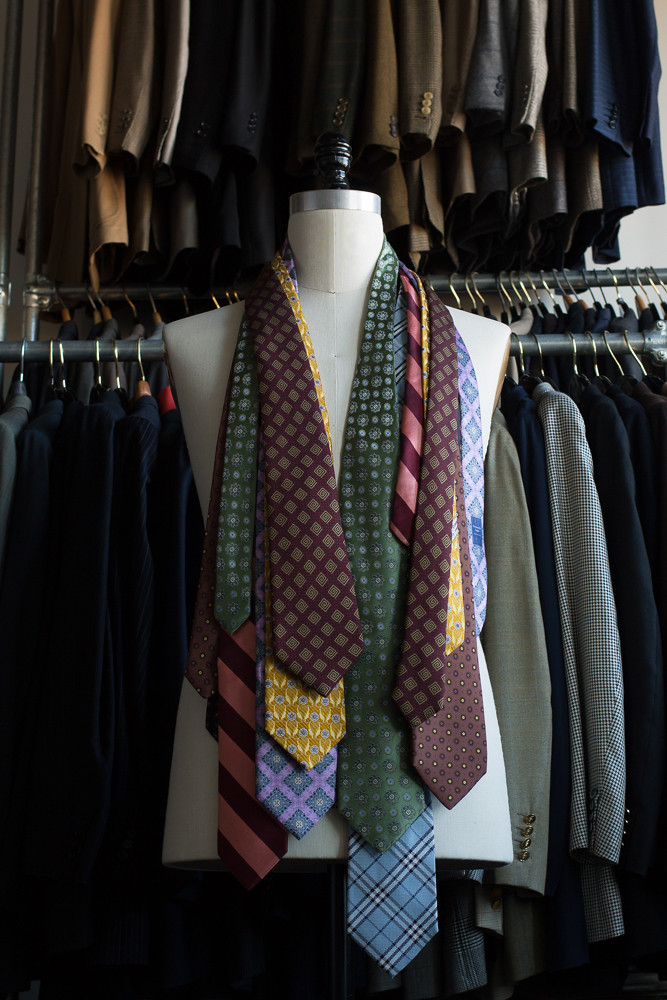
This story by Jeff Haden reminds me of a business lesson someone once told me about. An executive, having breakfast before a meeting, stained his tie. He cleaned the stain as best he could, but even so, the tie was still dirty.
When his boss looked at him, just before they went into the meeting, he picked up a pair of scissors and cut the tie in half.
Puzzled, the executive asked his boss: “Why did you cut my tie?” His boss replied: “Because it was dirty.”
The executive explained that he had stained it over breakfast, but his boss insisted that he take the tie off and taught him a lesson the executive never forgot:
“In business, never leave anything to chance. Either you wear a clean tie or you don’t wear a tie at all. You know you are always impeccable, and you and I know you stained it over breakfast. But the people we are about to meet don’t know what you are like or what happened to you, so they might think you are a careless, dirty person. So it doesn’t matter what happened. What matters is what those people might think happened. Don’t let them remember you as the guy with the dirty tie, or associate you with a permanent image because of a temporary situation.”
Further reading
See also: 5 tricks to look smarter than others (even if you aren’t)
Featured image: Robert Sheie, CC BY 2.0, via Flickr.