

Editor’s note: This article was first published in December 2014. Its remarks that “Internet is Google” and its ideas about cookies, ratings and YouTube chefs reflect the web of 2014.
Google has the perfect business model. In fact, the internet is Google. Even if you set out to browse without touching any Google service, you would find it hard to manage.
Every user who goes online provides, one way or another, a small profit for Google. But the company has learned that the business of the future is about shared benefits: users benefit from free services, Google benefits, and so do the sites that have chosen its advertising system. Everyone wins in the huge community the company has managed to build.
That “Google thinking” can be applied to practically any business, because every business is about building a base of loyal customers. But if, as well as loyal customers, you manage to build an open, linked community, just like the internet, where you jump from one page to another thanks to links, you could make anything profitable.
And that is what Jeff Jarvis sets out in his book What Would Google Do?, reviewing all kinds of industries that have changed and those that refuse to change and risk being left behind. What stands out is how a restaurant could work if we applied Google thinking to it, which, among other things, uses databases and knowledge of its customers to give them exactly what they are looking for.
Many companies fail because they don’t know their customers; Google succeeds because it knows its users: it knows how they think and exactly what they want, probably even before the users themselves know what they want.
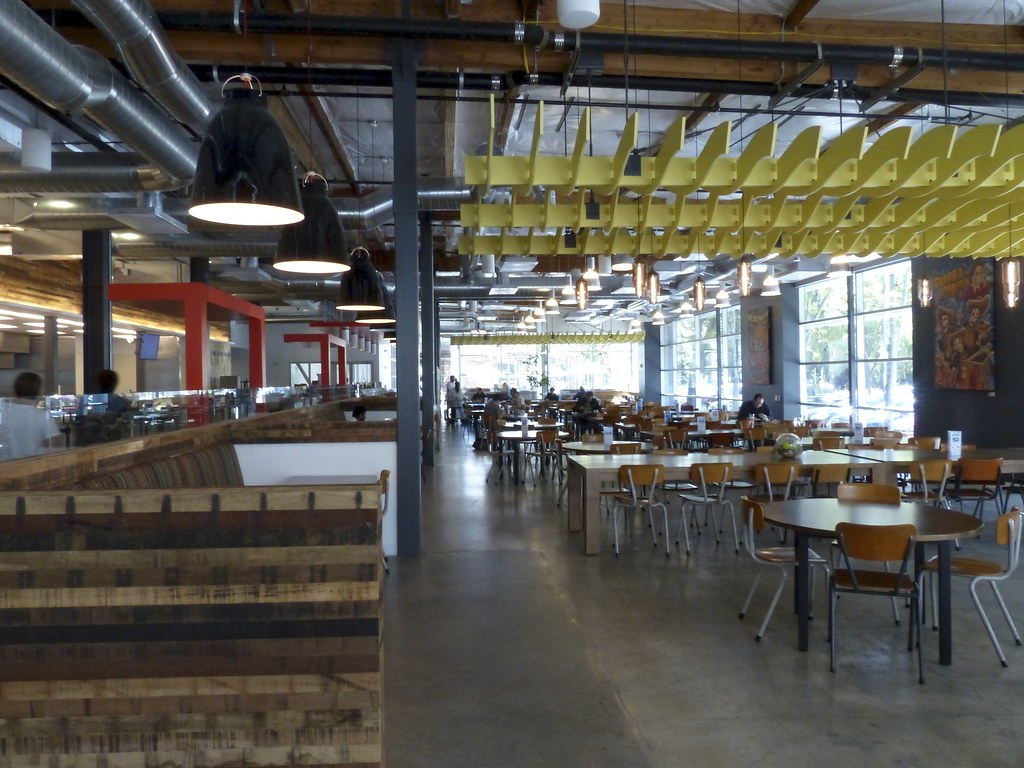
What would the Google restaurant be like?
We won’t talk about the decor, which we assume would be in full colour.
Imagine walking into the Google restaurant, picking up the menu and seeing which dish the most people have ordered today, or even the most popular one over the whole month. If the menu shows that 800 people have ordered a particular dish this week, that figure would probably influence our decision, because 800 people can’t be wrong.
On the internet, Google also detects when people like a page, and to some extent it does so thanks to the users themselves. But in offline businesses, people are not usually rude enough to criticise a meal they didn’t like; they simply don’t come back.
Imagine a restaurant giving you the chance to fill in a quick survey on how satisfied you were with each dish, with the quality of the wine, with the quality of the dessert…
If hundreds of people criticise the same dish (number 84) or the same wine, and hundreds of others rate dish number 56 highly, the restaurant would read the data, quickly take dish 84 off the menu and focus its efforts on preparing more of dish 56.
Over time, thanks to customer ratings, the menu would be made up only of excellent dishes: the ones customers really like.
Now imagine knowing your customers perfectly, as if you could keep a record of cookies: knowing how many sporty customers you get each month and which dishes that type of customer prefers, or how many customers prefer food with less salt, or how many really appreciate a particular type of wine.
And most striking of all: links
The key to a website or a blog is to talk about what you know and link to the expert on what you don’t.
Imagine a cluster of businesses linked to one another, where your restaurant somehow sends customers to another restaurant, just as that other restaurant recommends yours. People don’t always eat at the same restaurant; they like variety too. But everything would stay within that community, just as the restaurant could send customers to a particular pub, and that pub could recommend your restaurant to its most discerning customers.
In this way, businesses would “link” to one another, creating a kind of “offline PageRank”.
That is how Google would think if it left the internet for the restaurant business with the same thinking it uses today.
Clearly, achieving all this would take some technology. The point is that it sounds good, and I’d venture to say that sooner or later someone will do it.
Who will create this system of shops, cafés and restaurants linked to one another like one big community of users?
Jarvis mentions a restaurant that has already built a system based, in a way, on Google thinking, where customers collaborated on the restaurant the way users do on Wikipedia. The customers themselves helped with the design, the logo and the concept. The restaurant even shared part of its profits with its community of customers.
We can go even further. These days everyone says they are worried about their privacy, yet the truth is they voluntarily share all kinds of data. And for a restaurant, sharing could be very good. If you are a chef, imagine everyone being able to watch how you prepare the food, or even making videos explaining your recipes. That way, through a blog or a YouTube channel, you could become a local star, which would benefit your restaurant.
Think about how you could use the profitable model of the internet and Google in your own business.
Further reading


