

Editor’s note: This article was first published in June 2015. The 1.9 billion servings a day and more than 250 independent bottlers are 2015 company figures, and Coca-Cola’s place among the most valuable brands is also as of then.
Coca-Cola went from being a cocaine elixir in 1886 to a sugary drink found all over the world by 1929.
Today, people consume 1.9 billion servings a day, according to The Coca-Cola Company.
Having a product people enjoy is not all it takes to become one of the most valuable companies in the world.
Coca-Cola uses seven key design and marketing strategies. What made it as recognisable on the streets of Shanghai as in its home town of Atlanta in the 1920s, says Coca-Cola vice president David Butler, was innovation and entrepreneurship.
In the book Design to Grow: How Coca-Cola Learned to Combine Scale and Agility (and How You Can Too), Butler and his co-author, Linda Tischler, explore these seven strategies, which were summarised by Business Insider:
1. It all started with a unique, market-tested formula
After serving as a Confederate colonel in the Civil War, John Pemberton wanted to develop a version of the coca wines (basically cola with alcohol and cocaine) that were fashionable at the time. In 1886, Atlanta passed prohibition laws that forced drinks makers to produce non-alcoholic versions of their beverages.
Pemberton sent his nephew Lewis Newman with samples of his formulas to a local pharmacy where people gathered to drink these early versions of soft drinks. Newman passed on feedback about the various concoctions to his uncle, and by the end of the year Pemberton had a recipe that was unique and tailored to customers’ tastes. The original recipe is still locked in a vault in Atlanta.
Cocaine was removed from Coca-Cola in 1903. Other minor adjustments have been made over the past century or so, but apart from the “New Coke” disaster of 1985, the recipe has remained practically unchanged. This decision helped the company scale, Butler says, because it does not spend time trying to adapt the flavour to regional markets around the world.
2. Its logo uses a timeless typeface
Pemberton decided that the Coca-Cola logo should be written on containers in Spencerian script, because it would set the drink apart from its competitors. The company standardised the logo in 1923 and, as with the recipe, decided that while the packaging could adapt to the times, the core logo would stay the same.
The result is a logo that has had more than 100 years to imprint itself on people’s minds all over the world.
3. It is sold in a proprietary bottle
After Georgia businessman Asa Griggs Candler became Coca-Cola’s majority shareholder in 1888, he set his sights on making Coca-Cola the most popular drink in the country through marketing and partnerships with regional bottlers.
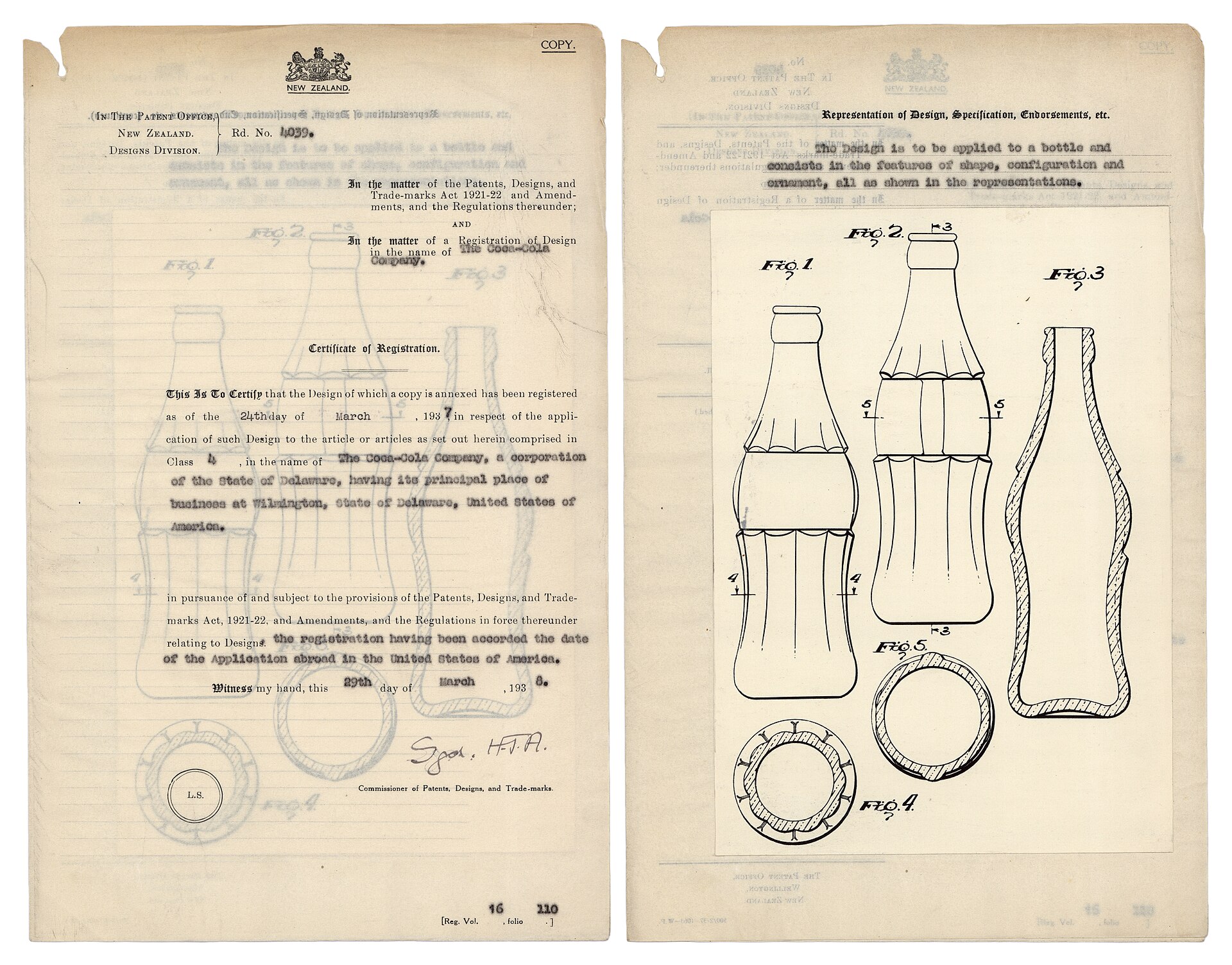
By 1915, Candler was losing market share to hundreds of competitors. He launched a national competition for a new bottle design that would signal to consumers that Coca-Cola was a premium product that could not be mistaken for any other brown cola in an identical clear glass bottle.
The new bottle also had to be mass-producible using existing equipment.
The Root Glass Company in Indiana decided to enter the competition and based its design on the product’s name. Looking up the word “coca” in the dictionary, Butler writes, mould supervisor Earl R. Dean came across an illustration of the cacao plant that caught his eye. Coca-Cola had nothing to do with cacao, but the cacao pod had a strange yet attractive shape. He and his team got to work and were declared the winners of the competition.
Coca-Cola commissioned the bottle design as a piece of defensive marketing, but it began to promote the shape as much as the logo and the product. Even after plastic replaced glass as the standard way to drink Coca-Cola in countries such as the US, the company kept promoting the image of the Coca-Cola bottle as an icon.
4. It enlisted retailers to keep standards high
Ernest Woodruff’s Trust Company of Georgia bought Coca-Cola from Candler in 1919. Woodruff focused on maintaining a standard of excellence at scale.
The Coca-Cola team decided that its drink should be served at 36 degrees Fahrenheit, and sent salespeople to new retailers to tell them the product should never be served above 40 degrees.
The tactic may seem a little silly today, but the 36-degree standard was one more example of establishing Coca-Cola as a premium product that deserved more attention than any of its competitors.
5. It kept the same price for 70 years
It is common today for high-tech start-ups to begin by offering a service for free and then charge consumers or advertisers a higher price once they are hooked. Long before the web, Coca-Cola used a similar approach to scale across the US and around the world.
From 1886 to 1959, a bottle of Coca-Cola stayed at a price of 5 cents.
6. Word-of-mouth advertising
For Candler, Coca-Cola was as much a drink as a consumer brand that people could feel good identifying with.
Candler started a massive promotional drive in which 10% of all products were given away to build brand awareness. He also supplied retailers with posters and festoons for decoration, and with calendars and clocks for customers. According to Butler, Coca-Cola pioneered putting its brand on items unrelated to the product.
7. It adopted a franchise model
In the middle of the soda wars that broke out in the 1880s, Candler’s most important business decision had nothing to do with the brand, Butler says.
In 1899, two Tennessee lawyers, Benjamin Thomas and Joseph Whitehead, approached Candler and asked whether he would let them bottle Coca-Cola. The drink was sold as a syrup that retailers mixed with soda water, and drinking cola on the go was not common. Candler decided to hand over the bottling rights for a single dollar, which he never collected, because he was happy to keep the rights to the syrup.
This was the start of what the company internally calls the Coca-Cola System, a franchise partnership with bottlers that allowed the brand to truly take off. Today there are more than 250 independent bottlers around the world.
“The Coca-Cola Company is not one giant company. It is a system of small companies“, and this pattern helps it scale new products, new communications, new equipment and so on. “The design of this pattern is critical; when you want to scale fast, you can.”
Featured image: Archives New Zealand from New Zealand, CC BY-SA 2.0, via Wikimedia Commons.



