Editor’s note: This article was first published in June 2015. Its figures are from 2015, including Buffett’s $70 billion, Zuckerberg’s $33 billion and Facebook’s 1.3 billion users. Adelson died in 2021, Bill and Melinda Gates divorced in 2021, and Trump appears only as a businessman.
Billionaires such as Amancio Ortega, Bill Gates, Mark Zuckerberg and Warren Buffett, among others, have a unique set of attributes and traits that most people lack. Or perhaps people do not know they have them, or that they can work on them.
Some of them may have been born with these attributes, but most of these traits do not come naturally; they are skills these billionaires honed and habits they nurtured on their way to wealth.
These are some of the traits that took billionaires from their beginnings to extraordinary success. Because the traits are not innate, anyone can work on acquiring them and applying them in their own lives to achieve greater success and wealth.
(See also: 25 habits of successful people)
1. Vision (Amancio Ortega).
Amancio Ortega is a business visionary. He had no formal education or business training, but he has known how to listen to the market and to customers’ needs, and to stay one step ahead of the competition. He is a simple man who dislikes glamour and does not surround himself with great luxury.
His vision was not only for fashion but also for a growth model built on low debt. Ortega did not buy all of his shops; he rented them. That way, if a shop did not work, he closed it.
He also changed, in a way, how businesses think about competition. On a single street you can find six shops that belong to Amancio Ortega under different brands. That way, Ortega fights the competition by being his own biggest competitor.
2. Patience (Warren Buffett).
Warren Buffett, the second-richest man in the world, built his $70 billion fortune simply by taking his time. He is not a fan of hot stocks or knee-jerk reactions to market swings. Buffett uses the value investing method, which consists of investing an amount, adding the interest earned to the principal, giving it time and letting it grow through compound interest. Compound interest on very large sums of money, mind you.
(Read: The Warren Buffett myth and how the public misunderstands value investing)
3. Gratitude (Oprah Winfrey).
Despite running into all kinds of obstacles on her way to success, racism included, the queen of television has not let her net worth of about $3 billion go to her head. For all her success, she is remarkably grateful. Her legions of fans draw inspiration from words of wisdom such as:
“Be grateful for what you have and you will end up having more. If you focus on what you don’t have, you will never, ever have enough.”
(Read: Five Oprah Winfrey quotes on overcoming adversity)
4. Courage (Michael Bloomberg).
In 1982, at the age of 39, Michael Bloomberg left Wall Street, the only full-time job he had ever had. He took a big risk and started his own company based on an unproven idea: making reliable financial information available to users and businesses on their computers.
This was before people really had that many computers, and almost everyone thought it would fail. In his words:
“Life is too short to spend your time avoiding failure.”
(Read: Michael Bloomberg: if you want to succeed, stop going to the bathroom)
5. Inquisitiveness (Larry Ellison).
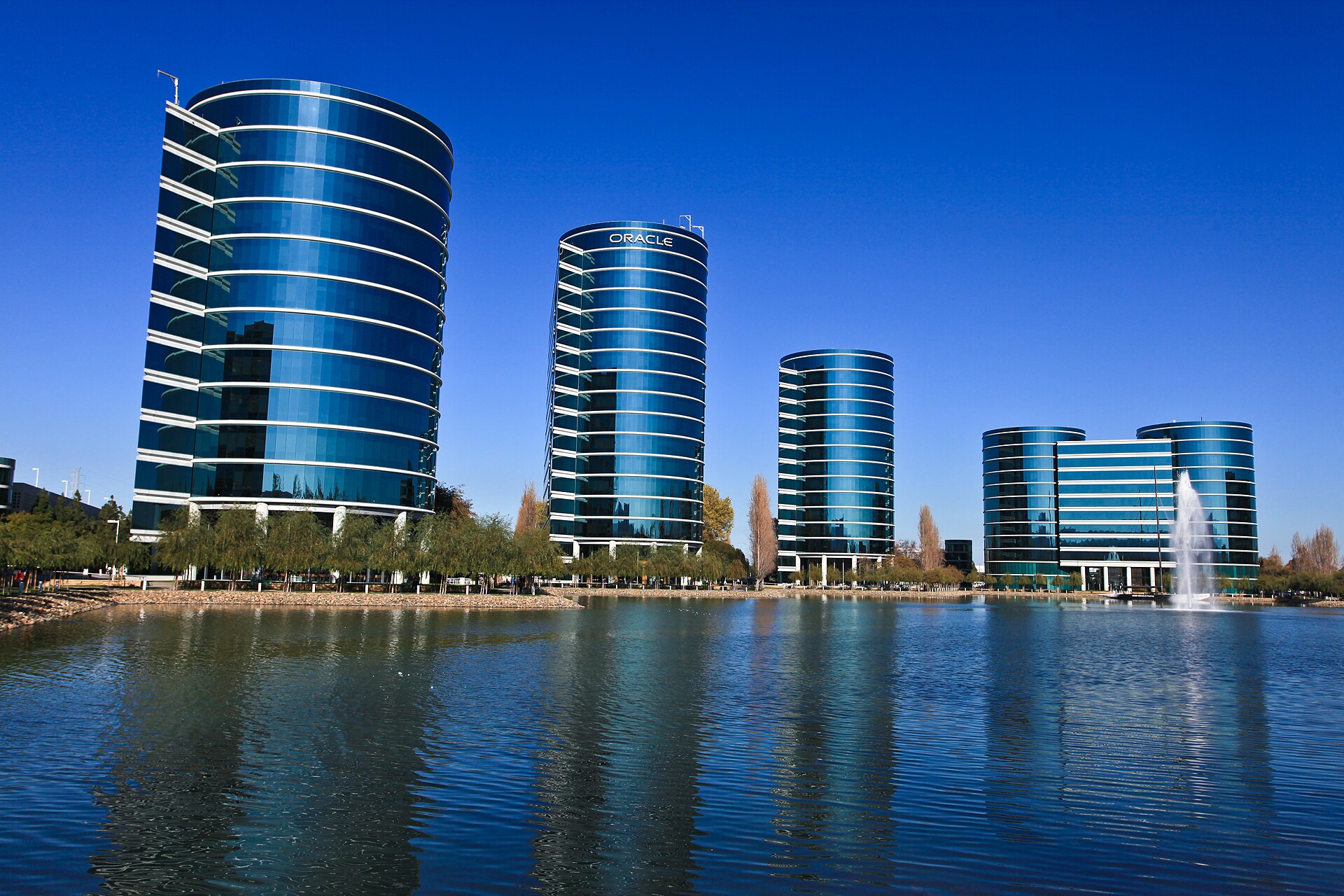
Larry Ellison, the college dropout and billionaire founder of Oracle Corporation, the world’s second-largest software company, says his inquisitive nature is responsible for his success.
“The most important aspect of my personality, the thing that determines my success, is my habit of questioning conventional wisdom, doubting experts and questioning authority. Although it can be painful in your relationships with parents and teachers, it is enormously useful in life, and even more useful in business.”
6. Tenacity (Sheldon Adelson).
Sheldon Adelson, CEO of Las Vegas Sands Corporation, was ranked by Forbes as the sixth-richest man in the US, with a fortune of $30 billion. He started in business at the age of 12, and by 30 he had already built and lost a fortune twice.
Despite his losses, his tenacity never flagged, and since the opening of the Sands Macao in China, Adelson’s personal wealth has grown fourteenfold.
7. Persistence (Mark Zuckerberg).
What took Mark Zuckerberg to success was his relentless development work in Facebook’s early days. The Winklevoss twins, founders of ConnectU, one of the first college-based social networking sites, were completely steamrolled when Zuckerberg launched Facebook.
Zuckerberg built a superior product, added more colleges and built an empire that threatened even the social media giant of the time, MySpace.
Facebook still reigns and keeps pushing the limits of social media by collecting sensitive data on its users, constantly changing its algorithms and offering paid product advertising, but it is this kind of persistence that has earned him a net worth of $33 billion, according to Forbes. What Zuckerberg has achieved, bringing more than 1.3 billion users together in one place, was simply unthinkable.
8. Innovation (Sergey Brin).
Google co-founder Sergey Brin wanted to build the best possible search technology. Nobody believed in the idea; they were told search engines were not a profitable business (even Yahoo did not want to buy the search engine). He and his partner Larry Page maxed out their credit cards to buy servers, and by the end of the 1990s Google dominated the search engine market.
9. Passion (Donald Trump).
Billionaires do not find success on their own; they use their passion to inspire and energise others. “Without passion you have no energy; without energy you have nothing,” Donald Trump likes to say. He has devoted his whole life to his passion: doing deals. “Nothing great in the world has been accomplished without passion.”
(See: The entrepreneur’s mindset: Donald Trump’s 10 commandments)
10. Curiosity (George Soros).
Billionaire investor George Soros is often compared with Warren Buffett, but they are very different in many ways. Soros is emotionally tied to his business and lets his natural curiosity influence his decisions.
World-famous for making $1 billion on a speculative trade that brought the Bank of England to its knees, Soros loves philosophy and sees investing as a way of testing his theories.
He is also constantly looking for flaws in his theories and is open to other people’s ideas. This kind of curiosity has made him the 26th-richest person in the world.
11. Confidence (Michael Dell).
Michael Dell is one of the many entrepreneurs who went from rags to riches thanks to the dot-com business. Dell enrolled as a pre-med student at the University of Texas in 1983, but computers were his real passion.
He began selling computers from his dorm room and eventually dropped out to start Dell Computer Corporation.
Dell became the youngest CEO of a Fortune 500 company in 1992, and he is still at the helm. In his words:
“You don’t have to be a genius, a visionary or even a college graduate to succeed. All you need is a dream, and to get to work on achieving it.”
12. Creativity (Jan Koum).
The creator of WhatsApp is a self-made billionaire with a net worth of $7.1 billion, according to Forbes.
He dropped out of San José State University to start an innovative app that disrupted the mobile messaging industry. WhatsApp has more than 600 million monthly active users and was sold to Facebook in February last year for $19 billion.
13. Fearlessness (Richard Branson).
Richard Branson did not become a billionaire by playing it safe. The founder of Virgin Group, which is made up of more than 400 companies, believes you have to step out of your comfort zone and take risks if you want to achieve greatness. In his words:
“You don’t learn to walk by following the rules. You learn by walking, falling over and getting back up.”
(Read: What makes Richard Branson so special and unique)
14. Charm (Mark Cuban).
You have to be a people person if you want to build an empire. Mark Cuban, one of the richest people in the world with a fortune Forbes estimates at $2.7 billion, knows how important it is to win hearts and minds.
“People hate dealing with jerks. It’s always easier to be nice than to be a jerk.”
15. Humility (Bill Gates).
Bill Gates and his wife Melinda have devoted most of their fortune to improving the lives of the world’s poorest people. Yet despite donations totalling tens of billions of dollars, Gates acknowledges that others are making contributions more significant than his.
“I’m not going to stop eating or going on holiday. I’m not really sacrificing anything I want, and there are people who are sacrificing a great deal and giving everything to help the most disadvantaged.”
(Read: How Bill Gates makes $1 million a day without lifting a finger)
Further reading
- The eight beliefs of successful business people
- 16 hard things you will have to do if you want to succeed in business
Featured image: Håkan Dahlström, CC BY 2.0, via Wikimedia Commons.