Editor’s note: This article was first published in July 2015. Its “iCar” remark reflects 2015 speculation about an Apple car; Apple reportedly dropped the project in 2024.
Even today, the story of the “i” that comes before the names of Apple’s products is still held up as an example by naming agencies, the firms that come up with attractive names for companies’ products. Although there are plenty of rumours about where the “i” in iPhone, iPod, iPad, iWatch, iTunes… might come from, who better to ask than the person who had the excellent idea of distinguishing all those different products while tying them to a single company, in this case Apple?
Some rumours say the “i” is down to Apple’s star design genius, Jony Ive, while others believe it was a sudden idea that came to Steve Jobs in a moment of inspiration. But it was neither. The “i” was the result of careful work by an advertising agency, and Steve Jobs very nearly threw it out, which would probably have given the iPhone a very different name today.
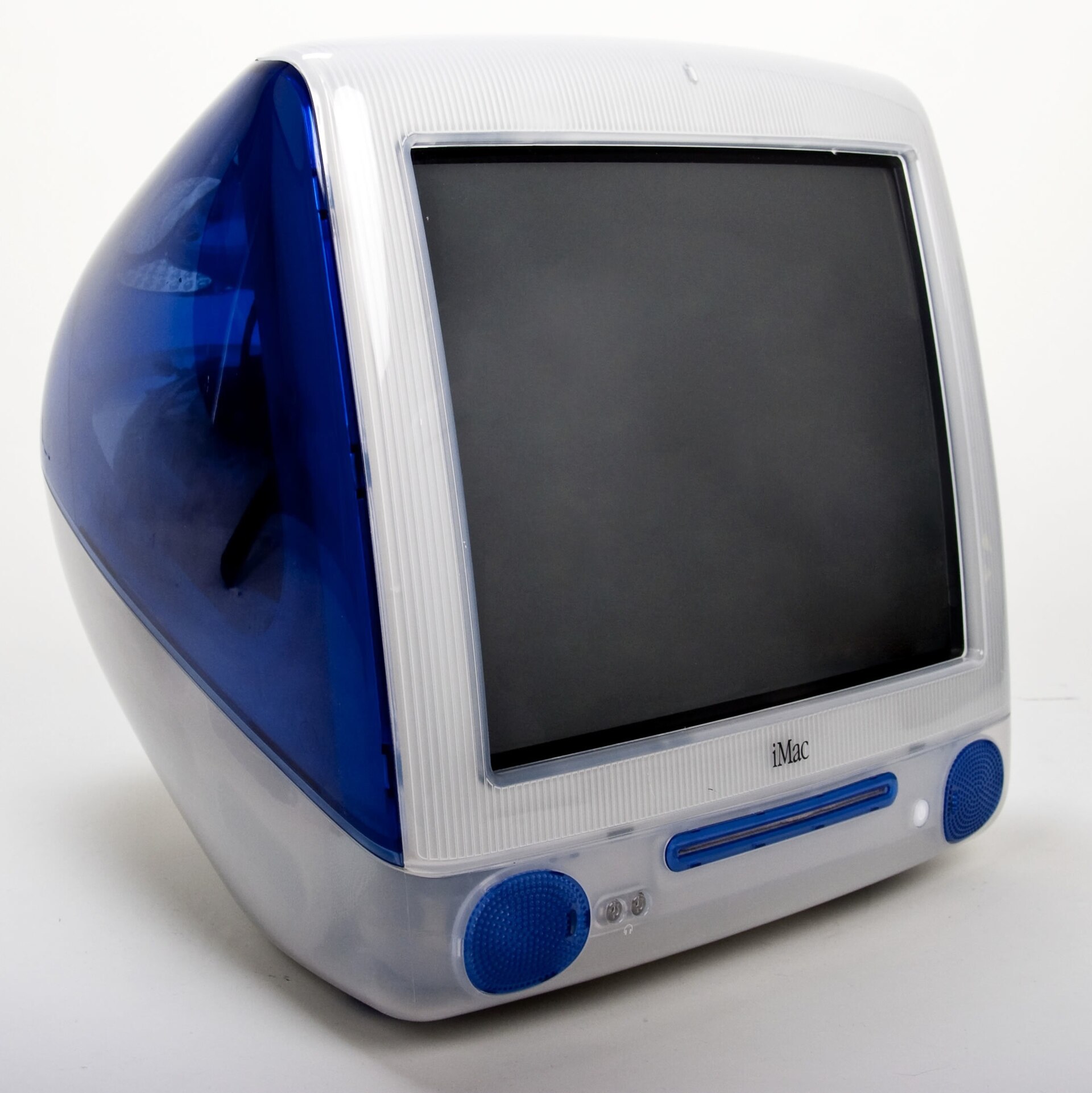
As Ken Segall tells it, Steve Jobs was looking for a name for the Mac in 1997, “a computer that looked like nothing we had ever seen before”, Segall said. A product as innovative as it was revolutionary.
But it still had no name, so Jobs called the advertising agency he worked with to get them working on it. Jobs set one condition: the name had to include the word “Mac”. He also told the team of ad people, led by Ken Segall, that if they didn’t come up with a better name, the computer would be called “MacMan”.
Jobs had no problem admitting that he had come up with the name MacMan by thinking of Sony’s legendary music player, the famous Walkman. To Segall, the name was awful, not to mention the obvious gender connotations of the “man”.
Segall’s team started working on a long list of names for the Mac and, after whittling it down, ended up with its five favourites, the top favourite being iMac. It was a simple name, easy to remember, and the “i” said a lot on its own.
That “i” told you this was a Mac ready to venture into the world of the internet, and it could also be associated with “individual” and “imagination”. Although Segall’s team had no idea that Apple would end up making tablets and mobile phones as well as computers, they did think that the “i” could be used for other products in the future.
The problem came when they presented the name to Steve Jobs, who didn’t hesitate to tell Segall something like: “I hate all those names. I prefer MacMan. You have one week to find another name, or the final name will be MacMan.”
The ad people got to work on new names to present to Jobs, but Segall remembered the words of a wise old hand in advertising: “As long as you have new ideas to share, you are free to present the old ones again.” So, as well as looking for new names for the Mac, Segall put iMac back in as his favourite.
Once again, Jobs didn’t like the names, although this time he did say, more or less: “Well, I still don’t like iMac, but at least this week I don’t hate it. We only have two days left, and I still think MacMan sounds much better.”
During those two days, Jobs went around asking everyone at the company what they thought of the name iMac, and he even had the name silk-screened onto one of the computers to see how it looked.
Once he saw the name iMac on a computer, he decided to go with it.
That “i” would become one of the most important elements of the Apple brand. Just by seeing a product whose name begins with that lower-case “i”, you know you are looking at an Apple product. Then came the iPod, iPad, iPhone… and the day you see the name “iCar”, you will have no doubt that you are looking at a car made by Apple.
The opposite of Apple’s philosophy of simplicity would be the way Dell names its products: Inspiron, Vostro, XPS, OptiPlex. According to Segall, these names are very impractical, because every time a company like this adds a new product to its range, that product’s name has to carve out a place in the consumer’s vocabulary.
Simplicity is uniqueness.
Ken Segall, who went on to write the book Insanely Simple: The Obsession That Drives Apple’s Success, explains the power of simplicity not only for products, but for something as basic as a name, a brand or a logo.
Giving a product a name that is easy and simple to remember doesn’t guarantee success, any more than getting a university degree guarantees success, but it does increase the chances of success, Segall explains in his book.
Human beings are wired to identify products with simple words. Ask more of them and you may be disappointed.
Likewise, a large part of Apple’s success has come from having a small product range. While most computer companies had a broad catalogue of up to 15 different products, each with different prices and seemingly different uses, Apple focused on making just a few. At the time, after his return to Apple, Jobs made his position on products very clear: users had consumer laptops, professional laptops, consumer desktops and professional desktops.
Further reading
- Steve Jobs’s and Bill Gates’s first business ideas, and how they shaped their futures as entrepreneurs
- 11 Steve Jobs quotes that will go down in history
Featured image: Carl Berkeley, CC BY-SA 2.0, via Wikimedia Commons.