How can you be happy when everything seems to be going wrong?
At some point we’ve all thought about the events that, if they happened, would make us very happy, such as finding a job (if you’re unemployed), getting a pay rise or winning the lottery… Just as we’ve thought about the events that could bring sadness into our lives: losing our job, a serious accident, breaking up with our partner, and so on.
If I told you right now that a devastating event in our lives, such as ending up in a wheelchair, and a very positive one, such as winning the lottery, would leave the vast majority of us exactly as happy as each other a year later, I suppose you’d think I’d gone mad just for mentioning it.
False beliefs
Most people think that someone who ends up in a wheelchair after an accident can no longer enjoy happiness in the same way. But that isn’t entirely true. By that logic, if you’re not in a wheelchair, you’d have no reason not to be happy. And yet most people have plenty of reasons not to be happy.
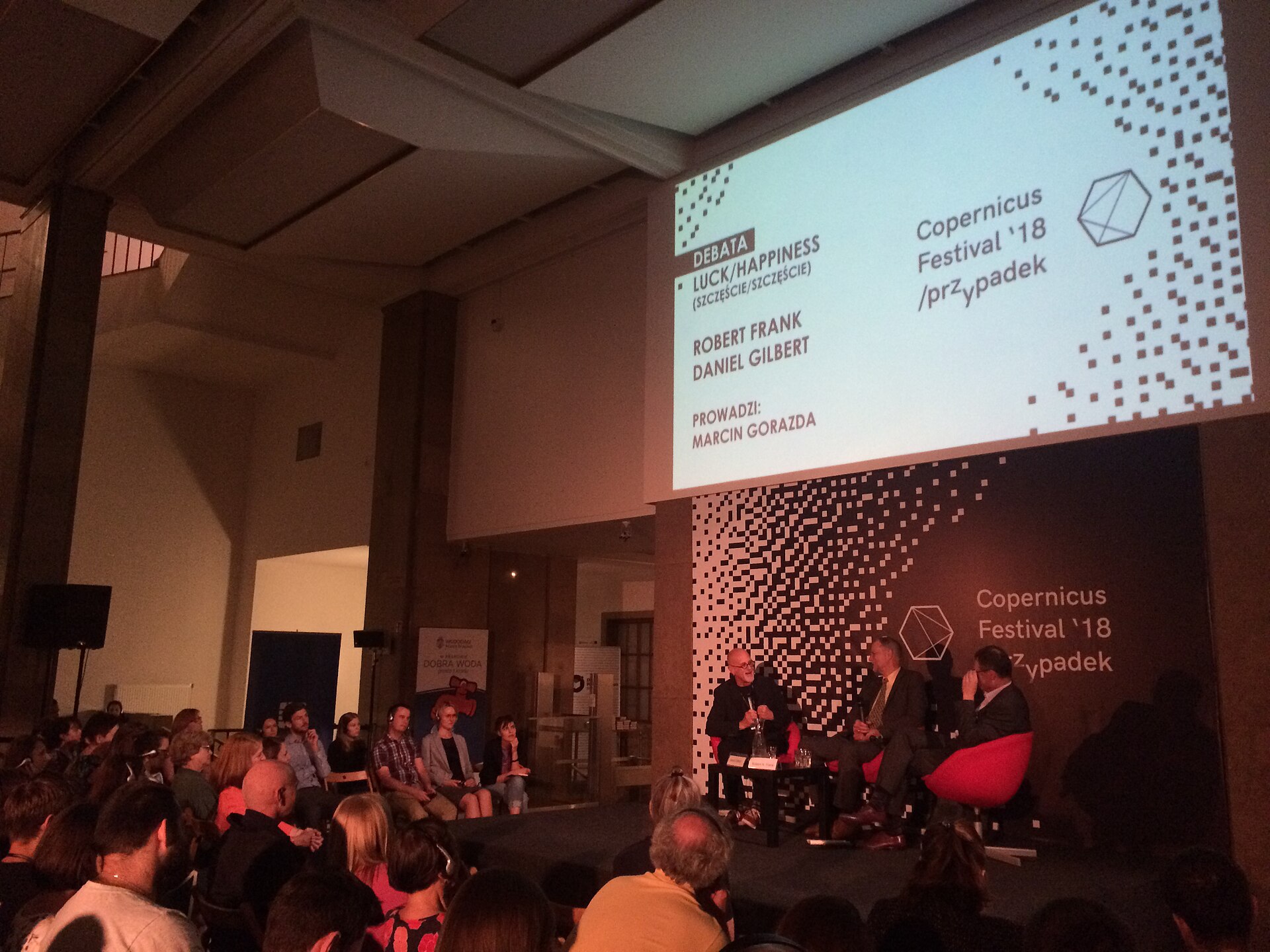
Harvard University psychologist Daniel Gilbert, author of the bestseller Stumbling on Happiness, analyses many of the ways in which we misjudge how situations and unexpected events can make us happy or very sad. As you’d expect, he answers many of the questions that explain why people who have everything they need to be happy fail to find happiness, while others who lack even the basics would become the happiest people alive thanks to an event most of us would consider minor.
When was the last time you gave thanks for being able to have breakfast? When was the last time you appreciated the sound of hot water while you showered? And the last time you were grateful for being able to decide what you want to do with your life, even if you then decide to do nothing?
It may seem too extreme, but the truth is that you would brighten the lives of millions of people around the world if you told them that from now on they could at least have breakfast three times a week and a hot shower once a month. In fact, millions of people would be happy simply to be able to drink a glass of clean water once a week.
But beyond this, Gilbert reveals some counterintuitive ideas about what really makes us happy and what doesn’t.
The impact bias
Imagine an earthquake destroys your home, or you have a serious accident that leaves you paralysed from the waist down. When Gilbert asked people about these events, everyone agreed how devastating they would be. Some even said they would rather die than never walk again.
But both Gilbert and a famous study published by Northwestern University researchers in 1978 found that the happiness levels of paraplegics and big lottery winners were exactly the same a year after the event. Yes, you read that right. One person loses the use of their legs, another fulfils their dream of winning the lottery, and a year later both are equally happy.
We tend to overestimate the impact events have on our lives. Extreme positive and negative events can hurt us emotionally or make us very happy in the short term, but according to numerous studies, in the long term they don’t have as much impact as we think they will.
See also: 16 things you should know about life, money and happiness
Is it a matter of regression to the mean?
The truth is that someone left in a wheelchair after an accident is so emotionally shattered that things can only get better, and what Gilbert calls the “psychological immune system” starts building defences to help you get through the situation and focus not on everything you won’t be able to do, but on what you can still do despite your new circumstances.
On the other hand, the person who wins a big lottery prize has already had the “mother of all events” in our money-based society. Seen this way, they have already reached the peak of happiness, so after their overestimated initial joy, things can only get worse.
It’s a question of focus
The problem is that the lottery winner forgets about the other 99% of life that has nothing to do with money: despite now having money, that person will still feel bad in the morning when they haven’t had enough sleep.
They’ll still be stuck in traffic when they drive into town and will still have to exercise if they want to stay in shape. On top of that come new negatives, such as becoming more distrustful, having to take precautions as someone newly rich, and constantly worrying that someone might harm their loved ones to get hold of part of their money. And money won’t stop a loved one from dying of illness either.
If they used to spend hours reading to learn new skills, they may now feel they no longer need to learn. They’re so eager to do new things that doing what they did before getting rich will seem like a waste of time. That’s why the newly rich often end up worse off than they were.
Meanwhile, the person paralysed from the waist down can go on enjoying many of the things they used to enjoy. As a Greek philosopher said long ago, “lameness is an impediment to the leg, but not to the will.”
This person can still watch their favourite TV series, talk with friends, read a good book and eat pizza.
Gilbert concludes that there is plenty of room for happiness in a life that may seem undesirable to our imagination today, just as there is plenty of room for sadness after an event that brings great happiness in the short term.
Now let’s learn the lesson
Of course, I’ve chosen the most extreme examples, such as a traumatic accident, but what you look for is what you’ll find.
Sometimes, when I’ve seen someone in a wheelchair say that it changed their life, and not for the worse, because they have now learned to love life, there is always someone who says those words are just the resignation of a person who can’t do anything to change their situation.
But… why call it resignation rather than acceptance? That person is following the most basic rule of happiness: don’t dwell on the negative, and appreciate the positive; don’t focus on what you’ve lost and can’t get back, but on what you can still do.
In other words: focus on solving the problems that have a solution, and let go of the ones that don’t.
Those of us who have two arms and two legs can learn from that, because even so we sometimes torture ourselves with all kinds of problems, some of which we even make up.
Nobody said life would be perfect, but if you look for negative things in your life, you’ll find them; if you look for positive things, you’ll find them too. That’s because we are all surrounded by both problems and good things. It depends on where you put your focus.
As we’ve said hundreds of times, happiness is an internal state that doesn’t depend on material things but on who you are; happiness isn’t something to achieve, but a state of mind you inhabit.
See also: 6 things money can’t buy, and they’re not what you think
Featured image: Franek Vetulani, CC BY-SA 4.0, via Wikimedia Commons.