

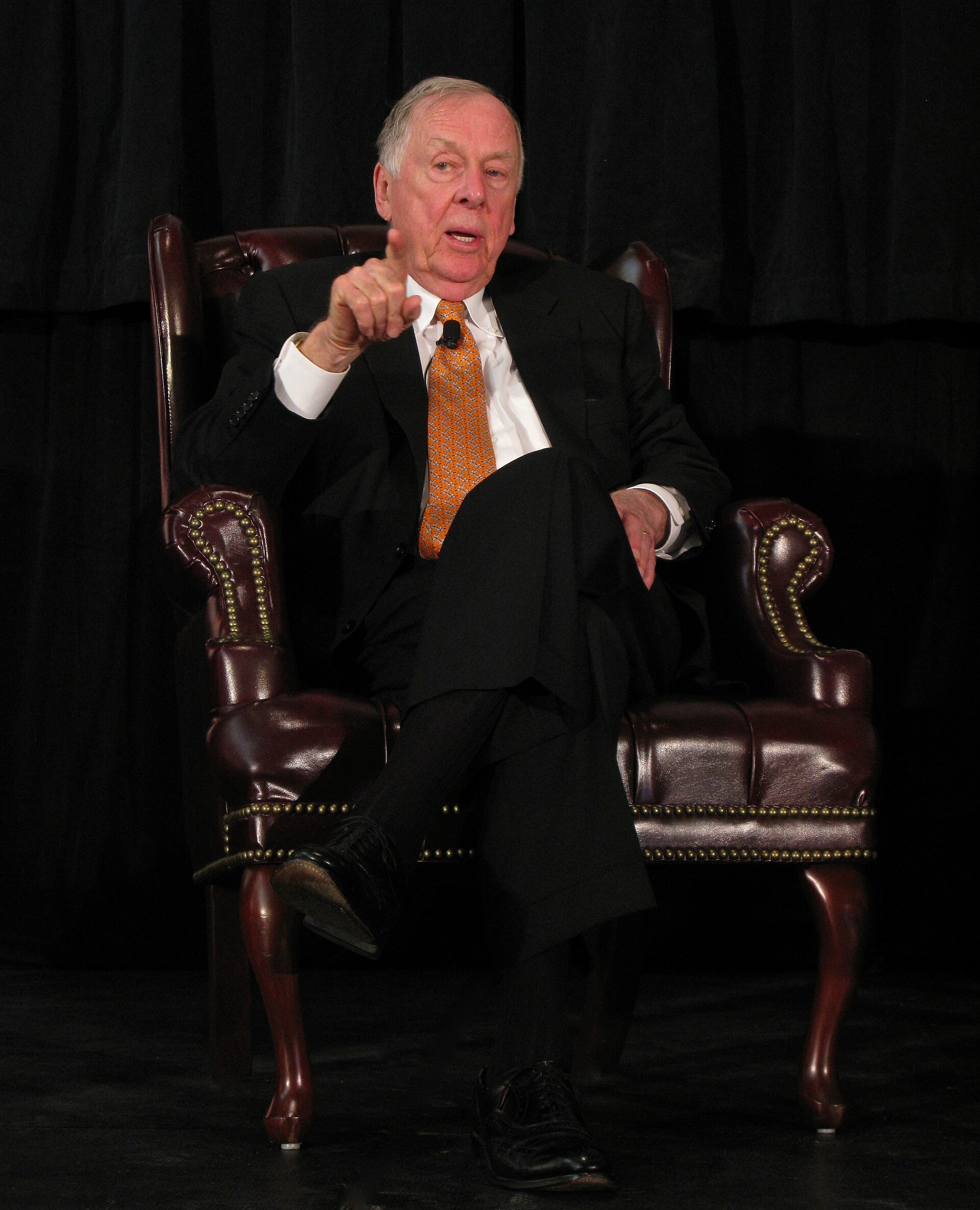
Editor’s note: This article was first published in October 2015. Roles are as of 2015, including Maynard Webb as chairman of Yahoo, Angie Hicks at Angie’s List and Pickens at BP Capital. T. Boone Pickens died in 2019.
LinkedIn recently asked some of the brightest minds in business to share their best productivity tips and hacks, because we sometimes mistake being busy for being productive.
To do so, it launched the #ProductivityHacks series, in which leading business figures such as Richard Branson, Tony Robbins and Travis Bradberry, among others, shared some of their tricks for getting more done.
Before this series of tips, Steve Jobs was one of those who taught us how to make meetings more productive, albeit Jobs-style.
1. Richard Branson: “Be committed to punctuality”
If you want to be more productive, start at the beginning: “be on time”, writes the founder of Virgin Group on his LinkedIn profile.
Branson says that being punctual is also a sign of respect for others.
“Being punctual doesn’t mean rushing around all the time,” he explains. “I always take time to exercise and spend time with my loved ones. It simply means organising your time effectively.”
Of course, some things, like traffic, can’t be avoided, but even then Branson says he does whatever it takes to get where he needs to be on time.
Being on time doesn’t mean his schedule is rigid, he says. “It means being effective at delegating, organising and communicating,” he writes.
2. Tony Robbins: “Ditch your to-do list”
“The biggest problem with to-do lists is that focusing only on what you have to do doesn’t guarantee that you’re actually making any real progress,” writes the author of Awaken the Giant Within.
“To-do lists can keep you busy, of course, and there’s a certain satisfaction in checking off a series of finished tasks. But sometimes, even when you’ve crossed off the whole list, you feel as if you haven’t really accomplished anything.”
Robbins suggests shifting your thinking to focus on the key results that matter most in life, rather than on mere activity or a to-do list.
“You have to be very clear about what you want,” Robbins writes. “The clearer you are about what you want, the easier it is to achieve, because then you can design all your activity to move towards it.”
Next, Robbins says, you need to work out why you want to achieve that result. “If you have a compelling enough reason and a strong enough purpose, you’ll find a way to make it happen.”
Once that’s clear, Robbins says the next step is to develop a Massive Action Plan, or MAP. “The MAP is simply the specific steps, or actions, you have to take in order to achieve the result.”
3. Neil Blumenthal: “Eliminate bad meetings”
“Since meetings dominate the modern office schedule, especially among executives, I try to make meetings as useful, efficient and productive as possible so that everyone is engaged,” writes the co-founder of Warby Parker.
He says that last year he and co-founder Dave Gilboa noticed that Warby Parker’s meetings weren’t very efficient, so the two of them led a review of meeting protocols across the whole company.
The new productivity rules they adopted are very simple:
- No update meetings, only decision-making meetings.
- The material to be covered in the meeting must be shared in advance with everyone who will attend.
- Everyone must do their homework before walking into the conference room.
- Mobile devices are banned.
“We’ve found that all of these practices ensure that team members actively participate in the meeting.”
4. T. Boone Pickens: “Always keep a folder by your side”
“At BP Capital, my team and I are flooded with more reports than people would imagine, everything from precise rig-count data to weather forecasts and more,” writes Pickens, founder, chairman and CEO of BP Capital and TBP Investments Management. “There’s no way I could digest all of that and get anything done during a normal working day.”
His solution is to always keep his trusty hard plastic folder at hand, closed with a black elastic band so that no document goes astray.
Pickens says you might find any number of documents in his folder, including the impact of the latest OPEC announcement, an analysis of a new energy technology, a personal note from a family friend, or a thank-you note from the proud parents of an Oklahoma State student.
“My folders help me turn downtime into gold,” he writes. “I’m better informed on the essential issues. My team can share key documents with me. And there’s always a surprise or two that makes my day.”
5. Maynard Webb: “Trust, but verify”
“I expect the best from everyone, but I invest in methods up front to make sure we can achieve together everything we set out to do,” writes the chairman of Yahoo. Building relationships of trust saves an exponential amount of time, he says.
Webb builds trust through a few key steps:
- Making sure people know what they’re doing and by when.
- Checking in regularly.
- Encouraging people to share concerns.
- Being available for anything urgent, but setting time limits for dealing with everything else.
- Asking questions instead of telling people what to do.
“I’ve found that every trusted person delivers at least three times as much as the average person, which saves me all that time.”
6. Angie Hicks: “Ask yourself what matters most”
“If you want to be more effective, don’t be a victim of your calendar,” writes the co-founder and CMO of Angie’s List.
“I’ve learned to limit the number of hours I allow myself to schedule in a day. If I didn’t, my working life would be an endless series of meetings, with no time to reflect, prepare, strategise, respond to crises or help the members of my team.”
To do that, you need to know what matters most, Hicks says, and that applies to different areas of work and life.
Hicks suggests working out what matters most for your working style, for your company and your superiors, and what matters most right now.
7. Travis Bradberry: “Never touch things twice”
“I’ve learned to rely on productivity hacks that make me much more efficient,” writes the author of Emotional Intelligence 2.0. “I try to squeeze every last drop out of every hour without any extra effort.”
He does this by acting on things as soon as they need his attention, instead of putting them off until later.
“I don’t save an email or a phone call to deal with later. As soon as something needs my attention, I act on it, delegate it or delete it.”
To do this, you need to master a few key tricks:
- Do the hardest things first and save the more exciting tasks for later.
- Don’t be fooled by “urgent” tasks. Eliminate or delegate the things that get in the way of real momentum.
- Say no when necessary.
- Check email on a set schedule.
- Don’t multitask.
“Never touching things twice simply means handling one thing at a time.”
Featured image: Steve Jurvetson from Los Altos, USA, CC BY 2.0, via Wikimedia Commons.



