

Editor’s note: This article was first published in December 2015. Its reference to readers who have been with the blog for more than seven years refers to the blog as of 2015.
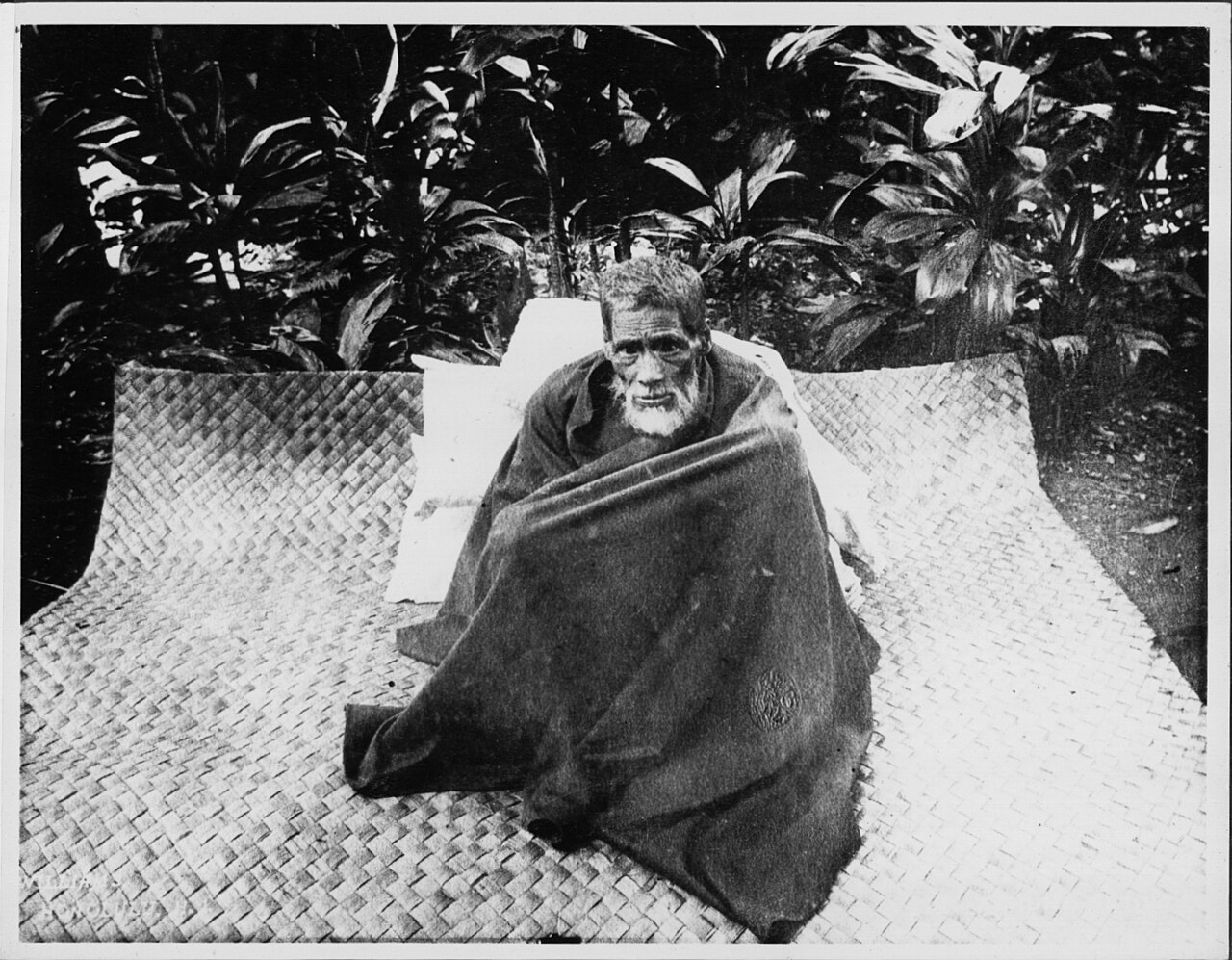
For those who aren’t familiar with it, Ho’oponopono is a Hawaiian art or technique for resolving problems and inner conflicts. Its philosophy comes down to a few words: “I’m sorry. I love you. Please forgive me. Thank you.” In other words: be grateful, feel, forgive and love.
Tony Robbins uses this philosophy in his famous seminar “Date with Destiny”, and some people say that adopting it and practising it consistently kept a number of attendees from taking their own lives at moments when they could no longer see any meaning in life.
And apparently, some of those people looked, from the outside, like successful people. That was the case with Robin Williams, a man who achieved financial success and a successful career as an actor.
But Williams had too many unresolved inner conflicts, which probably plunged him into depression, and from there into a complete and utter loss of meaning in life, until he decided to put an end to it and took his own life.
(See: How to reverse depression and raise your happiness levels, according to neuroscience)
What is Ho’oponopono?
It may sound overly spiritual, but it’s true that love and gratitude (being grateful for what we have, loving what we have) can literally change your life, or rather the way you see life, and put an end to much of our suffering.
Family conflicts or disputes
When there are conflicts or disputes in a family, the Ho’oponopono technique has all family members get together, sit down and begin a process of discussion, confession, repentance, restitution and mutual forgiveness. Nobody leaves the room until the conflict has been resolved. And it seems the technique works.
So I thought: “If Ho’oponopono works miracles in the lives of people carrying too much negative emotional baggage, couldn’t it also work for our friends the entrepreneurs and business owners, who are usually in the perfect position to carry twice the load of those same negative emotions?”
Let’s not forget that the secret price an entrepreneur pays is sometimes depression and suicide.
Business owners, like everyone else, face loss and frustration, but twice over: they suffer losses in their personal relationships and the loss or death of family members, and at the same time they suffer the loss of clients and a constant fear of their business dying.
Constant fear
A major loss for a business owner might be a big-billing client who decides to leave you for the competition. In theory, we all know that in business you sometimes win and sometimes lose, but in practice a loss can make us feel truly awful. Even though we’re talking about the professional sphere, losing a client is going to affect our personal life, where we already face the same emotional burdens as anyone else.
Business owners constantly face feelings of rejection and failure (a negotiation went badly, a client doesn’t want to work with our company, my best employee is leaving for the competition…), and then comes the classic question: why is this happening to me?
Faced with a pile-up of situations like these, the business owner starts sleeping less and eating worse, and those negative feelings, even though they come from the brain, end up taking a toll on the body.
It may sound cold, but many people are prepared for the death of their parents, while few business owners are prepared for the death of their company. They are prepared for their partner to leave them, but not for a client who accounted for 50% of their revenue to walk away.
It’s not that they are more materialistic people. A company can come to mean as much as a child, because it is something you created yourself, so in some business owners’ brains damage to their business carries the same negative emotional weight as harm to a family member.
When one of these events happens, we can fall into one of those vicious circles of guilt and frustration that we need to get out of as soon as possible, because whatever happens in the business will affect your personal life, and the problems in your personal life will stop you from making good decisions in the business. Before you know it, you’ll find yourself saying: “Life sucks.”
That’s when you should remember what Tony Robbins says in his book Awaken the Giant Within: pain is inevitable, but suffering is not.
Using Ho’oponopono in business
We should turn every negative event into a way to grow as a person
And certainly, we shouldn’t let a negative event, or a string of them, define our mood or our prosperity, whether in our career, our life or our business.
See also: 4 truths about the art of negotiation
You’re not a better or worse person because your partner leaves or stays, and in the same way you’re not a better business owner because a client stays or goes. Still, we should use that event to improve and to keep it from happening again in the future.
Does that mean that if an employee steals money from me, I should thank them, forgive them and love them? Obviously not. And this is where some adjustments are needed.
If an employee steals from you, we’ll use the “Ho’opono-Carlos” version, which basically swaps “I’m sorry. I love you. Please forgive me. Thank you” for “Get the hell out, thank you, and I hope things go well for you.” But we’ll use that event to stop it from happening again, and to improve hiring and controls.
There’s nothing better than prevention, which is why, in business, your company must keep growing. If your company isn’t growing every year, every year it’s dying a little more. Clients will come and clients will go.
We should be grateful for the clients who come in and learn why clients leave, so that it doesn’t happen again. But our job as business owners is to win new clients every day, so that we don’t end up tearing our hair out every time a big client walks away.
Ultimately, Ho’oponopono says not to focus on the loss or the negative event, but on what you can learn from it and on how to resolve it.
So we should focus on a few questions:
- What was my share of the blame in this situation or problem?
- What behaviour could I change so that this doesn’t happen again?
- What can I do to resolve this situation?
In short: what could I improve? And clearly it won’t always be our fault, or at least not entirely.
Frustration makes no sense unless we see it as an opportunity to learn and grow. That way, negative events still hurt, but we use them to learn rather than to suffer.
As for disputes between departments or colleagues within a company, it is definitely good practice to bring the parties involved together, have each one give their version and offer solutions, apologise for whatever they may have done to cause the problem, and reach a reconciliation which, while it won’t be based on love, will at least be based on respect.
And as for the problems of the past, the traumas we may carry with us… we need to make peace with ourselves. We can’t change past problems, but we can close that book and start writing a new book of our life from today. Not with the traumas we picked up along the way, but with the experiences we lived through and the lessons we learned from the most negative events of our life.
In the end, this is still a technique of focus. Some people insist on focusing on the negative side of a situation (on what ends or goes away), while others focus on the positive (on what comes after what goes, and on what we find after what we lose).
I’ll finish with a somewhat silly example
When I started this blog (space, site or whatever you want to call it), I promised myself I would be honest and always give my point of view exactly as I see it, not necessarily in a politically correct way.
Sometimes, after a controversial post, a whole series of negative comments has come in, or people saying they’ll punish us with a “dislike”. Controversial posts have this peculiarity: some followers may leave, but new followers also arrive.
You can focus on the 5 or 10 people who leave, or on the 30 new people who arrive thanks to that controversial post. In any case, the long-term follower trend is upward, so it isn’t worth spending energy grieving over an occasional exodus of followers. Instead, I focus on the message that we can’t please everyone, because the recipe for failure is trying to please everybody.
Of course… could I do something so that some readers didn’t feel offended? Of course I could. Stop being myself. And so I conclude that it isn’t worth it.
In my case, I forget what goes, I’m grateful for what comes, and there is certainly a lot to be grateful for in the people who have been with us for more than seven years, because they are the ones who push me to improve every day and try even harder.
So to all of you: of course, I love you, forgive me sometimes, and thank you for being there.
See also: 12 things you need to remember when you wake up every morning
Featured image: Unknown author, Public domain, via Wikimedia Commons.



