

We’ve already looked at some habits of the rich that you can easily start applying. Since it’s all about adopting habits, and sometimes we don’t know where to start, a group of professionals launched #BIBetter, a 21-day self-improvement programme in which we add one habit a day that can make a difference. Some of the tasks are things most people know they should do but don’t, or keep putting off.
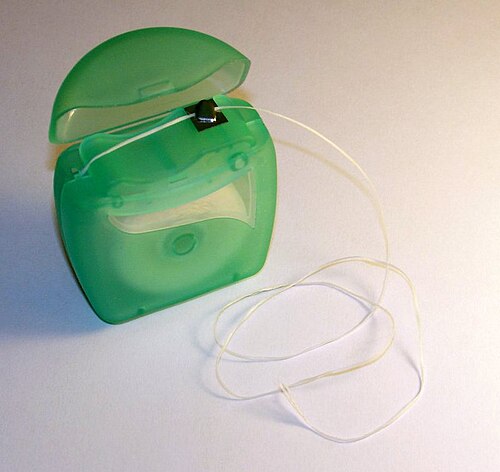
Day 1. Floss, and do it every day for the rest of your life
It’s estimated that more than 50% of people don’t floss, when in fact, according to specialists, it’s probably the most important part of brushing your teeth. It’s a small habit we should turn into a routine, and our smile will thank us in the future.
Day 2. Start sweating every day, and keep doing it for the rest of your life
Exercise is a magic cure for all kinds of problems, both physical and mental, and sweating is the best known way to eliminate toxins from the body. By sweating we keep cholesterol, heart problems and sexual problems a little further away. In fact, if you can’t be bothered to go running, you can always try the “bedroom workout for two”, one of the most complete and healthy forms of exercise there is.
What’s more, according to recent research I read the other day (I can’t remember where), the idea that 5 minutes of exercise doesn’t improve your health has been debunked. The article said that if your goal is to avoid health problems, there wasn’t much difference between 5 and 30 minutes of exercise. If what you want is to build muscle, on the other hand, you obviously need to put in more time. So that does away with the “no time” excuse.
Day 3. Keep a journal
Psychologists have been studying expressive writing and have found that people who have kept a diary for decades have coped much better with certain problems in life than those who didn’t put down in writing how they felt at the hardest moments of their lives.
A Harvard study also found that professionals who kept a journal performed better at work.
Day 4. Start reading a book, and keep reading every day
Although the original publication tells you to start reading a novel, I personally don’t recommend getting into the habit of reading for entertainment, but of reading productively. Once your daily productive reading is done, then turn to entertainment.
I don’t need to repeat the benefits of reading every day again. Just remember what George Martin said: people who don’t read live one life, while avid readers live more than a thousand.
It’s true that many psychologists recommend reading fiction because it opens the mind, but some people are like me: with so much to read by real people giving real advice, I’d feel I was neglecting something more important if I sat down to read a novel.
Day 5. Have lunch with a colleague you don’t know well
We tend to surround ourselves with the people we know best. This happens at work too, so having a closed circle of colleagues can sometimes make us miss the chance to meet other people who could be very interesting.
So strike up a conversation with people you don’t know very well, go for a drink with them, and you’ll probably end up glad you met some of those new people.
Day 6. Go to a museum
According to psychologists, visiting museums has a long list of cognitive benefits that help you be more creative and read and write better.
According to a study published in the New York Times, students showed stronger critical thinking skills and were more socially tolerant after visiting a museum, and visits have the same benefits for adults.
Personally, museums bore me, but if you’ve been meaning to go, or have never been, there’s your task for day 6.
Day 7. Help someone without asking for anything in return
We’re not talking about giving a couple of euros to a homeless person, because that’s easy, takes no effort and won’t be rewarding for you either. Put generous behaviour into practice by helping someone with a task that takes real effort on your part, in a way that leaves that person truly grateful.
When we help someone or brighten someone’s day, we’re not only helping that person, we’re also helping ourselves. Their satisfaction and sincere gratitude will raise our oxytocin levels. In fact, people who never do anything for anyone tend to have higher cortisol levels, which suggests they live more stressed and bitter lives.
Day 8. Start keeping track of your spending
We should know where every euro we spend goes. You can use one of the free apps out there or an Excel spreadsheet. But start tracking, and over time you’ll greatly reduce those small everyday expenses that quietly add up.
Day 9. Get rid of anything you haven’t used all year
How many clothes do you have in your wardrobe that you haven’t worn in years and probably never will again? That pair of jeans you’re fond of but will never wear again?
Let go of your emotional attachment to those things and start transferring it to the people who love you. You have a few options: sell the things you don’t use or give them to people in need. That way you’ll get rid of a lot of the junk you hoard and make someone happy.
Also, make it a rule to buy clothes only when one item leaves your wardrobe to make room for the new one. That way, loss aversion will also stop you from buying clothes just for the sake of it.
See also: 17 money tips to improve your personal finances this year
Day 10. Get your email up to date
If you’re one of those people with 9,376 unread messages in your inbox, spend whatever time it takes to get your email up to date. Unsubscribe from newsletters that are purely advertising, or from those you were added to without your permission.
In short, keep just three or four subscriptions.
Day 11. Call people you haven’t spoken to in years and try to meet up
There are three kinds of interpersonal ties in society: weak, strong and absent.
In 1973, a study described “the strength of weak ties”. It found that it isn’t the strong ties you share with close friends and family that help you get ahead professionally or grow as a person, because they usually have access to more or less the same people and information as you do.
That’s why some acquaintances sometimes do far more for us than many friends. It’s not that our friends don’t want to help, but that those acquaintances were in a position, and willing, to do it.
Day 12. Go and see a live show
You can choose a concert, a musical, theatre, dance, classical music… whatever you like best. It’s another way to appreciate culture and have more experiences.
Day 13. Travel somewhere you’ve never been
They say travel opens and broadens the mind, but you don’t have to go all the way to China, especially in Spain, where practically every province has different customs from the next.
Still, seeing the cultures, customs and ways of life of other countries has led some people to find business ideas they later applied in their home towns. That was the case with Starbucks, for example.
Day 14. Do something creative
Paint a picture, make clay vases, write a book… do something that makes you bring out your most creative side. The benefits? It boosts creativity, strengthens the brain, reduces negative emotions and increases positive ones. And if something decent comes out of it, put it up for sale on one of those new selling apps.
Day 15. Update your goals and objectives in life
Design your life plan and set clear, concise goals, but keep them small and achievable so you stay motivated as you reach them. And fight for them every day, taking a step that brings you closer to that goal each time.
Remember that people who don’t know where they’re going rarely reach their destination.
Day 16. Take control of your online passwords
Most people ignore the advice to update their passwords from time to time, which leaves them vulnerable to being hacked. Today Google offers its users two-step verification, an extra layer of security: if you sign in from a device other than your usual one, it asks for a code that it sends to your phone.
We only realise how important it is to update and manage our passwords once the damage is done.
Day 17. Make a financial plan
If you haven’t done it yet, you should. You need to define exactly how much money you need to save to reach a specific financial goal. Ultimately, you need to be clear about how you’re going to earn more money, how you’re going to save more, how you’re going to get a better return on your money, and how you’re going to shorten the time it takes to reach a certain amount.
Day 18. Thoroughly update your LinkedIn profile
Take a little time away from Facebook and finish your professional LinkedIn profile, because it’s increasingly becoming our professional presentation online. In fact, more and more HR professionals look for candidates on LinkedIn. You could miss out on a job opportunity if a competitor’s profile says more than yours. Think of LinkedIn as your online CV.
Day 19. Reach out to two people you admire but have never met
You’re unlikely to get coffee with Amancio Ortega or Obama, but you’d be surprised how rewarding it can be to connect with one of your favourite writers, a businessperson, a blogger, an artist, an athlete… If you admire an influential person, give it a try: you already have the “no”, and a “yes” can be very gratifying. Tim Ferriss talked about this in The 4-Hour Workweek.
Day 20. Spend at least three hours in nature
Your second-to-last mission can be fun and has some important benefits. When was the last time you got lost on a hillside surrounded by nothing but nature, far from the city?
Spending time in nature lowers stress levels, restores mental energy and improves your eyesight. And it’s healthy and much cheaper than a psychologist.
Day 21. Cook a meal with unprocessed food
This shouldn’t be something you do only now and then, but every day. Still, let’s at least try to enjoy, from time to time, food in its natural state, away from fats and processed products. Let’s give our body a break, and if we do it with a group of friends, even better.
This article is based on the work of Richard Feloni, Drake Baer and Kevin Loria, who compiled for Business Insider these 21 simple steps, backed by various scientific studies, to improve our health, happiness and success. Adapted and modified from the original.
Featured image: Stan Zurek, CC BY-SA 3.0, via Wikimedia Commons.



