

Editor’s note: This article was first published in February 2018, but much of its content dates from around 2013, including Google’s D-Wave purchase, 23andMe sequencing for 99 dollars, Google Glass as a current project and forecasts for 2020 and 2025. Many of these predictions have since been overtaken or not met.
We continue analysing the future of the industries that will create the most jobs and the businesses with a future, as well as the opportunities for young people and entrepreneurs looking towards 2019, 2020 and 2025, because everything is changing and we have to adapt to those changes.
We can see that the future is overwhelmingly technological, so even when we try to guess and predict it, we don’t know whether in 18 months some new technology will appear and become the cure-all for new entrepreneurs, turning into one of the most profitable sectors, as social networks and mobile apps might have been until recently.
A while ago we published 10 jobs and businesses that would be booming by 2020; today we put together a summary of industries and sectors that are or will be booming in 2018–2025.
See also: 41 businesses you can start today
These will be the most profitable industries of the future
This compilation of industries and sectors was made possible by USNews, as well as by a thorough analysis by market trend experts at CNBC.
1. Cloud education
Companies like Coursera, Udemy, Udacity, Codecademy and Skillshare, and non-profit organisations like Khan Academy and edX, are allowing anyone in the world with a connection to the cloud to receive high-quality education from Harvard, Stanford or MIT! Broadband internet access will reach places that can’t get it today.
2. Clean energy will be a business with a future
This is the biggest challenge. Energy sectors include solar, wind, biofuels, bioenergy, carbon capture and storage, nuclear fusion energy and battery storage (including plutonium and strontium batteries). New energy sources will improve living conditions in developing countries.
3. Sustainable, smart homes
Adapting homes so they are energy self-sufficient, along with the various applications of home automation. Think home automation, robotics, mobile apps, technology and housing, and you’ll probably find a business opportunity, especially if we also include savings for the consumer.
4. Nanotechnology
This new technology is based on manipulating microscopic materials and makes it possible to work with and manipulate molecular structures and their atoms. Thanks to nanotechnology, important innovations are being developed in areas such as carbon nanotubes, water desalination using graphene and 3D printing with claytronics, as well as major advances in medicine and surgery and new industries that will change a great many products.
5. Organic food
Consumers are increasingly aware of the junk they are eating, which would explain the boom in organic food shops and herbalists. Sadly, Spain is the most permissive country when it comes to GMOs, but fortunately it is also one of the countries where, despite the crisis, the most organic food co-op shops are opening.
6. Water desalination
Recent research at MIT has used graphene to create a highly energy-efficient way of removing salt from water. As the human population grows, reaching 9.5 billion by 2050, this will secure access to drinking water for some of the communities that lack it.
7. The convergence of phones and PCs
Our smartphone will soon also be our PC. We’ll only need to connect the phone to an HDMI monitor to turn it into a complete PC. Once smartphones are powerful enough to run Excel, there will be no reason to have a separate computer unit for the bigger monitor. Right now in India, 59% of internet users already access it only from their phones.
8. Technology and biotechnology
While technology is a latent business opportunity in any country, here in Spain we have a lot of talent in the chemical industry. Biotechnology applied to health opens up a whole new world for new entrepreneurs.
9. Quantum computing
In 2013, Google bought a D-Wave Two quantum computer and, in collaboration with NASA, created the Quantum Artificial Research Center (QUAIL). Unlike binary computers, in which bits must be either in state 1 or state 0, quantum computers use superposition to allow every state between 0 and 1, which allows much faster processing. Research on quantum particles will enormously multiply the speed of computers, which will also speed up what researchers can do.
The businesses of the future run on technology
10. Mobile apps
The mobile phone has already become one of the most important and necessary tools in our lives. It is our wallet, our payment system, our key for opening doors and our computer. It will also be the controller for our home appliances. Mobile apps are probably at 5% of their creative potential, so for the most tech-minded and innovative entrepreneurs they will continue to be a very profitable source of income.
11. Home automation
Home automation was already part of our immediate future. In a few years, anyone who can’t close their window or start the washing machine from their workplace 10 km away will be something of a dinosaur. One thing leads to another: thanks to mobile apps, home automation will see a revival in which system developers will have the chance to do business with manufacturers of household appliances and building materials.
(Read: 10 booming markets)
12. Cloud-connected devices
In the future, chips and sensors connected to the cloud will be in everyday devices. It won’t only be TVs, tablets and phones that are connected, but also the heating, the car, the fridge, pacemakers and so on.
13. Smart contact lenses
Take Google Glass, for example. Google’s project is probably just the beginning of a new technology. Although Google’s glasses haven’t been as successful as expected, steps are still being taken towards similar technologies, perhaps more focused on the 3D experience.
14. Data storage
Recent work at Harvard has made it possible to store data in DNA: 700 terabytes of data in a single gram of DNA. In 2012, IBM announced that it could store one bit of data in just 12 atoms.
15. Electronic devices and synthetic materials inside the human body
Pacemakers, cochlear implants (to restore hearing), bionic eyes and synthetic organs already exist. This trend will accelerate in the coming years, allowing rapid advances in human health. But there will be many debates on fundamental ethical questions and human rights. If you want to learn more about this subject, you can watch the documentary Transcendent Man: The Singularity is Near.
16. Elderly care
Older people will be one of the most profitable businesses, and not only in caring for the elderly but also in entertainment, especially now that the cuts have reached the Imserso trips (Spain’s state-subsidised holidays for pensioners). And it’s not just the domestic market: Spain’s good weather will turn the country into a paradise for foreign retirees. So there is business both in care and attention and in low-cost entertainment for older people.
17. Artificial intelligence is one of the fastest-growing businesses with a future
In 2011 the first man-versus-machine Jeopardy! contest took place, and IBM’s Watson supercomputer defeated champions Ken Jennings and Brad Rutter. This was a far harder test for artificial intelligence than the one Deep Blue faced when it beat the world’s best chess player, Garry Kasparov. Now IBM is using Watson technology to help doctors diagnose patients and to help brands connect with their customers.
18. Tourism in all its forms
Specialising in one type of tourism can make the difference in this sector: gay and lesbian tourism, adventure tourism, extreme tourism, eco-tourism, business tourism…
19. Synthetic biology
Biology used to be solely the domain of nature. Now that we humans have learned to edit the code of life, applications have emerged such as smart fuels, synthetic algae, synthetic food that could feed billions of people, and altered stem cells that could prolong life…
20. Climate engineering
David Keith and Andy Parker at Harvard are making important advances in the field of climate engineering. One promising option for removing CO2 from the atmosphere is bioenergy with carbon capture and storage (BECCS).
21. Technologies to fight brain ageing
In 2011, research by Dr Gary Lynch at UC Irvine explored the relationship between ampakines and increased electrical energy between neurons, to allow us to think and remember as we did when we were young.
22. Clean transport technologies
Tesla Motors has been a pioneer in this field, and the surge in its shares shows how well the company and the electric car are doing, in a future that is no longer so far away.
What will be the biggest and most profitable business of all?
All the data suggest that the industry that will move the most money and cause the most change is the Internet of Things. In fact, the Internet of Things brings together a wide range of the products and ideas we set out in this article. Robotics, home automation, artificial intelligence and mobile apps will all connect into one thing, one big industry.
23. Graphene manufacturing and export
We have already talked about investing in graphene, and as it happens, Spain is very well positioned among the nations that export this material. According to ICEX (Spain’s foreign trade and investment agency), Spain’s industrial production of graphene is today the largest in Europe. (Read: Emerging business opportunities)
24. Personalised medicine and gene sequencing
Following the completion of the Human Genome Project and the full sequencing of human DNA, companies such as 23andMe have made progress in the field of personal genetic sequencing. Now, for just 99 dollars, you can have your DNA partially sequenced, which lets you learn more about your ancestry and your risk of disease.
25. Robotics
This is the technology that aims to create automated machines that can replace human beings in dangerous environments or manufacturing processes. They resemble humans in appearance, behaviour and/or cognition.
We will see a lot of robots in the future: Professor Hiroshi Ishiguro has created a twin robot. Geminoid uses motion-capture sensors to replicate absolutely every human movement. Bill Gates is already announcing a new economic revolution which, apparently, will start in 2016, driven by the creation and use of robots in daily life.
26. Driverless cars
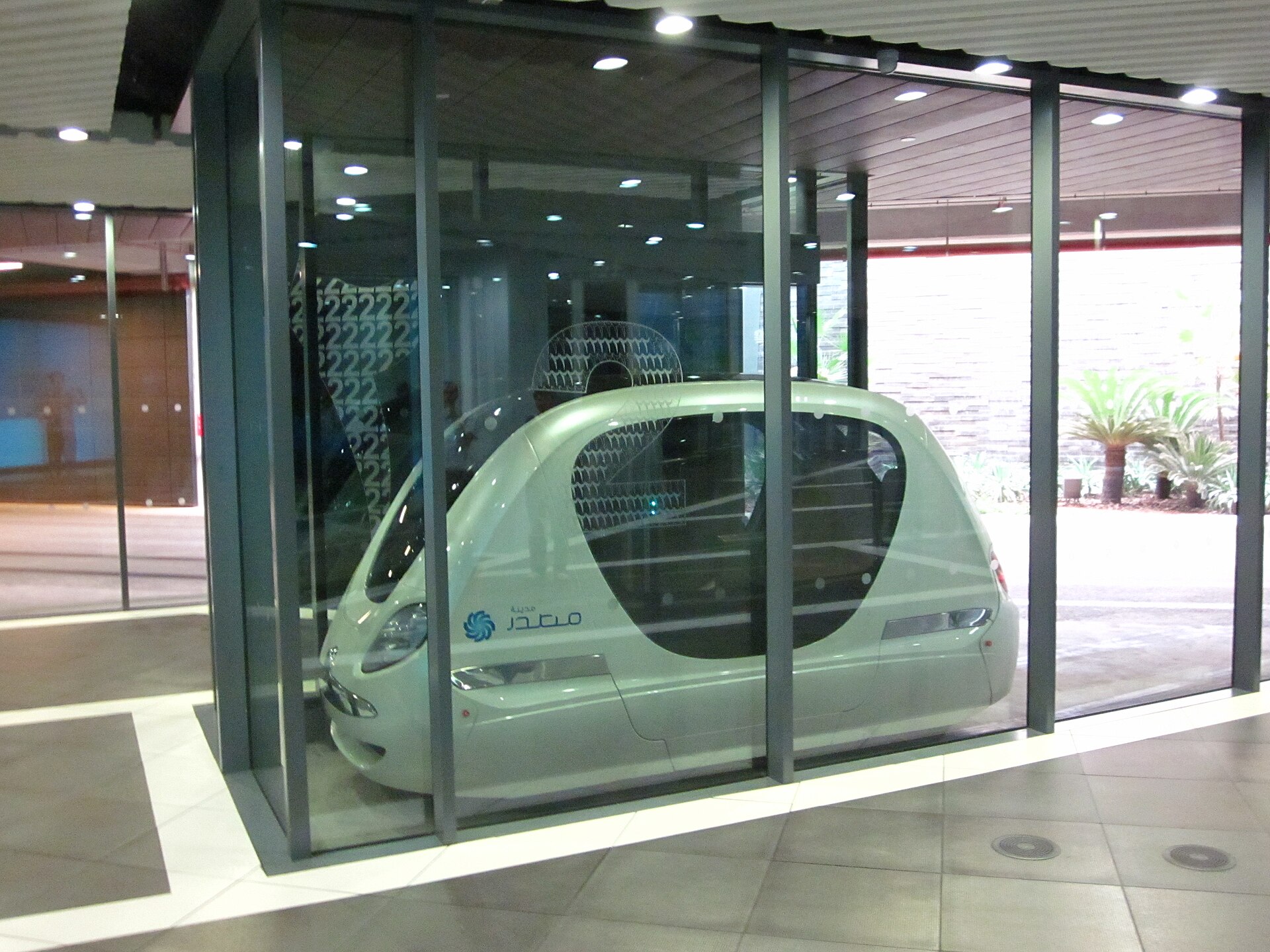
Both Tesla and Google are working on building a car that drives itself. In Masdar (United Arab Emirates), the “City of the Future”, automated electric transport cars (called podcars) are used underground as part of the initiative to build a city with zero carbon emissions.
27. 3D printing
Five years ago, 3D printers were out of reach for anyone but big companies. Today anyone with 1,300 dollars can buy a Cubify 3D printer and print thousands of objects.
28. Private space travel
Companies such as SpaceX and Virgin Galactic, the company of our beloved Richard Branson, are working to make commercial space travel possible. By 2025, anyone with 100,000 dollars (or even less) will be able to go to space. By 2050, anyone with 5,000 dollars will be able to make the trip.
29. Natural user interfaces
This is the technology that lets you interact with a system without using controllers, just with gestures. Natural user interfaces include touch, voice, hand gestures and thought. Siri (on the iPhone) allowed voice interaction as early as 2010.
Leap Motion is working on interaction through hand gestures. Finally, Emotiv is trying to show that, through a headset, games could be controlled by the player’s mind and facial expressions.
30. The clothing of the future is technological
From clothes that charge your devices to clothes that change with the environment. It is already a reality today.
See also: 6 futuristic ideas in the clothing business
31. Cybersecurity technologies
In a technological world where our data, company data and governments’ own information are all stored on devices, cybersecurity won’t be an option but a necessity for everyone, so we could put this market at many billions of euros over the next decade.
32. All kinds of innovative solutions to common problems
Whether through technology or innovation (even more powerful than technology), entrepreneurship in the future will be only for the brave and the daring.
See also: 6 of the most innovative business ideas of 2013
33. Subscription businesses
This industry has an ever broader market, since it offers customers discounts while the company works with exact figures for its number of customers and orders. More information here.
Featured image: Jan Seifert, CC BY 2.0, via Wikimedia Commons.



