

Editor’s note: This article was first published in March 2018; Uber’s pause of autonomous testing after the recent accident refers to the fatal Tempe, Arizona crash of 18 March 2018, and Amazon Go had just opened in January 2018. Google’s self-driving project is now Waymo, and the stratosphere trip price comes from a 2016 item.
The world is changing at a speed never seen before in history, so it is very hard to predict the jobs of the future from here in 2018. But it is easy to see which jobs are likely to disappear with the rise of new technologies, and those still to come.
There is no need to fear these changes, though, because throughout history progress has made many professions disappear while giving rise to completely new ones. Without looking any further, just 20 years ago the most fashionable professions of today did not even exist: web developer, community manager…
One thing we need to be clear about is that, today, professionals will need constant training, change and rapid adaptation. Of course, this will not only happen at work. People today need to prepare for a new era of instability in every sense: unstable jobs and unstable relationships. So, for the first time, accepting uncertainty and getting used to it will not be optional, but probably compulsory.
Robots and artificial intelligence in the hands of the tech giants and big corporations will become an “Armageddon” of job destruction. Let’s look at the jobs with the brightest future and the jobs that are likely to disappear.
The jobs that will disappear: jobs with very little future
The future of employment, as we can already see, is going to hit public-facing jobs directly.
1. Shop assistants and cashiers
One day you go to McDonald’s, and before you know it you are entering your order on a double-sided machine, next to three other machines. In other words, a total of eight screens where customers queue to place their orders.
Meanwhile, the experiment of Amazon’s cashierless physical store has been a success for Jeff Bezos, and he plans to open more stores while saving on staff.
2. Customer service and receptionists
Face-to-face customer service will at first be replaced by call-centre operators, who in time will end up being replaced by automated programs thanks to artificial intelligence.
Some hotels are already testing a fully automated check-in and check-out process, with no need for the guest to deal with a human at any point.
3. Translators
With the invention of simultaneous translators, you can already have a decent conversation with someone who speaks any language. These translators will improve, so the work of interpreters and translators is likely to have a poor future in a few years.
4. Travel agencies
It is a bad time for travel agencies, as we increasingly use price comparison sites and book directly online. These franchises, businesses and jobs will not take long to collapse.
5. Taxi drivers and transport workers are also under threat
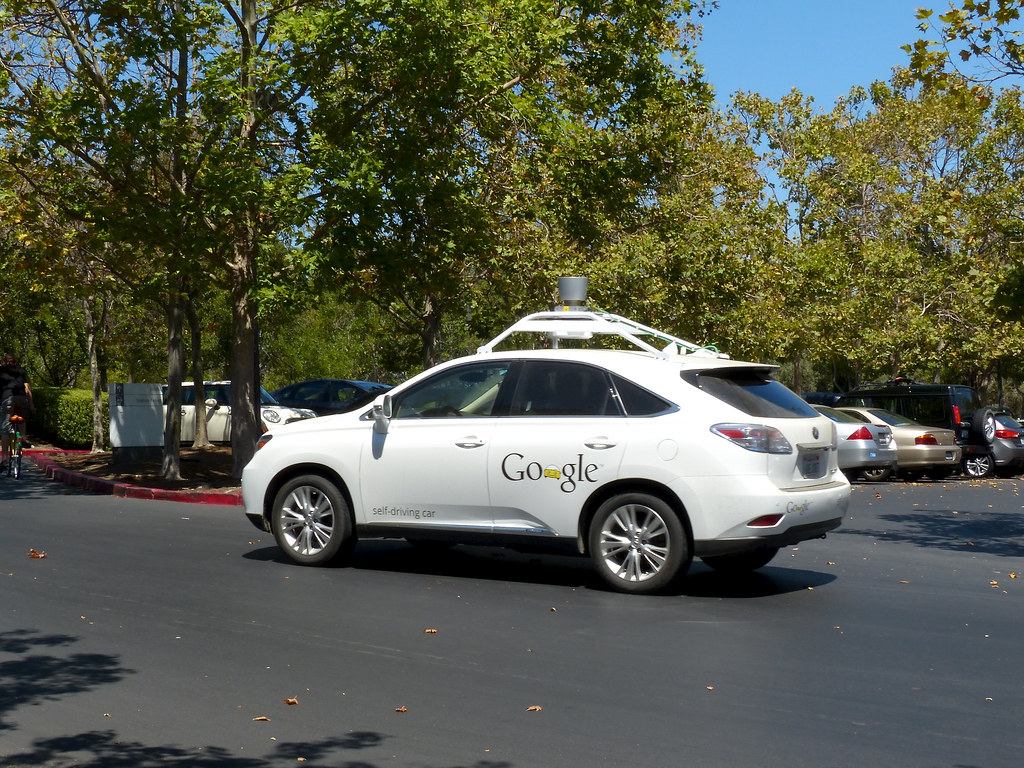
Google and Uber (and probably Apple) are making giant strides in self-driving systems or autopilots (driverless cars), and despite Uber’s pause following the recent accident involving one of its autonomous cars, it is only a matter of time before taxis and other kinds of public transport no longer need drivers.
Who knows whether long-haul truck drivers will also be affected.
The future will arrive ahead of schedule
Today, the idea of walking into a shopping centre with no shop assistants, where we can buy and pay without any kind of human interaction, may seem too futuristic. But if you are observant, you will notice that while these jobs are not being wiped out, they are certainly shrinking.
At the moment, purchases in physical stores still outnumber the ones we make online, but the exponential growth of online shopping shows that it is only a matter of time before online purchases overtake purchases in physical stores. And that shift is inevitable.
See also: What the perfect CV looks like today, according to recruitment experts
6. Brokers are also at risk
In the old days, if you wanted to buy shares, you would usually call a broker to buy them for you. Today that is no longer necessary, because our own bank gives us a platform to buy and sell.
The arrival of high-frequency trading machines has delivered enormous returns, even though it is not a human being investing but an algorithm. And the robot has proved smarter than humans when it comes to making money from investing.
These machines will soon displace most traders.
7. Bank employees and security guards
Today, most of the things you need to do with your bank can be done online, so the role of the banker is in danger. Physical money is also tending to disappear, so there is not much to steal the traditional way, just as most transactions are carried out online.
In short, security guards have fewer and fewer tangible assets to protect.
8. Farm workers and factory operators
Wherever a robot can be programmed to carry out certain tasks, a human will not be needed, so many jobs really are at risk here.
Statistics on people being replaced by machines
According to the McKinsey Global Institute report, roughly half of the activities people are paid to do could be automated using currently demonstrated technologies.
The report also says that fewer than 5% of occupations could be fully automated. In other words, even as staff are cut and replaced by automated processes, there should still be workers in most jobs in a factory.
However, it estimates that in 60% of occupations at least a third of the activities could be automated, which would mean transformations and changes in the workplace.
So, has technology destroyed jobs? Yes, a lot of them, but the truth is that it has created more jobs than it has destroyed so far.
The jobs of the future
Just as we have talked about the jobs that are going to be destroyed, let’s now look at which jobs have a great future ahead of them, based on the data from various reports.
Healthcare jobs
A growing world population and a high percentage of older people, thanks to longer life expectancy, will mean more people are needed in this area to help the elderly and to research and treat dementia.
1. Nursing staff
More home care workers will be needed to look after the elderly, along with nursing staff to support and visit them.
2. Occupational therapists
There will be demand for more occupational therapists to help the growing number of elderly people keep living in their homes through modifications such as bathroom adaptations or stairlifts.
3. Physiotherapists
More physiotherapists to relieve physical problems and stiffness, and other kinds of therapists who use manual therapy to treat musculoskeletal pain in the elderly.
Ultimately, there will be more robotic assistance, and everything suggests that robots will become much more sophisticated at helping with a wide range of daily tasks, and in a way at keeping the elderly company or, at least, making them feel safer and more protected.
4. Architects
Architects specialising in smart homes for older people will be in great demand. All of this will bring home automation and robotics together in this sector.
5. Genetic counsellors and cytogeneticists
They will advise on matters such as how likely a person is to develop a disease such as breast cancer in the future, and what steps can be taken to reduce the risk.
6. Biomedical engineers
They will produce new types of prostheses and artificial organs, and stem cell researchers will also see a considerable boom in this new era of research.
7. Doctors trained in artificial organ transplants
Artificial organ transplants are already a reality. There will also be room for prosthesis designers working with materials such as carbon fibre and titanium.
8. Dietitians, nutritionists and food scientists
Genetically modified foods are booming because of the growing world population, so there will be no shortage of scientists developing them, while the trend of the future will probably be towards healthier, organic food. There will be jobs with a future at both ends of the food spectrum.
9. Nanomedicine doctors
Advances in nanotechnology will make it possible to cure ailments with robots from inside the body. The field for highly tech-skilled doctors will be immense.
Nanotechnologists will also develop and use novel nanomaterials such as graphene and carbon nanotubes to revolutionise fields such as drug delivery to patients.
Space tourism among the jobs of the future
SpaceX and Virgin Galactic are making giant strides in this area. Space is going to move a lot of money in every sense.
Without looking any further, a short trip to the stratosphere for 110,000 euros is already on sale. And, curiously, there is a waiting list. Space tourism is one of the businesses of the future.
10. Space miners
Neodymium is a very scarce element on Earth, and it is crucial for industries such as renewables (wind turbines), aircraft engines and industrial magnets. That is why the possibility of exploiting certain resources on other planets is being considered, so the miner’s job could become a little more galactic.
Exobiologists (11), space debris recyclers (12) and space clinicians (13) are other professions we will probably soon see, given current trends, according to the University of Kent report.
14. Space architects
There are already designs for greenhouses on Mars and colonies on the Moon. Specialising in this space sector could mean a career free of unemployment in a future closer than it seems.
Internet jobs with a future
It is hard to predict which internet jobs will have the most future, because at the rate things are changing, a branch that does not exist right now could appear tomorrow. Even so, in 2018 we can already see a boom in the following jobs:
15. Cloud computing professionals
It is said that millions of new jobs could be in demand in the cloud computing sector.
16. Internet security consultants
Clearly, today everything moves through the internet, so security is essential. This sector, along with police officers specialising in cybercrime, will boom quickly. In fact, it already is.
17. 3D designers and visual effects designers
Games, films and virtual reality will need these professionals more and more, and network engineers (18) will also be needed.
Not to mention digital marketing experts (19), a profession that is fashionable right now and will keep growing, because brands’ sales growth is in the hands of these professionals.
20. Global lawyers
With the development of the internet, lawyers will be able to advise clients all over the world online, especially in internet legal disputes, where the law is still very unclear.
Robotics jobs
While machines can destroy jobs, the truth is that they are also creating many of them.
21. Robotics engineers
For a robot to take a human’s job, a human first has to design, build and program it. Ever more skilled and creative robotics engineers will be needed, since right now robots are thought of for useful purposes, such as a robot in an operating theatre performing operations with millimetre precision. But robotics will probably also enter the entertainment, indulgence and luxury sectors. There is business and employment in robotics.
It goes without saying that robot maintenance staff (22) will be needed.
23. Drone professionals
With the rise of drones, designers, programmers and pilots specialising in this area will be needed. Drone repair can also be a good business idea or profession.
Finally, the future belongs to smart (driverless) cars, and creative people and professionals will probably be needed to build smarter roads adapted to a future of autonomous cars.
The future of training and education
In a fast-changing landscape, with information just a click away, the future of teaching is moving online. If professionals want to stay up to date, the internet will become their lifelong teacher.
In fact, sales of online courses have soared. So online teachers (24) and developers of online educational materials (25) will have their chance in this new era.
Other jobs in demand in the future
New jobs in economics and finance
26. Corporate social responsibility expert
This professional will manage the company’s social commitments, such as working with NGOs, transparent reporting and so on. You can study for a master’s in environmental project management and CSR.
27. Online brand positioning specialist
The role of the brand expert is now more important than ever.
28. Corporate cultural manager
This professional’s job will be to develop projects based on a cultural context, economic revival of areas, tourism initiatives and so on.
You can study for a master’s in cultural engineering.
Environmental jobs with a future
29. Environmental health technician
In this case, the professional’s work would be that of an inspector monitoring environmental risk factors for health. You can train for it with a master’s in environmental pollution, prevention, monitoring and correction, or a master’s in environmental pollution and toxicology.
30. Natural areas manager
Responsible for conserving, protecting and managing protected areas. You can study for a master’s in biodiversity and ecosystem functioning and management.
31. Bioclimatic architect
As an architect or engineer, this professional will work in green building, the use of renewable energy and ecological urban planning. You can study for a master’s in environment and bioclimatic architecture.
32. Sustainability director
This professional will be responsible for the company’s good practices, such as cutting energy consumption and introducing renewable energy. You can study for a degree in agri-environmental engineering or a master’s in renewable materials engineering.


