

Editor’s note: This article was first published in April 2020. The inflation and Fed money-printing figures it cites reflect that time.
These days most governments look down on gold and silver. Why? We could sum it up by saying that countries that back their currencies with gold would be bound to a certain degree of responsibility and forced to live within their means.
That’s probably why, in 1971, Richard Nixon annulled the Bretton Woods agreement, signed in 1944 at the end of the Second World War. With the end of this agreement, the obligation to back a currency with gold reserves was permanently closed.
Why did currencies stop being backed by gold?
The United States had been living beyond its means for more than 10 years, printing too many Federal Reserve notes to pay for efforts the country couldn’t afford, such as the Vietnam War or the so-called War on Poverty.
All of this led to an increasingly devalued dollar.
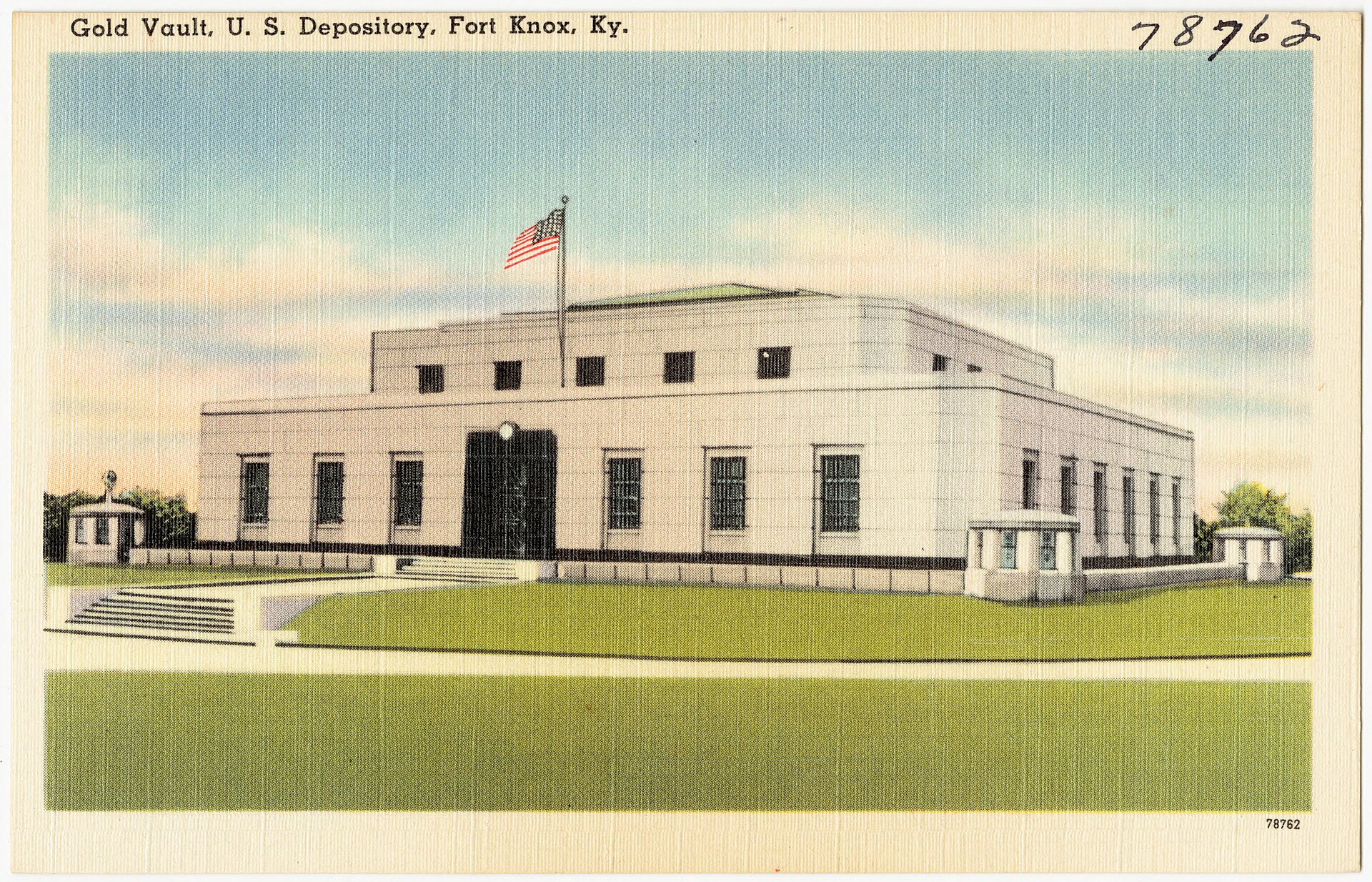
Then many of the world’s central banks, led by West Germany, France and Switzerland, saw their US dollars start to depreciate, so they began exchanging them for the gold stored at Fort Knox. They exchanged so many dollars for gold that by the end of 1970 the United States had only half the gold reserves it had in 1960.
It’s said that the outflow of gold was so fast that, had it continued, US gold reserves would have been completely used up within a few more years.
The United States could have kept the gold standard and stayed within the Bretton Woods agreement, but then it would have had to cut its spending and take critical financial decisions that it clearly wasn’t willing to take.
After the dollar stopped being backed by gold
Since the link between gold and the dollar was cut in 1971, the excesses have led many Americans to feel that the dollar’s usefulness as a store of value has been destroyed. If we stick to the data, today it takes about 614 dollars to buy the same “basket” of goods and services that in 1971 would have cost just 100 dollars. Of course, we can see the same situation in other countries. And yes, in the eurozone too.
The bad news is that savers, as well as retirees and people on fixed incomes, depend on their currency holding its value. If a currency depreciates too quickly, living standards fall.
Over the last decade, the Fed is said to have printed more than 4 trillion dollars. That’s new money created out of thin air, and it doesn’t bode well for the value of the US dollar or for confidence in it in the future.
Why is gold good insurance?
Unlike paper money, precious metals can’t be created out of thin air, and that makes them instruments for protecting wealth. That’s why some people choose to keep part of their savings in gold and silver.
How safe is it to invest in gold and silver?
Gold has always been a liquid asset, and it will remain one in the future. Some people argue that gold and silver don’t pay interest, don’t generate dividends and don’t produce cash flow, but that is probably their greatest strength as insurance for your wealth. Precious metals serve no master, so they don’t depend on any counterparty to remain solvent. What’s more, gold and silver are the ultimate collateral, which makes them a perfect insurance policy against currency devaluation or a loss of confidence that ends in hyperinflation.
Let’s take an example.
Suppose two people were shipwrecked on a desert island in 1960. One has 100 dollars in his wallet and the other the same amount, but in silver coins. If both were rescued in 2012, we’d find that the man with the 100 dollars (a small fortune in 1960) would have lost a huge part of his purchasing power, while the man with the silver coins would have more than 20 times the purchasing power he had on the day he was shipwrecked.
Wealth isn’t measured by the money you have, but by the amount of goods and services you can buy with that money. Inflation, caused above all by the continuous creation of new money put into circulation, is what means that someone holding 1 dollar will, 25 years from now, have only 35% of that dollar’s purchasing power. Both gold and silver have survived the damage done by inflation.
It’s true that precious metal prices go up and down, although, to split hairs, the purchasing power of gold and silver never changes in real terms, because what is changing is the value of the currency.
In fact, many countries use gold to buy oil. For this there’s the gold-to-oil ratio, which shows how many barrels of oil can be bought with one ounce of gold. The good news is that whether we follow the gold-to-oil ratio or the silver-to-oil ratio, we could say that over 50 years an ounce of gold has bought practically the same number of barrels of oil. And although this ratio has its ups and downs, everything suggests that 50 years from now you’ll probably buy the same number of barrels of oil with the same gold.
On the other hand, if we overlay the price of gold with the VIX index (which measures fear in the markets), we could see that it mirrors its behaviour.
Still, we’re talking about the importance of holding gold as insurance to protect your wealth in uncertain economic scenarios. And like any insurance, it’s quite possible you’ll never need to use it, in which case it can also become a store of wealth your children could inherit.
But at least you have the peace of mind of knowing that you can turn to it at any time.
And finally, remember that we shouldn’t make the mistake of buying collectors’ items such as limited-edition gold or silver coins, because you’ll be paying a higher price.
See also: Where can you invest your money? 14 options
Featured image: Tichnor Bros. Inc., Boston, Mass, Public domain, via Wikimedia Commons.



