


Editor’s note: This article was first published in August 2021. The in-app purchases on Instagram and Facebook it describes (Meta has since scaled back in-app checkout on its Shops), location-triggered push notifications, and “most traffic now comes from smartphones” reflect that year.
Improving your conversion rate is a priority. If the conversion rate of your online store is low or zero, it won’t matter how many followers you have on social media or how good a job your community manager does. Nor will it matter if you increase the number of visits to your website or blog. If your business consists of selling something and the users who reach your website leave without buying, your business will simply end up closing.
What is the conversion rate of an e-commerce store?
Put simply, the conversion rate is the percentage of users who, after arriving at a website, end up taking the action you wanted them to take. For an online store, the most profitable action is without doubt buying one of your products. In other cases, it might be signing up for your newsletter. In other words, if 2 out of every 100 users you attract to your website through your different acquisition channels (social media, advertising and so on) end up buying, your conversion rate is 2%.
Is that conversion rate high or low? What is the ideal conversion rate for an online store?
The truth is that there is no ideal conversion rate, because every site has a different number of users, higher or lower profit margins on each purchase, and so on. To be on the safe side, then, the ideal conversion rate would be “higher than last month’s conversion rate”.
Now let’s get down to business.
How to increase an online store’s conversion rate
On the internet, users can buy at any moment, at any time and from anywhere. So, to begin with, our online store must put as few obstacles as possible in their way and make buying as easy as it can possibly be.
This may sound very obvious, but more than once, after deciding to buy something on a website, I have run into more problems than anything else and ended up leaving without buying.
Stratesys, a digital-native hub working between Europe and the Americas, has put together a kind of ten-point guide to improving CRO (conversion rate optimization).
1. Focus on mobile users
Most of the traffic that reaches our websites and online stores today comes from smartphones. So when we design our online store to make shopping easier, we should not forget PC users, but we should put more energy into mobile users.
Avoid very small text or buttons, and make sure the page design adapts fully to the mobile user’s experience.
2. A site that makes buyers feel safe and at ease
Customers need to be sure that their data and payments will be protected. You need a “secure site” certificate, but the moment of connecting to the payment gateway is also key: at no point should customers feel they are losing control of the purchase.
Simply by fixing a few errors in this area, some online stores have seen their conversion rate rise.
3. Optimise page load times
This matters not only for increasing your conversion rate. It also matters to Google and to your search ranking. Bear in mind that users are less and less patient, and if they see that a page takes too long to load, they won’t hesitate to close it.
Besides, there is one thing that doesn’t change between selling in a physical shop and selling online. In the end, customers remember the experience they had while they were on the site, so that perceived experience will add to or subtract from the chances that they buy and come back later.
Make sure your online store’s load times are short.
4. Take care of your copy (texts and descriptions)
The texts and descriptions of your products can definitely make a difference. Even learning a bit of copywriting can help you improve your conversion rate by using phrases or expressions that encourage people to buy. But above all, make sure the description is as complete as possible, and that it covers the benefits of the product itself.
Making certain changes to the texts and improving the descriptions can even double your sales conversion rate.
5. Use social media to sell
Social networks can do more than help us get known and drive traffic to our online store. They have more and more e-commerce features; on Instagram and Facebook, users can even make purchases without leaving the social network.
A good social media strategy lets us increase the reach of our products and even improve the shopping experience, since we can use interactive formats that let users see the product better and encourage them to buy it.
6. Don’t forget customer service
As we said before, users can connect from anywhere on their mobile phones. When a brand offers live chat or chatbots to answer questions in real time for a user who is unsure whether to buy, there is a good chance that, once the question has been answered, the user will go ahead with the purchase.
7. Use push notifications to be there at the right moment
One advantage of online stores is that you can contact potential buyers at the ideal moment. So when users are in a particular place where you know they may need your product, you can send them a push notification. That way, it is as if you reached them with the information they need at exactly the right moment.
8. Bet on user-generated content
What a customer says is worth much more than what the company says. In a high percentage of cases, the purchase decision is made once the user has checked what other buyers say about your company and your product.
That is why companies invest a lot of time and some money in generating this kind of content, which is sometimes even produced by the company itself, but it is necessary. We live in a time when companies look for ways to get around the rules of platforms such as Amazon, where buying positive reviews is prohibited, and even so, there are companies that cater to this demand.
Other companies pay people to post comments on forums or in shops that speak well of the product without it showing that the comments are paid. An unethical practice? Perhaps, but unfortunately a necessary one if you want to sell more in your online store.
9. Checkout: the most important step for increasing your conversion rate
A small distraction or a small error in the checkout process can make your conversion rate plummet. The user experience at this point is vital.
Use autofill forms, offer one-click payment and build trust in the payment step. If there is one moment when you need to make it easy for customers to buy, it is this one.
10. Use A/B tests
We may not get it right the first time, and some changes may even make our conversion rate worse. The best approach is to keep a record of our experiments and compare the conversion rates produced by each change. Then we keep whichever gave us the best conversion rate.
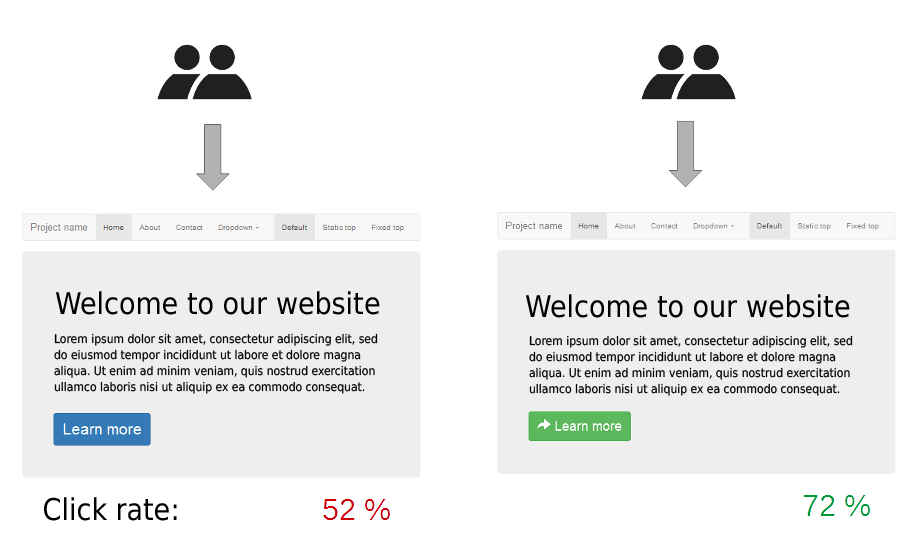
And this is easy to do. There are already services and tools that randomly show users one version or the other. They then give us the results, and it is easy to see which version gives our store the better conversion rate.
There are many possibilities, and there is no need to lose heart if we don’t get the results we want straight away. The simple fact that users reach the final checkout page tells us there is real interest from the buyer. If, even so, the conversion rate is low, it is because something is failing in that part of the user experience, and it simply needs to be improved.
Featured image: Nenad Stojković, CC BY 2.0, via Wikimedia Commons.




