

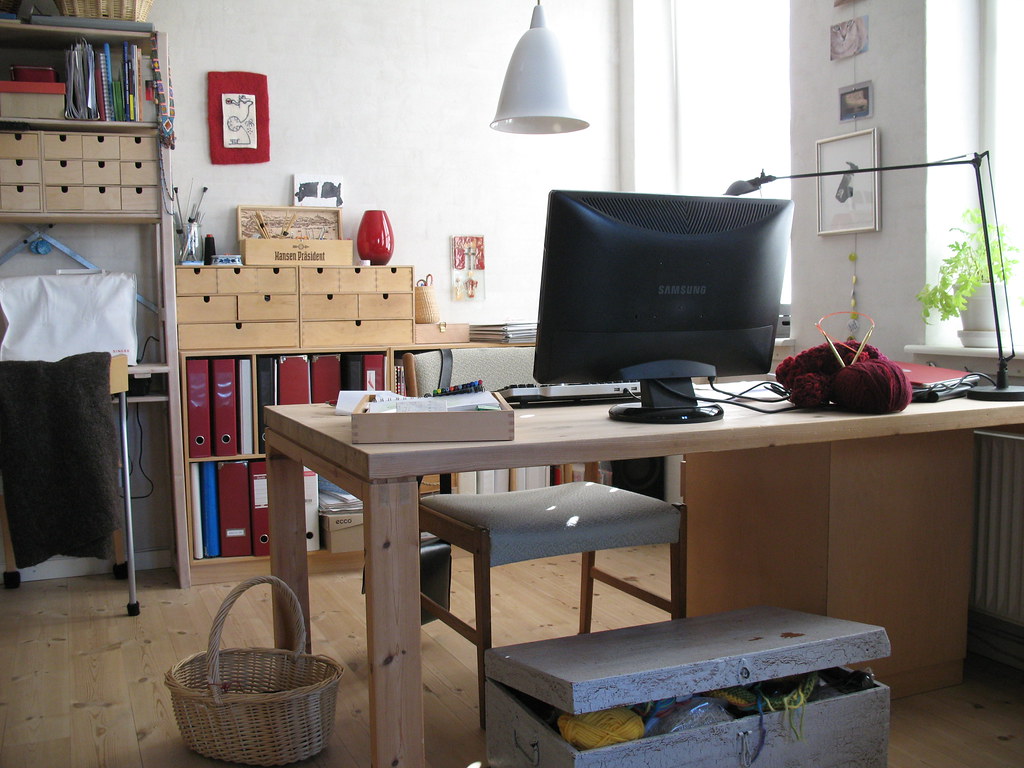
When people talk about working from home, it all sounds like advantages. The idea is that you can organise your own time, work in your pyjamas and, most strikingly, rest whenever you like and set your own hours, not to mention the financial advantages of running your business from home, namely saving on all kinds of costs.
But for some reason, as time goes by, you can end up feeling that you work 24 hours a day and yet you are not even half as productive as someone who works eight hours in an office. In fact, you can end up feeling more tired.
These are some of the things I learned working from home and running my business from home.
The myths of working from home
Forget about flexible hours when you work from home
It’s true. You can be flexible with your tasks and your time, and it will go well. But only for a few months, or the first year. In the end you come to the conclusion that working from home is not the opposite of keeping a schedule.
It starts with finishing late one night on certain tasks, and the next morning you get up later because you finished late the night before. You can afford to, because you set your own hours. So there’s nothing wrong with getting up at 10 or 11 in the morning.
Before you know it, your schedule is out of balance on every level. Your mealtimes and your sleep get out of control. When your fixed time for getting up and going to bed disappears, you start to feel that you are working all day long, even though you have actually had very few productive hours. And the fatigue starts to take its toll because you never fully switch off. You have merged your work at home with your personal life so much that it’s hard to separate them.
That’s why the first piece of advice I would give anyone who wants to start working from home is to set a schedule, with mandatory breaks, like anyone who works in an office. Once you stop having set hours, everything starts to go wrong.
Please don’t work in your pyjamas
There is a huge psychological difference between working in your pyjamas and getting dressed for work. If you roll out of bed, make a coffee and get down to work still in your pyjamas, you start sliding into a spiral of sloppiness.
You need a minimum of discipline when you decide to work from home, and you need to keep certain habits. Many studies have shown that the way a person dresses has an impact on how they carry out an activity.
When a salesperson puts on a suit and picks up a briefcase, their self-confidence for a negotiation goes up. Studies have shown that they negotiate more aggressively when they have dressed for it.
The same goes for the person who sits down to work unkempt and in pyjamas. Although here it’s not so much the psychological effect in the salesperson example, but rather the psychological effect of not separating your personal life from your working life (even though you work from home).
That’s why it is absolutely advisable, when you get up, to stop by the shower and the wardrobe. Working in your pyjamas can be tempting for the first few days. After that you start to feel more and more dissatisfied.
And the next point is linked to this one…
Separate your workspace from your personal space
Working in your pyjamas from the living-room sofa also sounds good, but it isn’t advisable, for the reasons given in the previous points.
Set up a room or a space specifically for work, away from all distractions.
Although people say you save money working from home, if you need to invest some money in setting up your workspace, do it. You will be grateful in the long run. Obviously, forget this advice if you are a mother working from home while looking after your baby.
But if that isn’t your case, do everything you can so that your brain switches off from personal matters and associates that space with work. You will perform much better.
See also: All the tools you need for remote working
Your worst enemy when you work from home is the people who know you work from home
Most people around you assume your hours are flexible. They know you don’t have to answer to anyone, so they won’t hesitate to phone you (since they know you can afford to talk to them). They even know that at any given moment you can pop out for a coffee or to do them some kind of favour.
In my case, a neighbour once left her child with me because she had nobody else to leave him with for a few hours. I’ve been left the keys to the house next door in case the electrician they were expecting turned up. I’ve even been told on a Tuesday night: “Come to the party we’re having, you can get up whenever you like tomorrow.”
You have to set limits for people, or they will overstep them. And all of this will be easier once you understand that, even though you work from home, you need fixed hours, a certain discipline and a lot of willpower. You have to cut out distractions, and by distractions we mean not only the TV being on, but personal calls too (with the odd exception).
I’ve known people who, after their first year working from home, decided to rent an office in a coworking space to force themselves to stick to all the points we are discussing. Apathy, stress and sloppiness were winning the battle, so they decided to put a stop to it quickly, concluding that it was best to work outside the home.
Other problems that come with working from home
If you can’t stick to a schedule with proper breaks and accept that working from home needs limits, you can even end up damaging your health.
In my case, and in that of other people I’ve known who also worked from home, we neglected exercise, and this led to a significant loss of muscle mass in the lower body.
Spending too much time sitting down, with no need to leave the house, can turn you into a completely sedentary person. And that is something else to avoid.
In fact, the advice here would be to use that flexibility in your hours to get up from your chair every so often (every two hours) and exercise your legs a little. It is also clearly advisable to get at least 45 minutes of exercise a day, either cardio or strength.
Learn to switch off
We have always given one piece of advice: when you are working, work. When you are having fun, have fun and forget about work. When you work from home this gets complicated, because everything is so intertwined that it’s hard to switch off. Well, in your case this disconnection is compulsory, because failing to separate your mental spaces for work and life can do you much more psychological harm than it would to someone who has to leave home to work in an office.
These are some of the things you should keep firmly in mind when you consider working from home, because in reality everything that sounds like an advantage at first can end up becoming a disadvantage.
See also: 20 home business ideas that need no commercial premises and are easy to start
To sum up…
The disadvantages of working from home
Most of the problems with working from home tend to be psychological.
Loneliness
Camaraderie in a company is vital for a worker’s morale and motivation, and in this case you will be on your own.
Lack of motivation
Human beings tend to slack off, so not having to rush to get to work (since you’re already there) can make you fall into apathy, staying in bed a little longer and staying up a little later, so that day by day you may feel more tired and less motivated.
Distractions
The distractions you may have in an office are one thing; the ones you can have at home are another: the TV, children, the radio, salespeople knocking at your door, sales calls, personal calls, friends and neighbours.
Your neighbours, your spouse and your friends know where you work and know that nobody is watching you, so you can end up becoming the errand runner: “If the gas man comes, tell him to leave me two butane cylinders,” “pop out for a minute later and buy a loaf of bread.” To many people, it’s as if you enjoyed extraordinary freedom.
See also: How to earn extra money from home: 41 ideas
Featured image: Lisa Risager, CC BY-SA 2.0, via Flickr.


