Editor’s note: This article was first published in April 2010, about the 2005 Stanford speech. Its present-tense line on NeXT technology being the heart of Apple’s renaissance and its closing farewell reflect 2010; Steve Jobs died in October 2011.
When we talk about success and mindset, it’s worth knowing how Steve Jobs, the founder of Apple, got his start. Even though he was fired from his own company, that didn’t stop him from starting again from scratch and climbing back to the top.
Steve Jobs gave a speech at Stanford University in which he told thousands of students something they will never learn at university.
Steve Jobs’s biological mother was a young, unmarried student who couldn’t cope with her pregnancy and decided to give the baby up for adoption.
She set one condition: the parents who took in little Steve had to be university graduates and had to guarantee that Steve would go to university one day.
But fate and chance meant that the family who adopted him hadn’t even finished high school. Even so, they promised that Steve would go to university even if it was the last thing they did.
Seventeen years later they kept their promise and fulfilled their dream. Steve enrolled at Reed College, which was as expensive as Stanford.
Steve Jobs didn’t know what he wanted to do with his life and didn’t think university would help him find out, so he dropped out six months after starting.
He dropped out, but he didn’t leave the campus. He stayed around for another 18 months, confident that things would work out for him. Steve himself recalls that he had no room on campus, so he slept on the floor of his friends’ rooms.
He returned empty bottles for 5 cents apiece so he could buy food.
Since he no longer had to attend classes, he started going to calligraphy classes out of genuine interest, and there he learned about sans serif typefaces.
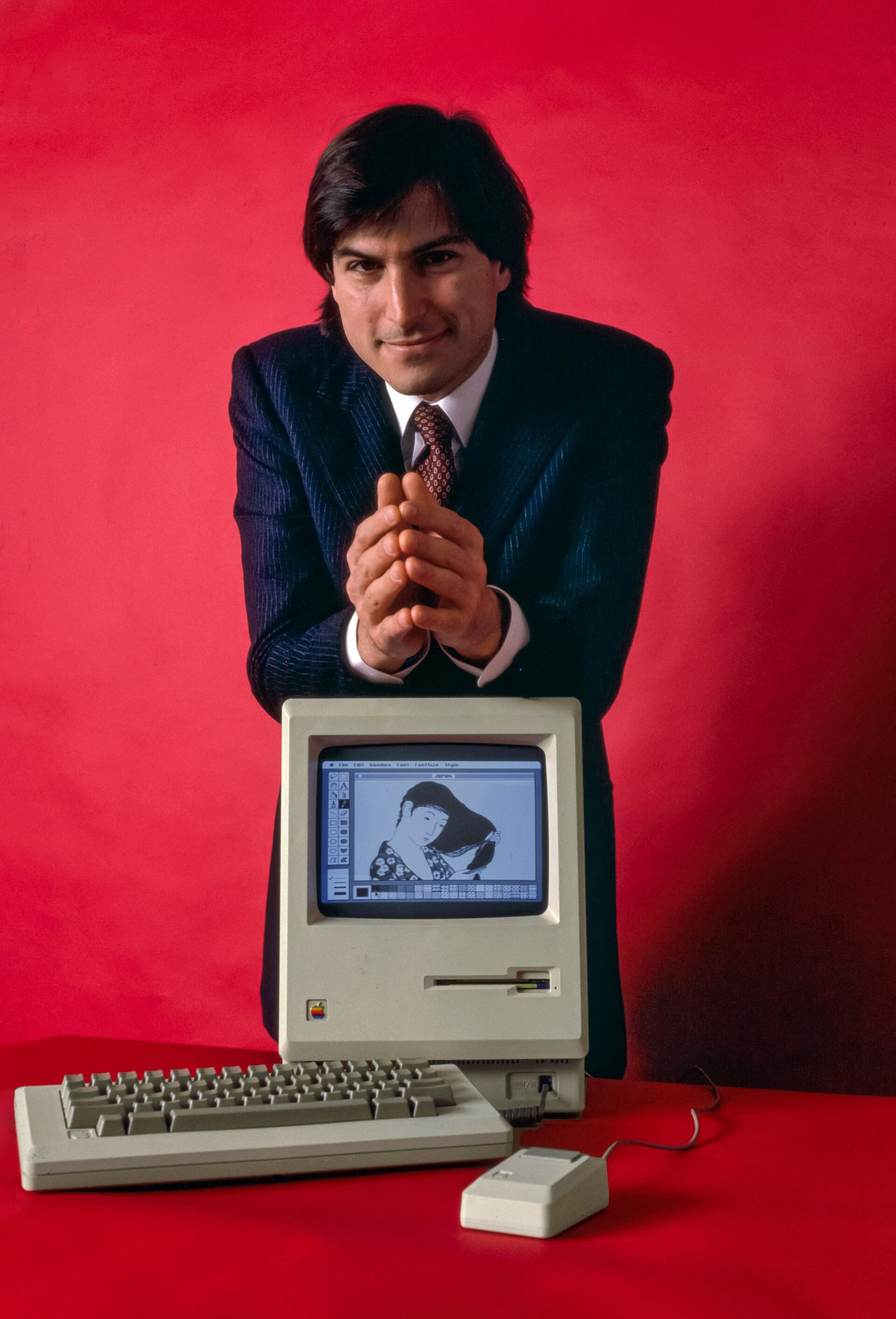
He found it truly beautiful, although he knew it had no practical use in his life. Then, ten years later, when they were designing the first personal computer, the Macintosh, all that knowledge came back to him.
Thanks to those typefaces in their purest form, Steve Jobs designed the Mac. Years later, as Steve himself has claimed, Windows owed its success entirely to copying the Mac.
When Steve Jobs was 20, he and Wozniak set up the company we know today as Apple in the garage of his family home.
By the time he was 30, Apple had grown from 2 employees to 4,000 and was worth 2 billion dollars.
A year after launching his greatest creation, the Macintosh, Steve was fired from his own company over professional differences. The board of directors made the decision on the advice of the very person Steve had chosen to accompany him on the road to success: Wozniak.
Stunned and disappointed by the treacherous blow life had dealt him, Steve wandered around for months, thinking he had thrown away a lifetime of creation.
Once he hit rock bottom, he decided to start again from scratch, and that was when he decided to meet David Packard (HP) and Bob Noyce (Intel).
He started a new project, founding NeXT, a company that in less than three years was already climbing to the top, to the point that Steve acquired Pixar, the company that made the first computer-animated feature film (Toy Story).
At this crossroads of success, Apple bought NeXT and Steve returned to Apple. Today, NeXT‘s technology is at the heart of Apple’s renaissance.
Steve Jobs is one more example of a person whose story shows hard work, the courage to pursue what you’re passionate about, and the right mindset in the face of the obstacles life puts in your way. You can hear the story in Steve Jobs’s own words in the video of his speech. Highly recommended: Steve Jobs’s commencement speech at Stanford University.
Congratulations, Steve.
Featured image: Photo: Bernard Gotfryd – Edited from tif by Cart, Public domain, via Wikimedia Commons.