Editor’s note: This article was first published in October 2010 as a news piece, written right after Google revealed its self-driving car project; the forward-looking statements reflect that moment. The program was later spun off as Waymo in 2016.
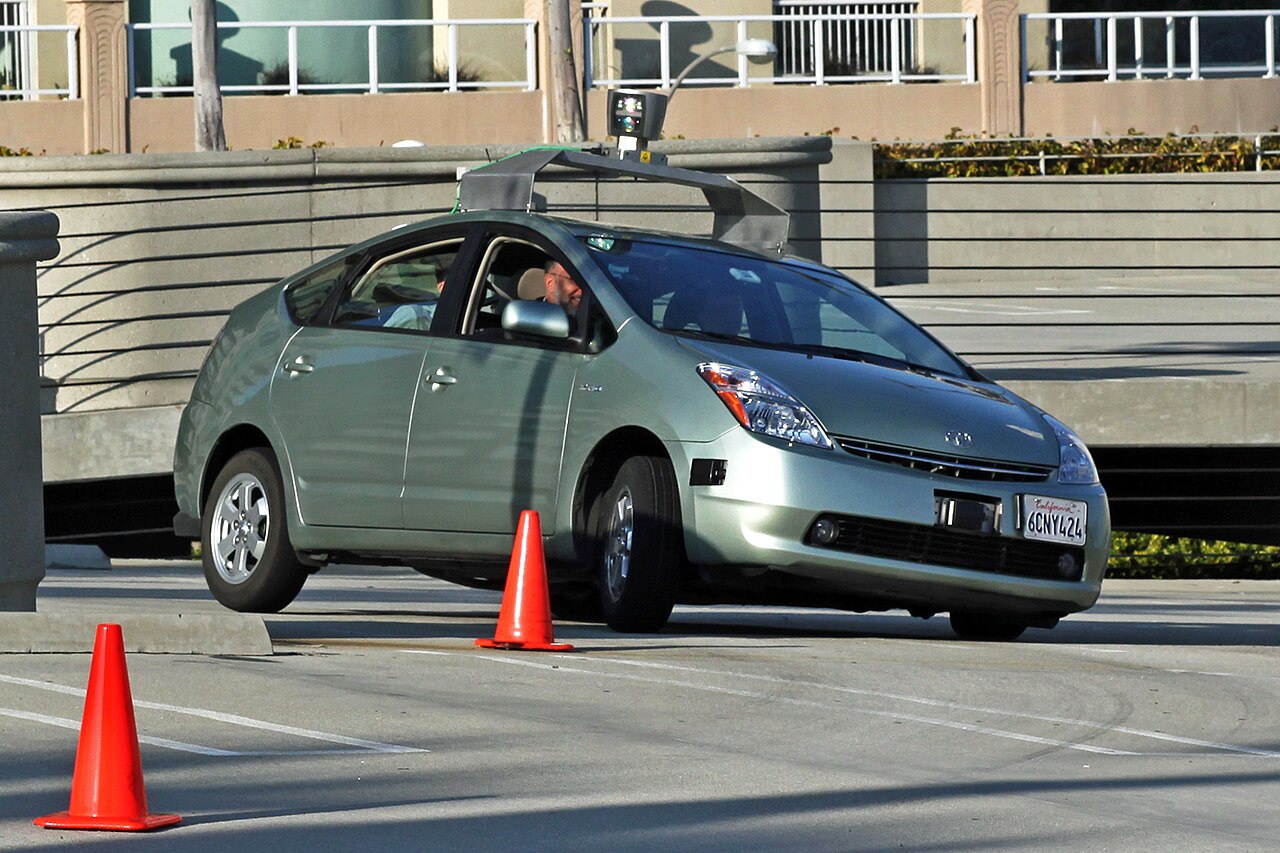
Can a car drive itself? Fiction has become reality thanks to Google. The internet giant is set to get people talking: it has designed a vehicle that can drive without a driver, not only on programmed routes or closed circuits but on any road, busy or not. It has already run tests and sent its car out onto city-center streets in the United States. The “Google” car has managed to travel more than 1,500 kilometers without any human intervention.
Naturally, Google hasn’t wanted to say much about the technology that makes this possible. Nor has it released any photos, although the car is presumably fitted with several cameras that analyze and process information, motion sensors that detect the presence and proximity of pedestrians and obstacles on the road, and modern 3D-based technology.
With this, Google aims to put an end to traffic accidents and, while it’s at it, why not, to dominate the motor business in a new market, though one not so different from the one it is already used to.
If Google indexes web pages in its search engine, with this new business idea it will now index roads, from which I deduce that Google Maps was one piece of this business.
If Google can build a vehicle that, on its own, detects a stop sign, yields, stops at a red light and gives way to traffic coming from a side street on the right, I have no doubt that Google’s founders, Larry and Sergey, will give people plenty to talk about.
And best of all, while the car drives itself, you can use Facebook and Twitter. Jokes aside, we are looking at the technology of the future and a revolution in the motor industry.
Featured image: Flckr user jurvetson (Steve Jurvetson). Trimmed and retouched with PS9 by Mariordo, CC BY-SA 2.0, via Wikimedia Commons.