

Editor’s note: This article was first published in January 2011. Its picture of manufacturing costs in China and India reflects that time.
India and China are two major options for many companies and new entrepreneurs who want to import all kinds of products from these two countries, above all clothing. In our previous article we gave some basic advice on the steps to take to import clothing from India, but I’ve noticed that some people are confused about what “importing from abroad” actually means, so I’ll take the opportunity to explain a few concepts.
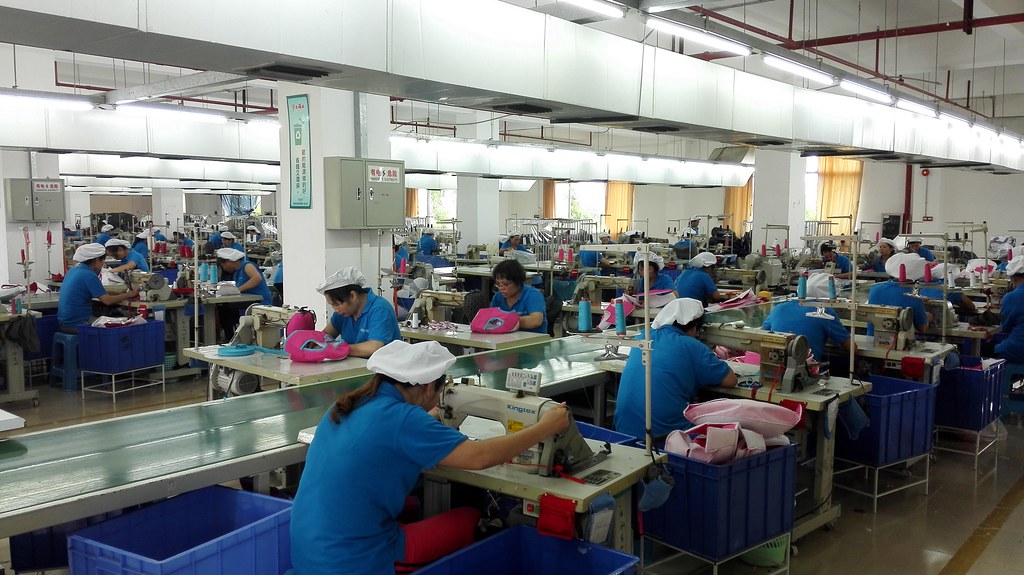
First of all, depending on the demand your business has, importing from China or India can mean considerable savings for your company, mainly because labour in both countries lowers the cost of manufacturing a product. That lets you be more competitive on price and spares you an Achilles’ heel that, in many cases, is in-house manufacturing.
You’ll remember that in the past, when someone told you a product came from China, it was a byword for quality (Chinese porcelain, Chinese decorative items and so on). Today, when you hear that a product comes from China, your mind links it to something cheap and low quality.
Well, China is still a byword for quality; it’s just that we tend to import the cheapest products so we can compete in our own country or go out and sell abroad.
You can import products in two ways:
- Buying the product ready-made: factories in China or India have thousands of items in low, medium and high quality. Obviously, when a company sets out to import a finished product, it looks for the cheapest option, so quality drops. This is importing in its purest form. You buy a product for €0.10 and sell it in Spain for €1.20. You have a good profit margin, a cheap product and an easily calculated profit.
- Making the manufacturing decisions: importing a product doesn’t mean you don’t make your own products. You’re simply outsourcing the manufacturing, but you developed the product, and you chose its quality and its design.
We’ll focus on the second way of importing, since the first needs little explanation and is easy to carry out.
Imagine you want to produce a particular line of clothing, but you want it to be your own brand and carry your name. All you need to do is get in touch with a factory in China or India and explain the type of garment you want made.
You’ll have to bring them the designs, choose the quality of the fabric, and so on. Subcontracting the manufacturing, or let’s call it outsourcing production, still gives you a product made the way you want it. You’ve simply saved on hiring your own staff, and one advantage of this kind of outsourcing is that you know exactly what you earn on every item you sell.
When you agree a price with a factory in China, bear in mind that it isn’t the final price: you’ll have to add some taxes, including customs duties, so you’ll need to turn to an adviser who specialises in importing products.
There’s another drawback that business owners who outsource manufacturing, especially to China, are often unaware of. Even if your brand is a registered trademark, you’ve handed over the manufacturing plans. So once they’ve made your product, if they see that it’s original or innovative, the copy will follow, and within a few months you’ll find your product at a lower price, of lower quality of course, competing with your own. This happened with some products from Apple, a company that saw counterfeits on the street even before the original was officially launched. Everything suggests that the company Apple had outsourced the manufacturing to played very dirty (these things happen).
That’s the price you may have to pay, although in any case we live in an age of copying and plagiarism, so sooner or later you were going to find yourself in that situation.
In short: you can be the manufacturer of your own product without making it yourself. You just need to outsource the manufacturing to outside factories, and when the factory is in another country, that’s called importing.
Further reading
- Importing clothing from India: how to do it
- The advantages of starting a business in times of crisis
- Why new businesses fail
- How to start a business with no money
- How to negotiate successfully
Featured image: IEMS HKUST, CC BY-SA 2.0, via Flickr.


